Writers on writing

I was writing this morning, wondering about how random thoughts (like journal entries) become complete works. I’ve read some of the journal entries of Thoreau, and letters of Alan Watts. But I started looking at which other writers kept journals (many did).

While I cull through the list I’m compiling, I have these rules from Vonnegut for writing fiction I thought I’d share:

Eight rules for writing fiction:

  1. Use the time of a total stranger in such a way that he or she will not feel the time was wasted.
  2. Give the reader at least one character he or she can root for.
  3. Every character should want something, even if it is only a glass of water.
  4. Every sentence must do one of two things — reveal character or advance the action.
  5. Start as close to the end as possible.
  6. Be a sadist. No matter how sweet and innocent your leading characters, make awful things happen to them — in order that the reader may see what they are made of.
  7. Write to please just one person. If you open a window and make love to the world, so to speak, your story will get pneumonia.
  8. Give your readers as much information as possible as soon as possible. To heck with suspense. Readers should have such complete understanding of what is going on, where and why, that they could finish the story themselves, should cockroaches eat the last few pages.

— Vonnegut, Kurt Vonnegut, Bagombo Snuff Box: Uncollected Short Fiction (New York: G.P. Putnam’s Sons 1999), 9-10.

Weekly Rundown

Work, work, work. Every day this week was one job or another. But I had some good creative time too.

What I’m reading: Horizon by Barry Lopez. Spoiler: at over five-hundred pages of the main text, I’ll likely not finish this within a week. I hope I do finish it though. My thoughts on this: the cover shows plain-white text of title, author, and one achievement – “National Book Award-winning author of Arctic Dreams.” The cover photo wraps to the spine, and shows blue sea along the lower half, blue sky above. The horizon, a solid white line through the middle – it’s in this line where anything is possible. If, I suppose, you can judge a book by its cover. Lopez is a travel writer, humanitarian, and environmentalist. And everything about the layout of this book makes me want to read it.

What I’m listening to: Hadestown Original Broadway Cast Recording. Hit a deep dive of Andre DeShields for the radio show this week, and revisited this soundtrack. Really a wonderful compilation of music from Anaiis Mitchell.

What I’m watching: The Mandolorian. I was a few weeks late to the game, but I caught up. Good script, solid acting, great effects. A space-Western, reminiscent of Firefly.  The internet went wild for Baby Yoda (who should have a non-Yoda name that, hopefully, will be revealed soon), and I’ll admit it’s a cute critter. Looks like Gizmo from Gremlins though. Behind the mask, Pedro Pascal is doing awesome work. I think I first saw him GoT, but have tried to follow his career since.

Other things I’ve sent to friends this week:

  • Rolling Stone’s profile of Adam Driver. Gearing up for Star Wars Episode IX next week, the interview hints at the character arc for Kylo Ren and gives a revealing look at the actor behind the mask.
  • Another one from Rolling Stone, this one an interview with Rian Johnson regarding Knives Out. Again, loved that movie.
  • From NatGeo, a look at what happens to fresh water when mountain ice doesn’t reform on these water towers.
  • SNOWBALL FIGHT! The John Wick director shot this video with the iPhone 11.

Why I post daily

This was an easy decision to make, but slightly more challenging to put into practice. Some days I easily write four or five posts to queue up. Other days it’s challenging to put a sentence down.

The prompt was Seth Godin’s interview with Tim Ferris on The Tim Ferriss Show (ep. 138). “The first thing I would say is everyone should blog, even if it’s not under their own name, every single day. If you are in public making predictions and noticing things, your life gets better. Because you will find a discipline that can’t help but benefit you. If you want to do it in a diary, that’s fine. But the problem with diaries is because they’re private, you can start hiding. In public, in this blog, there it is. Six weeks ago you said this; 12 weeks ago you said that. Are you able, every day, to say one thing that’s new that you’re willing to stand behind? I think that’s just a huge, wonderful practice.”

I like looking at the world – its working philosophies; the creative industries; environmental concerns and conservation efforts; books and publishing; and many other things that come into my attention. If I’m lucky, I have an original thought about them.

At the very least I have something to say about what’s happening, or maybe I just to shine a light on it.

And the world needs perspectives – of all shades – to be shared.

Mise-en-place

Another in a series of thoughts on decluttering and belongings, the French culinary specialists have given the world mise-en-place, or everything in its place. And the principle extends beyond the kitchen. When I lived in my small home, I tried to adhere to this principle to maintain my sanity (with mixed results).

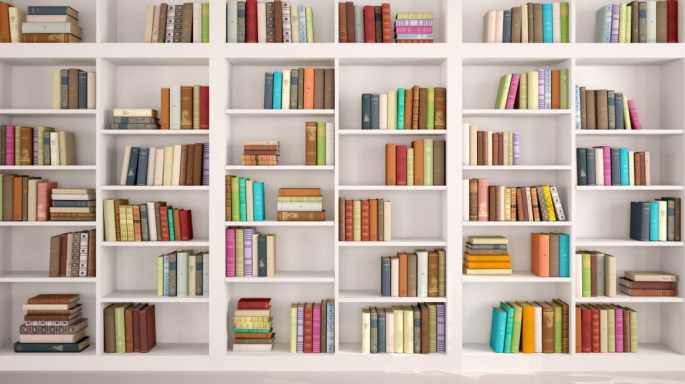
How far you take it is up to you. Maybe the bookshelves keep a clean and orderly appearance.

559404-istock-512966920_0

Or you meticulously organize your pantry.

0841b355db23d1b5d4e2362cf6cf1775.jpg

On the other hand, maybe you’re lucky if everything fits on a shelf. 11844881464_95278ba223_b

Whichever side you currently find yourself on, remember that it can be better. Find a home for everything – one that looks pleasing to your eye. Then, make sure every item returns to its home after use.

If you don’t have room for everything, then that’s a discussion for a later time.

Simplicity

When working towards simplifying life, it’s easy to forget to take care of certain things. Relationships, for one. And the quality of your relationships directly affects your well-being.

Remember to be honest with those closest to you, and honest with yourself. What are you trying to achieve? And why? Knowing your reasoning, and being able to communicate it, will go a long way towards easing your transition into a scaled-down lifestyle.

Weekly Rundown

The week that passed was a long one, I’m not going to lie. There was a fourteen-hour car ride to Florida, and that was a bit exhausting. Everything before that wasn’t as restful as I would have liked either. Nonetheless, hear are some things that I spent some time with this week.

What I’m reading: Tip of the Iceberg by Mark Adams. Just cozying up to this book as the weather is getting cold. Thinking about this past summer in Alaska, and what the future may hold.

What I’m listening to: Antonin Dvorak’s Symphony No. 9. Also known as the New World Symphony, this makes me feel like it’s Thanksgiving. I enjoy this recording from the Slovak Philharmonic Orchestra.

918959D7-818D-45F2-AC54-420F9EC609F8_1_201_a.jpeg

What I’m spending time on: Dog training.

My 60 lb. boxer is nearly seven years old, partially blind and deaf from an invitro stroke, and ultra-hyper. Breaking him of some bad habits will take a good deal of time, but I’m certain that he and I are up to the challenge.

Other things of interest:

  • Knives Out, written and directed by Rian Johnson. Wow, I loved this movie. I thought it was well-written, well-directed, and well-acted. With names like Jamie Lee Curtis, Daniel Craig, Chris Evans, and Christopher Plummer, it was an excellent ensemble movie. The premise – wealthy suspense novelist dead by apparent suicide following birthday party with suspicious family members – may seem trope, but it leaves you guessing until the end.
  • Where to buy books online from a website that isn’t Amazon. From Anya Zhukova, here are seven recommendations that include B&N and BAM. I also like AbeBooks and Easton Press for more obscure or special edition volumes. And I go to eBay as well. As I was linking Tip of the Iceberg, it occurred to me that I didn’t want to recommend Amazon for every book I like. So I went with GoodReads, though it is owned by Amazon. Its positives include that it links to retailers other than Amazon,  and is enhanced by its users and readers.
  • Why can’t every workweek be four days? I mean, seriously?
  • Nat Geo story on the death of the male white rhino, and the species’ coming extinction… An extinction brought about by man’s overhunting of the animal.

“Watching a creature die—one who is the last of its kind—is something I hope never to experience again. It felt like watching our own demise.” – Ami Vitale

We work, then we ship

This blog is shipping. It’s a continuous reminder to me to get the work done. I’m at a point where I can now write every morning. I write here, and I write in my other media (at this time a novel, which I started during NaNoWriMo, but which has been a holdover).

Work completed isn’t much until we get it out. Really, it isn’t completed until you put it out. And it’s scary to put it out. There are times when I’d rather not see the finished product.

I do some work in improvisational acting, and that’s instantaneous shipping. That’s getting up, creating a scene (doing the work) and performing it in front of an audience (shipping), all in one moment. Terrifying!

But doing that, it’s helping me here. It’s helping me everywhere. Because in improv, as in any other work, it’s okay to fail. Maybe one project lands flat. Flatter than flat. Just put it in the dungheap and move on.

Seth Godin has a graph of shipping that looks like this:

6a00d83451b31569e2017ee8407661970d-500wi.jpgOriginal post here.

This is specifically for the publication of a book. But it applies to any artistic medium. The Y-axis is the joy you feel for the project, and the X-axis shows time passing with each milestone. I think data point 6 is even lower than what’s shown because fear can take hold. That resistance.

But it’s so important to ship. To accept that fear. That fear is a gift. It’s your body telling you that what you’re doing may very well be important. So don’t stop now. Accept the gift, and get your idea out there.

Adventuring

I think some of the things that make this world so amazing are the people who go out and live life like no other. Take for instance Leon McCarron. Contributing writer to Adventure Magazine, author of such books as The Land Beyond and The Road Headed West, he set out after University on a bike ride halfway around the world. Then decided to keep traveling.

According to McCarron:

“There was a time when explorers traveled to mark the blank spots on the map—but now, in the digital age with fast, inexpensive transportation to once-hidden corners of our world, there’s far less call for flag-planting.

Instead, I see the modern frontier of adventure as storytelling; using immersive, adventurous travel to uncover new ideas. Adventure also applies on a smaller scale, one that’s accessible for all. It can be a daily practice in which we choose to do something different, something that creates a new experience—and that can happen as easily in London as it can in Ladakh. Adventure is everywhere, if we know where to look.”

The challenge is to create those new experiences. Look for the miraculous in your everyday life.

Down to the wire

Here it is, December 2019. Have you accomplished all that you wanted to this year? I know I haven’t. Sometime later this month I’ll do a personal check-in, showcasing some successes and failures of the year.

I recommend you do the same.

Try to think back to the resolutions you made on New Year’s last. Then, you can set them aside. Resolutions tend to be thinly-veiled attempts to make us live the lives we think we should have.

Really, just be honest with yourself over what worked and what didn’t this year? And ask yourself why? Maybe you’ll find 2020 is a time for new beginnings, or to recommit to the things that you really enjoyed in 2019. Either way, if you start thinking about it now, it won’t come as such a shock come January 1.

Thanksgiving

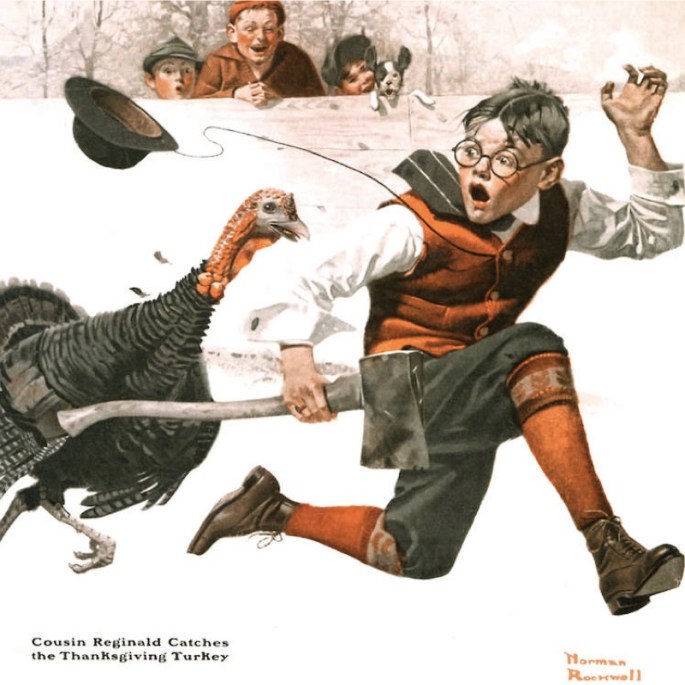
It’s been three years since I’ve become a vegetarian. I’m often asked why. No, it’s not because I was chased by a killer turkey.

I had toyed with the idea before. When I was younger, twelve maybe, I tried to go vegetarian. I didn’t receive much support from my family.

But the reason behind it was that I felt guilty for eating an animal that had died just so that I could eat it.

There’s a branch of Buddhism that sends it monks out on pilgrimage. They are graciously welcomed into houses, and allowed to partake of any meal that the family is providing. However, if the family slaughters an animal to celebrate the visiting monk, the pilgrim may not eat of it, as it was killed explicitly for his arrival.

In much the same way, I decline to eat any meat. Of course, no animal was killed expressly for me. Yet, the animal was killed with the intention that someone would purchase and eat it. So I refrain.

It’s easier being a vegetarian now than even ten or fifteen years ago. Beliefs that were on the fringe not so long ago have come to the forefront, and even current fringe beliefs are generally better accepted by the public. So it’s a good time to be a vegetarian.