Blog

Ornithology

Back in my early-twenties (or was it late teens? For the sake of legality, let’s assume I was at least twenty-one), I had an off-night at a bar. I was intoxicated, and I ended up roaming around town, no car, and no real idea where I was.

(Side note: this, in retrospect, not the best idea. I don’t recommend it. Be safe out there.)

Anyway, I call up a friend who’s in college in this town. I tell him the rough idea of where I’m at, street names and such. He comes and picks me up, let’s me sleep on a couch.

Now the next morning I’m faced with two choices – I can either stay there, subject to the whims of the others in the house, or I can go with my friend to his classes. I opt for the latter.

And the only thing I remember from that day of quasi-auditing was something about birds. There was a whole session of biology devoted to ornithology.

I didn’t necessarily have a problem with birds, but I didn’t particularly like them. At the time I was a meat-eater, and I did enjoy my chicken wings.

It was years later when I met a girl who would have rather been a bird. Or at least been able to turn into one. The dream of flight and freedom. That’s something I can understand.

This comes to mind because there are a lot of ravens up here I’ve noticed. Ravens, order Passeriformes, of the family Corvidae, are the largest of the corvids. The Raven, to the seven nations of the Northwestern tribes, is the trickster god, bringer of light, and creator of Earth.

I’ve seen them all over the shoreline and inland. They are loud birds, with a plethora of sounds that they can choose from. Somehow, leaving Alaska, I feel I’ll miss their bird song.
The mind is a powerful tool

Here’s a confession for you. I’ve started reading Napolean Hill’s Think and Grow Rich like three times, and each time I just can’t seem to finish it.

It’s a bit embarrassing, really. This seminal work of putting the mind to use in directing your future – the benchmark of self-help gurus from Tony Robbins to Wayne Dyer to Robert Kiyosaki – and damned if I wasn’t flummoxed by it.

But, I always remember that first story in the book. It just sticks with me.

Edwin C. Barnes, who with nothing more than the burning desire to work with inventor Thomas Edison, took a freight train to the inventor’s factory in New Jersey and asked to partner with him. What he got was a job as a floor sweeper, which he accepted without hesitation.

Just a few years later, Barnes took Edison’s invention, the Ediphone, and sold it to great commercial and personal success. His dream became true because he thought and believed and then acted upon it.

While I suppose I never had the burning desire to finish Hill’s book, perhaps I absorbed some of it through mere repetitive osmosis. Have a burning desire. Act upon it. And the mind will corroborate to achieve your success.

What about the movies?

I like movies. And, additionally, I like movie theaters. Seeing movies in the theater is a different experience than at home. For one, in a full theater, it’s a communal experience.

There are times I’ve talked about the transitory experience of live theatre, and that the performance that night will never be given again. Because, even if the lines and movements happen to be identical (being human, that seems incredibly unlikely), the audience changes. And each audience comes into a performance with something different than previous audiences.

Films, therefore, are subject to similar constraints. Audiences view films with many preconceived notions, and one’s perception of a movie can be drastically different from another seeing the same movie.

Under our current climate, it’s hard to envision what will happen to the movie theater, and to the film industry as a whole. But, as we’ve been programmed to be recipients for story since we first huddled in caves, I’m hopeful that we’ll resume theater-going once we’ve settled down again.

I know, at least, I’ll have a ticket in hand.


Online learning

This has been a great opportunity for inside learning. I’ve been spending time with Lynda.com and Khan Academy. But there are a lot of other good learning resources.

  • For coding and programming, Codecademy.
  • For careers in tech like product management, sales, operations, and more, visit School16.
  • Coursera offers online options for free, as well as paid.
  • And even Yale is offering it’s Science of Happiness course, online for free. 

The journey is the destination

When I started writing this blog four years ago, it was two parts. One, it was an opportunity to ship regularly. To write, and practice writing, and publish. To accept imperfection. Because, writing itself is a process, and I often let words tumble as they may.

The second, and perhaps the more important aspect, was as a coping mechanism. It gave me a platform to lay out my thoughts on a lot of personal issues. And I didn’t perhaps put as much intimate detail into these posts as I could have. As I’ve written recently, the dichotomy of public/private perception has been a challenge for me to work through. That is, being afraid of opening up.

It isn’t that we don’t do it as a species. Even culturally, some are apt to show their emotional content without any pretext. Americans, I feel, not so much. Me included.

It’s hard to open up – to expose your self and what you believe are your weaknesses. To “showing your throat” to what may be a dangerous opponent. And yet, the more we train ourselves not to, the harder it becomes, even with those we care about deeply.

While we shouldn’t go through life as an emotional whirlwind, it is important to try and be as authentic as possible – which means not closing off the feelings that we’re afraid to let others see.

It’s what I sometimes try and do here. Just to brush against authenticity. It doesn’t happen all the time. Even here, the Resistance feels a need to make its presence known. But it’s not about getting there. It’s all about the steps that are taken between here and there.

A new reading habit

In pandemic-lockdown, I’ve nearly finished the entire Dresden Files series from Jim Butcher. I’ve really only the short story collections to go. So coming upon this new idea for a reading habit could help me ease into whatever I start reading next.

In the book The Choose Yourself Guide to Wealth, author James Altucher suggests that every day you should read:

  • 10% of a nonfiction book to get ideas
  • 10% of an inspirational book
  • 10% of a high-quality fiction book
  • BONUS: Read a game-related book (or play a mental game like chess)

Additionally, for some very interesting reading, this article from Aug. 6, 2016, the New York Times reveals some of Altucher’s failures that led to his giving advice in the first place.

Searching…

I worked with a guy who would delete every text message on his phone that didn’t come from his wife. It was an elegant system, in that once the loop was closed, he no longer needed the text message. So het got rid of it.

On the other end of the spectrum, someone like Stephen Wolfram apparently saved basically every scrap of paper he’s ever received, and uses digital backups of all his informational correspondence and projects. It’s databased, and he can basically find just about anything he’s ever worked on, in some form or another.

While I’m at neither extreme, I am defintely closer to Wolfram in the hoarding bits of paper and computer files. I’m nowhere near as technological as he is, but last year I did start scanning documents that I had collected over the years.

This comes up because (while in seclusion), I’ve been cleaning up my computer files some. This time has given me some insight into how I systemize my computer, and my life. Needless to say, it’s been a little messy of late.

But that’s okay! It’s fun to be messy sometimes… as long as you can find what you need.

Deep Peace Gaelic Blessing

Deep peace of the running wave to you
Deep peace of the flowing air to you
Deep peace of the quiet earth to you
Deep peace of the shining stars to you
Deep peace of the gentle night to you
Moon and stars pour their healing light on you
Deep peace of Christ the light of the world to you
Deep peace of Christ to you

The day after tomorrow

In a crisis situation, it may be more pertinent to focus on the present rather than the future. The future can look awfully far away when you’re dealing with the day-to-day changes that seem to keep popping up.

However, what the future may show us is that this virus, as well as our response to it, fundamentally changed how we live our lives, conduct business, and interact with each other going forward.

What I’m thinking of specifically is the dissemination of information across the internet, how we can utilize it more efficiently for education, business, and entertainment, and what that flow of data will look like.

Comcast report usage up 32 percent on March 30th. Gaming platform Steam saw traffic up 25 percent since February. Internet conferencing and preferencing a computer over a cell phone have also increased during this shutdown.

I believe that once the country is able to revert to more normal circumstances, we’ll see some interesting data regarding how the internet is being used, at least in the short term. Many are learning new tricks for their computers, including video conferencing and distance learning.

Additionally, people are going to want to spend time together. More than they had previously. While some introverts may find this time in seclusion refreshing (I count myself among them), the whole will likely feel a push towards renewed intimacy. Maybe dinner table conversations without a cellphone screen.

One idea I’ve always loved is that of a salon, “a gathering of people under the roof of an inspiring host, held partly to amuse one another and partly to refine the taste and increase the knowledge of the participants through conversation.”

Maybe when we reopen, you’ll consider hosting a salon-style party, sharing stories of all you learned online while you were staying home.

Weekly Rundown

All about Ketchikan, Volume 5.

The Tongass National Forest:

2E3ACAC0-7136-4AA0-A9C2-A1657CA9359C
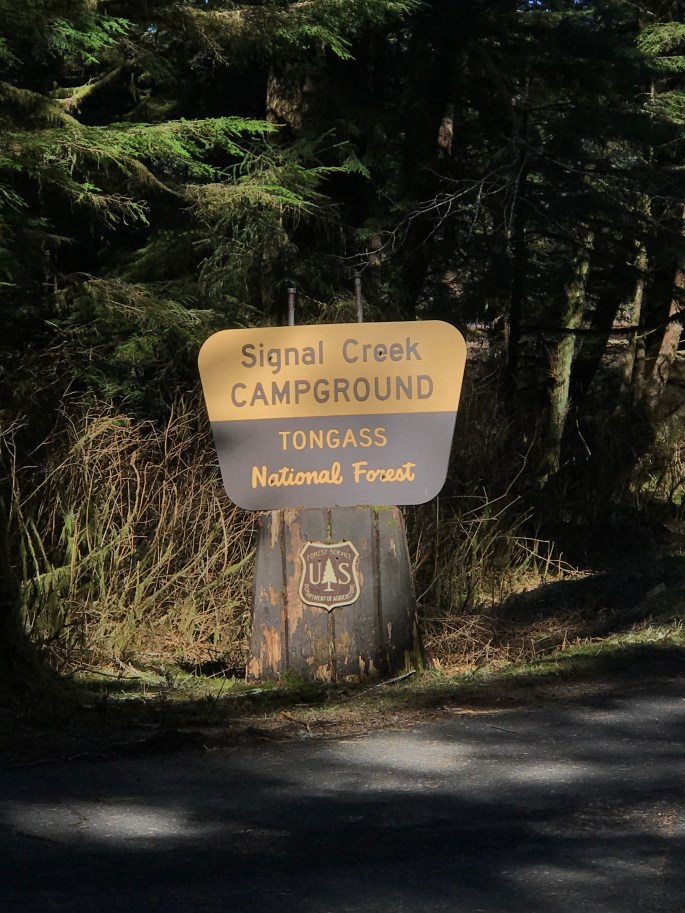
Sign for Signal Creek Campground at Ward Lake, in Tongass

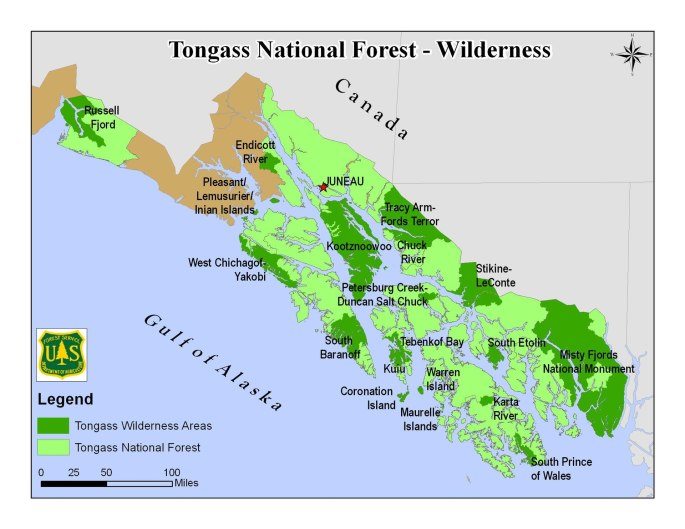
Tongass is the largest National Forest in the US and covers most of the Southeast of Alaska. Seventeen million acres, to be nearly exact.

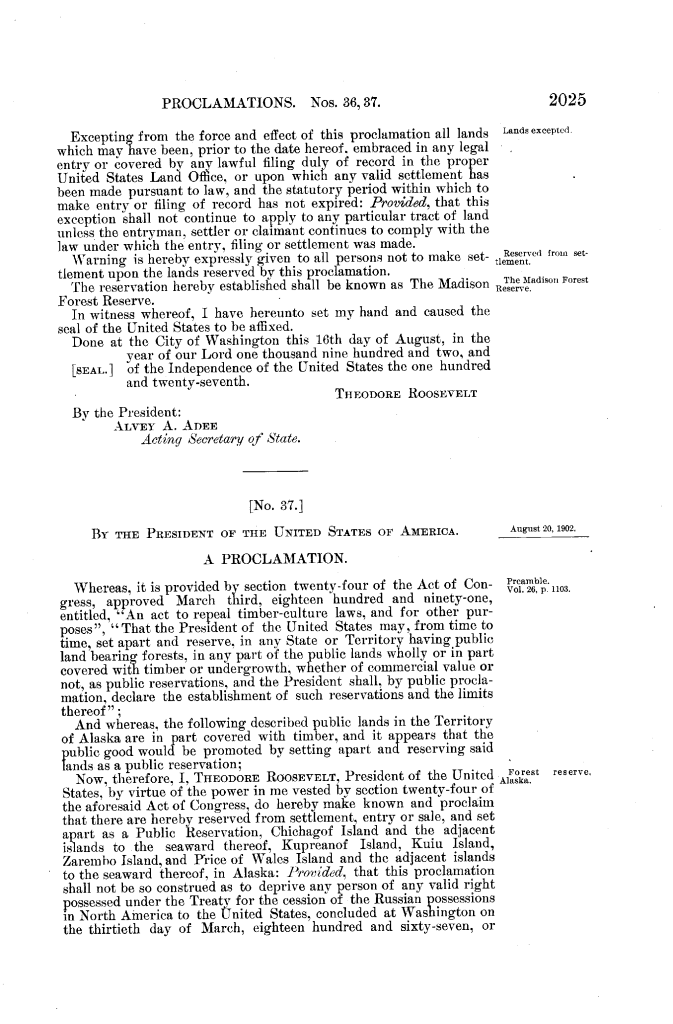
The Tongass National Forest stretches about 500 miles along the SE Alaska coast covering an area equal in size to Vermont, Massachusetts, Connecticut, and Rhode Island. It was designated a national forest on September 10, 1907, by proclamation of the President, Teddy Roosevelt.

image

Tongass is the point of some controversy recently, in the question of whether to allow logging in some of its areas. Today it is home to two national monuments (Misty Fjords and Admiralty Island) and nineteen designated wilderness areas. Which is part of a larger question of ecology vs. economy: how do you decide what’s of value?

Environmentalist (and huge Alaska fan) John Muir noted as he watched federally protected lands across the U.S. come under threat, “Nothing dollarable is safe.” And that is a conundrum that has faced man since the industrial age. What portion of land needs be preserved and what should be developed?

Sitting here, in Southeast Alaska, I’m glad there is still wilderness outside the door. In this country of ours. People from around the world come here in hoards to see Wild Alaska. Not this summer, maybe. But other summers, those in the past. And next summer, I estimate the largest tourist season yet here.

1920px-Tongass_NF_-_map_of_wilderness_areas