This is going to cover December, January, February, and I might as well include March. I’ve done significantly more reading over the past two weeks, owing to a nation in lockdown.
Books Bought:
- Alchemy & Mysticism – Alexander Roob
- Basketful of Heads #2-5 – DC Comics
- The Dollhouse Family #1-3 – DC Comics
- The Low, Low Woods #1-2 – DC Comics
- Alaska – James. A Michener
- The Dream-Quest of Vellitt Boe– Kij Johnson
- Certain Woman of an Age – Margaret Trudeau (Audible Original)
- The Science of Sci-Fi – Erin MacDonald (Audible Original)
- Caffeine – Michael Pollan (Audible Original)
- Alaska: The Harriman Expedition, 1899 – Burroughs, Muir, et al.
- Coming into the Country – John McPhee
- Children of the Raven: The Seven Indian Nations of the Northwest Coast – H.R. Hays
Books Read:
- Light the Dark – (unfinished)
- Horizon – Barry Lopez (unfinished)
- Arctic Dreams – Barry Lopez (unfinished)
- An Innocent Abroad: Life-Changing Trips from 35 Great Writers – Editor, Don George (unfinished)
- Walden, or, Life in the Woods – Henry David Thoreau (unfinished)
- Tip of the Iceberg – Mark Adams (unfinished)
- Children of the Raven: The Seven Indian Nations of the Northwest Coast – H.R. Hays (unfinished)
- Ninth House – Leigh Bardugo
- Basketful of Heads #2-5 – DC Comics
- Wild – Cheryl Strayed
- The Call of the Wild – Jack London
- The Modern Minimalist Budget – Brian Night
- Principles: Life and Work – Ray Dalio
- Locke & Key, Vol. 1 – Joe Hill & Gabriel Rodriguez
- The Starless Sea – Erin Morgenstern
- The Ballad of Black Tom – Victor LaValle
- Vagabonding – Rolf Potts
- Storm Front – Jim Butcher
- Fool Moon – Jim Butcher
- Grave Peril – Jim Butcher
- Summer Knight – Jim Butcher
December 2019
I almost did it. I almost went a whole month without purchasing a book. Alas, I didn’t make it. This month is a new month, a new year, some may call it a new decade, even though it’s kind of, technically the last year of this current decade. (If you want to debate that, I’d just ask to please consult the Farmer’s Almanac.) ¹
Anyway, my purchases were limited to a few comics, one esoteric edition from Taschen, and a couple audiobooks begotten by credit rather than cash. Audible credit, that is, of which I had a few left, as I subscribed last year.
I didn’t read as much as I had intended. Not nearly. Working an extra gig during the holidays ate into my free time, and I was a bit more tired than I expected.
The only “book” I purchased was Alchemy & Mysticism. I found a special edition on Easton Press, but then tracked down a Taschen copy for significantly less. Again, trying my best to not be frivolous with my money. I didn’t have time to dig into it, but it’s an art book showing the advance of early Western imagery and mysticism throughout the ages, from Pythagoras to William Blake. Is it a practical book to add to my collection? One I’ll read while sitting fireside and absentmindedly scratching my dog behind his ears?
No. No, it’s not. Yet, one of these days I will sit down and write out some of the things clunking around in my head, and a book on philosophical and alchemical history would, at that time, prove very useful. Plus, it’s nice to look at.
Joe Hill’s Basketful of Heads, on the other hand, I did read. I really enjoyed it.
January 2020
January introduced me to the writing of Cheryl Strayed. Wild had been on my radar as a movie since it premiered in 2014. I’ve still yet to see it, but the Reese Witherspoon project garnered a lot of attention, and I remember being vaguely aware that it was based on a book. But, 2014 was a busy time for me, and I didn’t think much about traveling until nearly two years later.
So I got ahold of this book, and the first thing that strikes me is how open Strayed is. Actually, the very first thing is that she chucks her remaining hiking boot over a cliff after the first one fell down into the woods below. Now, I’ve always liked my hiking boots – they are pretty comfortable, a pair of Merrells I got for my first long-distance trip. But I couldn’t imagine walking anywhere without the boots on while I was traveling, especially not with my pack on. It just didn’t seem practical.
So, that was a good introduction to the book. Got me interested right away. Moving on from there, it was how open she was regarding her grief, her inability to rationalize decisions, acting instead on impulse. And how those decisions had reverberating negative effects attached to them, all in an attempt to get her life back on course. Or, perhaps, onto a very new course that would take her to a better destination.
The solo trek was the vehicle of that recorrection. I can understand that intimately, and while this book may have been more useful to me several years ago, it certainly came into my life at a good time – right as I was preparing to spend six months in Alaska for my own bout of reorientation.
Coincidentally, in 2018 I had purchased The California Field Atlas, which I wrote about for that books post, and in it were contained some watercolor maps and highlights regarding the Pacific Crest Trail. Another coincidence: that books posting had also been delayed, and I condensed several months into one post again. You’d think this was a common occurrence for me… ²
Another book I looked at was An Innocent Abroad. I didn’t read much. Don George’s introduction about love and innocence and France; Strayed’s contribution about her trip to Andorra, Spain; and one or two others. I’d had the eBook for I don’t know how long. It was only after checking it out from the library on one of my visits and cycling through my digital library did I know I had it.
With as much as I love to travel you think I’d be a voracious consumer of travelogues. Yet that hasn’t been the case. I’ve tended to steer towards episodic fiction or fantasy (Butcher’s Dresden Files, Lee Child’s Jack Reacher novels, Sandman Slim by Richard Kadrey, etc), or I followed an author who I admired (such as Neil Gaiman, Tim Ferris, or Seth Godin).
I suppose that I would rather experience the destination myself, or, more particularly, the journey to get there. Somehow reading about travels never really holds up.
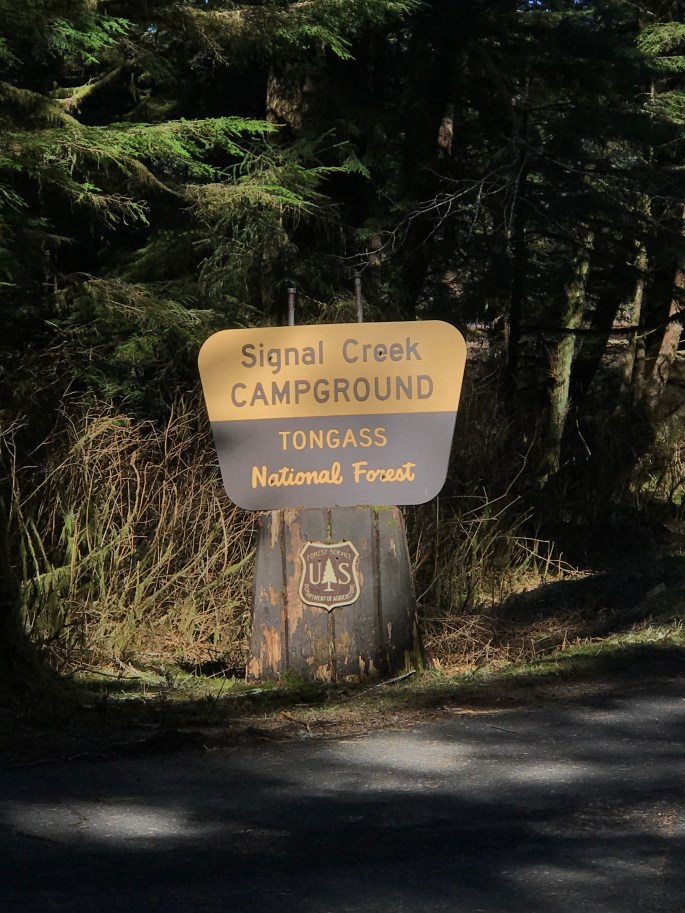
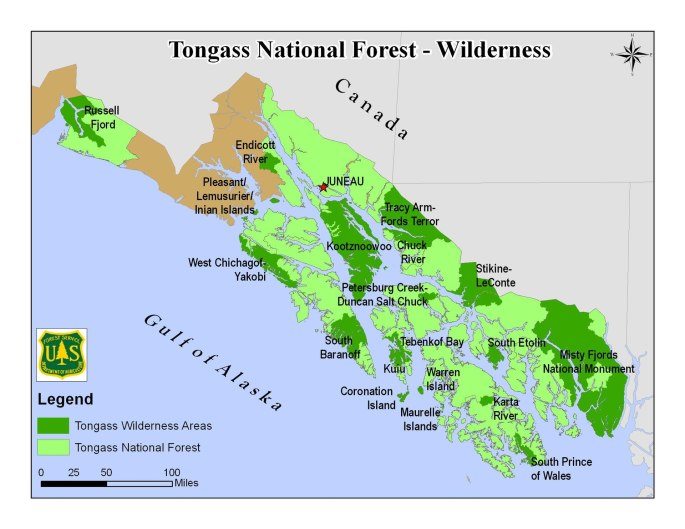
For instance, writing this now I’m watching a juvenile bald eagle fly over the woods by the Tongass Narrows. You can tell it’s a juvenile because the crown of its head has yet to develop the white feathering, maintaining a youthful dark color. Probably three years old or younger. And I could describe the spread of its wings, feathers parted at the tips as if to reach out to thermal blasts; the looping, soaring pattern it’s taking as it either hunts or is taking a leisurely flight to a perch; or the majestic nature of birds in flight, their long-ago inspiration for us as a species to try and take to the skies. But it’s not a good enough description for me. I feel inept in giving it, and don’t visualize well when I’m reading it.
All that being said, when I read Draft No. 4 last year, I sort of got inspired by McPhee’s writing. He’s got a book on Alaska, Coming into the Country, which I found at the local bookstore. It was on my to-read list, so I decided to get it. I haven’t started it yet, as there is a great deal of local interest information I’m supposed to read before the season starts – for my job up here. When I’ve become proficient in that information, then I’ll branch out into other Alaska tomes, starting with McPhee.
Another book of Alaska, Call of the Wild, got finished this month. I don’t remember if I’d read it before. The ending of the tale didn’t seem familiar to me at all. And I struggled to get through some of these parts.
I build up emotional attachments to well-fleshed characters. Buck, the protagonist, is a dog. For some reason, either my general love-of-animals or the fact that I have a goofy dog back home, Buck was instantly likable for me. And he went through some terrible things. Some of the other dogs had it worse than him.
From London’s perspective, it wasn’t easy been a sled dog. Life in the Klondike wasn’t easy for man, so how could it be for an animal? London had a long enough experience as a gold-miner to develop scurvy and nearly be killed. And he was horrified by the dead horses up by White Pass. I believe he saw the treatment of animals and knew that connection with them was better than abuse.
February
Mark Adams’s Tip of the Iceberg was what I was trying to finish. I didn’t. But, I got a gist.
Adams decided to retrace (as best he could) the route of the Harriman Expedition, an 1899 voyage that the railroad tycoon Edward H. Harriman put together. “His plan was to outfit a large steamship as his private yacht and survey the coast of Alaska… His steamship would sail up the Inside Passage and visit its best-known spots: lawless Wrangell; Skagway, epicenter of the Klondike Gold Rush; the old Russian capital, Sitka; and Glacier Bay…” ³
I learned from Adams about the fur traders (which I learned more about from Barry Lopez’s Arctic Dreams, including the habit of old-world whalers to trade goods and services with the sturdier indigenous natives of the arctic regions), the gold rush, and the oil pipeline: Alaska’s three booms that brought much attention to the area from the outside world.
The State of Alaska could encompass Texas, California, and Montana (size-wise, the second-, third-, and fourth-largest states in the Country), as well as having room left over. Including to fit the whole of New England. It’s 663,300 sq. miles, or roughly 1.16% of the Earth’s above water terrain. With a population of less than 800,000, it’s impressive to think about. Acres per capita, it’s about 1 person every 468 acres. Until the tourist season.
Pandemic notwithstanding, “each summer a million cruise ship passengers make the same scenery hajj as the Harriman Expedition. The most recent data [Adams] could find showed the Inside Passage had catapulted over Las Vegas and Orlando to become America’s number-one tourist destination.” 4
Watched Locke & Key on Netflix, so got my hands on Volume One of the graphic novel, collecting issues #1-6. It’s a compelling story, told by a capable storyteller. The illustrations by Gabriel Rodriquez add tone and ambiance to the story, and I read through it pretty quickly. As I said before, I didn’t put the Stephen King/Joe Hill – father/son dynamic together until I started doing some research.
Black Tom is a novella that had also been on my list for a while, crunching into the Cthulu mythos. It’s the tale of Horror at Redhook told from the point of view of a Harlem Renaissance jazz guitarist and flim-flam man. He knows some of the eldritch elements within the city and is taken with a summoning of one of the old ones.
There’s a lot here for such a short story. Racial tension, class divides, horror, and suspense. This interview with the author on Fresh Air reveals some of the issues with racism that this story dives into.
Which led me into…
March
I had two choices to start: Principles by Ray Dalio or The Starless Sea by Erin Morgenstern. In 2014 I had read The Night Circus, and I remember it pretty vividly. I was in DC reading it, and then I got sick, and I was in West Virginia staying with a friend of mine. Anyway, that feels like a lifetime ago. But I enjoyed its looping narrative and was excited when Starless Sea was released. I opted for that one.
It kind of defies interpretation. As it says, “He is a metaphor. And sometimes a pirate.” What I can say about it is that it feels like a love letter to books and reading, which sits well with me. I too love books and reading and can appreciate that aspect of it. There are also cats, and bunny pirates, and more that defy explanation.
I then decided to break open Principles. This book came highly recommended, and I’d heard Dalio speak before. It’s not a traditional business text, but it is chocked full of information that made me think. I think some key takeaways were:
- Think for yourself to decide 1) what you want, 2) what is true, and 3) what you should do to achieve #1 in light of #2.
- …develop your own principles and ideally write them down, especially if you are working with others.
- Dreams+Reality+Determination=A Successful Life
- You must be willing to do things in the unique ways that you think are best
- Pain+Reflection=Progress
There’s a systemization of problem solving and idea generation that is advanced and unique. If that kind of thing interests you, I recommend the book. The way is segmented makes it easier to read than just straight theory, which helps its digestibility. But there is a great deal of information contained in it.
And, of course, after two weeks of work preseason, we went into lockdown mode. In this time I’ve been writing and reading; generally just messing around. With Jim Butcher’s new Dresden novel scheduled to release on July 14th, I decided to reread the series. I put down the first four books in the last week of March, while also studying about Ketchikan, Alaska, and generally investigating anything I found of interest. This much free time has been a boon for my imagination, if not for my wallet and, perhaps, my overall sanity.
They tell me it’s okay to talk to myself. And, well, who am I to argue…?
And there you have it. Much of the last four months of my reading life. I set a personal goal this year to read a book a week. I haven’t been doing well with that, what with the busy schedule I was keeping back home. All this time in seclusion in The Last Frontier is allowing me to catch up.
Plus, I’m kind of cheating since I’ve read the fifteen Dresden novels before. But I’m also revisiting Walden, the writings of Marcus Aurelius and Seneca, a few screenplays, and some of the collected early writings of Neil Gaiman. In April I have a few books on Alaska to add to the reading list, which I hope to have finished in the next few weeks. And in May, I will post the April reading information, and not wait another four months.
At least, that’s what I keep saying to myself. Out loud…
- Afternote: This train of thought was relevant four months ago. Not so much now. I still hold we’re in the last year of the decade, however.
- This had me thinking a lot about procrastination, and time management, and, you know, doing things you like doing because you like doing them. I’m going to be posting on that topic over the next few weeks.
- Harriman was also responsible for the theft of numerous totem poles from here in and around Ketchikan, which I have learned a little about, but I am continuing my research and will write about at length later.
- “A whopping 47.9% of domestic tourists take an Alaskan cruise each year. This stat might be a bit surprising, given the time and effort it takes to get all the way up to Alaska, but a quick look at photos changes everything. The glaciers and stunning ice formations are well worth the trip. Next in line is Orlando, the “Theme Park Capital of the World,” and Las Vegas is a step behind Florida.”


 Michael's Musings