Blog

Friday assembly

…Sounds like I’m in school. Okay, maybe not this one either. But here we go!

What I’m reading: Joyland by Stephen King. Another (quasi-)carnival tale, of murder, ghosts, and the shine. Just happened to dig into it, and I really enjoyed it. It wasn’t the longest Stephen King novel by any stretch of the imagination, but it wasn’t the shortest either. All in all, however, it flowed quickly and kept me engaged to see what would happen next.

What I’m listening to: Longform’s interview with Rolf Potts. When I went looking for the first interview I heard, I found a collection of interviews over at Rolf Potts’s website.

What I’m spending my time with: The AFI 100. They’ve been on my list for a while, and I’m checking them off. So far I’m fifteen films in. I’m planning on getting them all watched by the end of the year.

Other things of interest:

  • It’s fall! Here’s a recipe for slow cooker mulled cider. It’s delicious, and you can spike it per the recipe. I find brandy works well also. The last recipe I used also suggested 1 qtr. cup of maple syrup.
  • Minimalism is overrated. This article from the Wall Street Journal mentions moving past the fear of overindulging in buying.
  • AltNYC Opera’s in-development production of The Halloween Tree. Synopsis and excerpts from workshop included in the link. After reading Something Wicked &  Halloween Tree, I did a good amount of Bradbury investigating and discovered this.
  • I was introduced to this financial blog – Our Next Life. Not just about budgeting, but long-term travel and early retirement.

Self-care

The body is a temple. Often it’s also a playground. Sometimes, let’s be honest, it’s a garbage can. 

We do a lot to our vessels. Overwork it. Deprive it of sleep. Feed it processed foods and give it beverages we wouldn’t give to any animal. 

And yet, the thing more often than not protects us, provides for us? Forgives us. 

In return, maybe we should be mindful of how we’re treating it.

Remember – garbage in, garbage out. 

The first books of Autumn

September 2019

Books Bought:

  • Coldheart Canyon – Clive Barker
  • The Electric Kool-Aid Acid Test – Tom Wolfe
  • Dooms Day Book – Connie Willis
  • The Best Plays of 2000-2001 – Edited by Jeffrey Eric Jenkins
  • The Photographer’s Handbook – John Hedgecoe
  • Holidays on Ice – David Sedaris
  • Four Metaphysical Poets: An anthology of poetry by Donne, Herbert, Marvell, and Vaughn – Richard Willmott
  • HTML & CSS: design and build websites – Jon Duckett
  • Japanese Ghost Stories – Lafcadio Hearn

Books Read:

  • Tools of Titans – Tim Ferriss (unfinished)
  • Something Wicked This Way Comes – Ray Bradbury
  • The Halloween Tree – Ray Bradbury
  • From the Dust Returned – Ray Bradbury
  • Draft No. 4 – John McPhee
  • Book of Sketches – Jack Kerouac (unfinished)
  • Letting Go: The Pathway of Surrender – David R. Hawkins, M.D., Ph.D. (unfinished)
  • Vagabonding: An Uncommon Guide to the Art of Long-Term World Travel – Rolf Potts

To start, I went very lean on purchasing books this month. But, Michael, there are nine books on the list! And, we know from reading these posts, you don’t always remember all the books you purchased!

True enough. However, the first eight books were picked up for a grand total of $3 (well, $2.60, and I told the woman to keep the forty cents). I perused two libraries this month, and purchased books from their Friends of the Library book sale. Three paperbacks for a dollar, and no more than $0.50 each on the others. I had planned on not buying any more, but books bring me great joy, as does shopping for and reading them.

Ghost Stories was an impulse buy, but purchased with rewards so no money was switching hands. It was a lean month for me in general, with not a lot of money coming in from gigs or otherwise. On lean months, I try and not overindulge. But I’m also a compulsive book shopper…

Anyway, that more or less explains the purchases. Dooms Day Book looked familiar to me. Rather, the author did. Connie Willis. I looked on the inner flap, but couldn’t see why I knew the name. After returning home, I saw in a stack of books Blackout, by Connie Willis. A sci-fi book with time travel and historical themes, both Blackout and Dooms Day Book explore similar adventures.

A few of the others I picked up as text books – Photographer’s HandbookBest PlaysMetaphysical Poets, and HTML & CSS. I didn’t want to add many narrative books to my stack – I have a large stack of to-reads. But books that I could flip through and study as I needed – something I didn’t need to read cover-to-cover – that was easy enough to justify.

In the reworking of my website, the web design book was a nice find, especially only at a dime.

In the reading column, I’ve mentioned before that I took a deep dive this month into Ray Bradbury. This was spurred on my a dream in which a dark carnival came to town, so I listened to Something Wicked This Way Comes on audiobook. Then I checked out Halloween Tree (audiobook) and From the Dust Returned.

I noticed in these books that Bradbury has a way of using descriptive language that is metaphorical and highly symbolic, utilizing long sentence chains to expound upon the descriptors.

Once, as a boy, sneaking the cool grottoes behind a motion picture theatre screen, on his way to a free seat, he had glanced up and there towering and flooding the haunted dark seen a women’s face as he had never seen it since, of such size and beauty built of milk-bone and moon-flesh, at to freeze him there alone behind the stage, shadowed by the motion of her lips, the bird-wing flicker of her eyes, the snow-pale- death-shimmering illumination from her cheeks.”

“They went down the steps in single file and with each step down the dark got darker and with each step down the silence grew more silent and with each step down the night became deep as a well and very black indeed and with each step down the shadows waited and seemed to lean from walls and with each step down strange things seemed to smile at them from the long cave which waited below.”

At times this language presents a unique challenge – following along the metaphorical rabbit hole and trying to keep up. The way in which Bradbury’s mind worked must have been nothing short of magical. And that’s why I go to books – for the magic they contain.

Some books I just opened and read for inspiration. Book of SketchesTools of TitansLetting Go, and Vagabonding. Potts’s book I’ve read twice before. Once in 2003, and again in 2016. I think I first learned of it from an interview on NPR. I couldn’t find that interview online, but here is a collection of interviews Mr. Potts has done over the years.

I didn’t fully understand my wanderlust in 2003. In 2016, fresh off a breakup and contemplating future life choices, I decided I would travel to Europe. I thought it would be three months, but instead expedited the trip by shortening it – one month in Europe, and I’d leave in three weeks. The first thing I did was take Vagabonding off the shelf and give it another read.

This dogeared copy has copious notes, highlights, underlining, and scribbling in it. Tucked away in its folds are recipes, airline itineraries, shopping lists, phone numbers, and fortune cookie fortunes. And as I prepare (mentally, practically, and financially) for the next adventure, it will no doubt receive new bits of scribbles and other scree.

Kerouac’s Book of Sketches influenced my style of journaling, perhaps more so in 2017 when I first picked up a copy, but even still.

“7 Feb ’17
Sitting in the car at church.
Early, which is unusual for me.
I stopped at the library, after
my first workout in weeks.
I love the shelves upon shelves
of books.
I don’t know what it is about
them.
Walking through the aisles, I’m excited
at one I’ve read.
Look at some I’ve never heard
of.
Try to pronounce names, places.
Ideas roll over me at the sheer
volume of pages,
Waiting to be held. Read.”

That was the day I found Book of Sketches. That’s when I started writing in my small Moleskine using a more poetic flow, rather than straight prose. My other journals still see me writing in normal patterns. When I remember to write in them.

I committed to more reading this month, and did better than I had the previous month. I also wanted to write more, and read John McPhee’s essays on writing contained in Draft No. 4. When it comes to writing, I’m of two minds – the first being akin to Just Do It. When Stephen King was asked what of pencil he used to write, his response was, “Blackwing 602 #2 pencil, longhand”. (You can read a full page on writing advice over at Seth Godin’s blog.) Because Mr. King shows up every morning at the same time, writes, and then calls it a day. He has a routine, and that’s where he has built his writing practice.

At the same time, knowing about other’s routines and their processes for writing is both interesting, and occasionally helpful. Like how Rolf Potts in Vagabonding describes his take on reading Dale Carnegie’s How to Win Friends and Influence People for the first time: “…a charming mix of common sense (“be a good listener”), good advice (“show respect for the other man’s opinions”), and antique notions (“don’t forget how profoundly women are interested in clothes”).

Writers and their habits are similar – sometimes you can come away with good advice for your own work. Other times, it won’t apply to you. So, no, the type of pencil Stephen King uses doesn’t matter to me. However I did like learning that Neil Gaiman used a fountain pen to write in his journal. As a matter of fact, now that I’ve written with fountain pen for a few months, I can’t imagine going back. (I am trying not to deep dive down the fountain pen rabbit hole. A friend of mine has, and I don’t know when I’ll see him again.)

Back to McPhee, his communicating of his process is straight-forward and highly informative. Ben Yagoda, of The Wall Street Journal, burbs the book by saying, “Draft No. 4 belongs on the short shelf of essential books about the craft.”

What works for me is McPhee’s storytelling:

“Robert Gottlieb replaced William Shawn as the editor of The New Yorker in 1987. If eccentricity was a criterion for the job, Bob was qualified. At one point, he had a toaster in his office that erupted two slices of plastic toast every hour on the hour.”

In my hunting for a quote to put here, I chose the opening lines of the essay Editors & Publisher. I then proceeded to read the next eleven pages, simply because I couldn’t seem to make myself stop reading. This will be one that I come to again and again over the years.

The books I re-read comprise a short list. In my last home they had their own shelf. Currently I don’t have the room for that, but hopefully my next house will be brimming with bookshelf space.

That list is:

  • Neil Gaiman’s Neverwhere
  • Neil Gaiman’s The Graveyard Book
  • Roger Zelazny’s A Night in the Lonesome October
  • William R. Forstchen’s Arena
  • Rolf Potts’s Vagabonding 
  • Seth Godin’s The Icarus Deception
  • Timothy Ferriss’s The Four-Hour Work-Week
  • And now – John McPhee’s Draft No. 4

Stories

The way in which we consume and process story has changed over the past 15,000 years, but not so very much. Big Fish Presentations gives a brief rundown of storytelling, but what I was thinking about was how YouTube – that incessant time waster – is just another receptacle for story. Sure, the sheer number of stories on YouTube is overwhelming. But, it has itself become a sort of ceremony.

Like early neanderthal, sitting around the fire and grunting out tales of hunts or avoiding death, and paintings on the cave walls showing these endeavors, we now turn to a new media cave wall, where the images are painted more clearly, though the grunting sometimes remains the same.

In an odd form of synchronicity, this story on Michelle Phan hit my inbox this week. Early digital influencer left the public life, but released a new video last week. Her third in two years.

Life is a school room

Sometimes we take it all too seriously. Life is about learning, and about experimentation. It’s not always cut and dry. It’s not always 1+1=2.

The truth is, we’re all given the same blank slate when we come into the world. Some of us have better financial situations, some worse. Some have terrible family lives, whereas others having amazing support systems. But what we come into this world with – it’s basically that same for everyone. You have a body, a mind, and time to use the both to their full advantage.

My full advantage won’t look like someone else’s. Sometimes, paths will align. Mostly, we run separate paths.

In The Four Agreements, number four is “Always Do Your Best.” It’s qualified after by saying that some days your best will be (objectively) better than others. However, if you’re always doing your best, no matter the external circumstances, you’re living up to your end of the life-bargain.

“Under any circumstances, always do your best, no more and no less. But keep in mind that your best is never going to be the same from one moment to the next.”

My Friday roundup

mmm… Friday Roundup. It sounds a lot like the 1A Friday News Roundup. Not sure that’s going to stick.

What I’m reading: From the Dust Returned by Ray Bradbury. Plunked out Something Wicked and Halloween Tree. My deep dive into Bradbury continues with more fiction. I don’t know why I didn’t read more of his stuff when I was younger. Hard-headed, I guess. After having to read Fahrenheit 451, it was a matter of principle to not read him. A mistake. Also, found this interview from NEA’s Big Read which I enjoyed.

What I’m listening to: Miss Nelson is Missing: The Musical. My next theatre project and I’m getting a head start on the material the best I can. I never thought I’d be one for TYA (Theatre for Young Audiences), but I like it. It tends to be much lighter, and therefore you can have a lot of free-spirited fun with it. Also, kids usually are more appreciative than adult audiences. (Not always, but usually.)

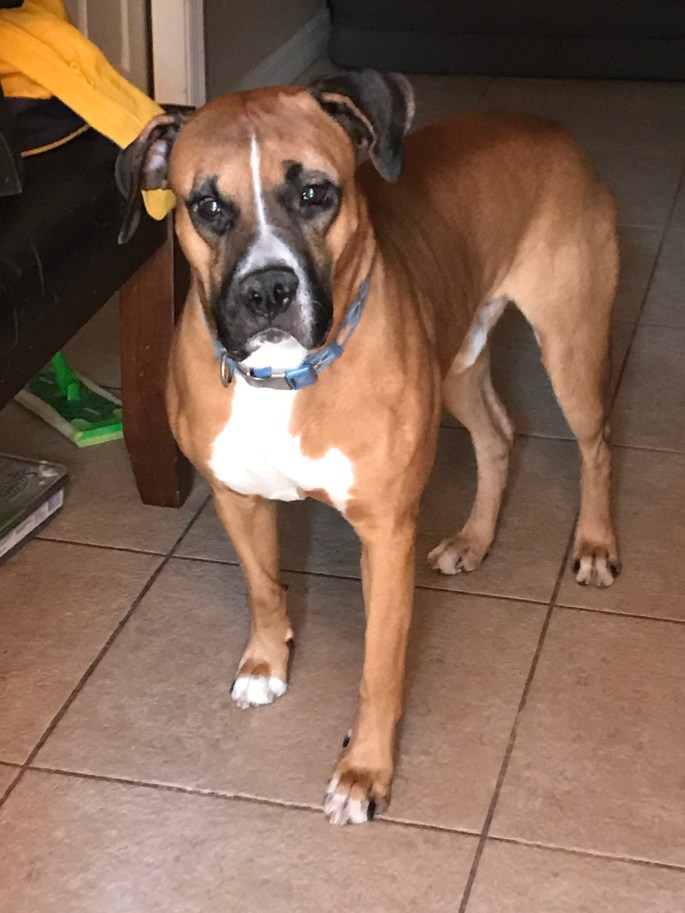
What I’m spending time with: My dog. Having a light month of work means more time at home, so he gets the benefit.
IMG_3424

Other things of interest to me this week:

  • Research on the Wendigo. I was captivated by the native Alaskan people and some of the tribal myths I heard. I did a little research on Alaskan culture and progressed some into Canada and the Pacific Northwest. Where, according to the legends of the Algonquian peoples, the Wendigo lived. A few links, if you’re interested: Backstory Radio; Extra Credits Animated; How Stuff Works.
  •  The painting style of Bob Ross. I do recall watching the show on PBS in the late 80s, early 90s. I was young, but that voice is hard to forget. You can also find a selection of episodes on Netflix or YouTube.
  • American Horror Story: 1984. More in the horror genre, and in the vein of the 80s, I watched the first episode of AHS 1984 this week. Truth be told, this is the first time I’ve been excited for a season of AHS since the first season. I haven’t even watched all the previous seasons. But resonates, as I grew up watching Friday the 13thNightmare on Elm StreetSleepaway Camp, etc. And actually, my cousin was the real horror-buff in the family. He had all the toys, the movies, and the spooky knowledge. The family even lived in this two-story cabin in the woods, and I’d go visit and watch scary movies, or Star Wars or Masters of the Universe, and we had a lot of fun. Anyway, this is a nice throwback – so far.

Drive

A song I’ve heard a thousand times if I’ve heard it once, Drive by Incubus played on the radio the other day. And for whatever reason, I really listened to it. Not, I could sing along with it easily enough, but I guess I hadn’t paid attention to the lyrics.

“Sometimes, I feel the fear of uncertainty stinging clear
And I can’t help but ask myself how much I’ll let the fear
Take the wheel and steer
It’s driven me before
And it seems to have a vague, haunting mass appeal
But lately I am beginning to find
That I should be the one behind the wheel
Whatever tomorrow brings
I’ll be there with open arms and open eyes
Whatever tomorrow brings
I’ll be there, I’ll be there”

It’s a question of how to live your life. Do you drive forward, making the decisions? Or do you just go with the crowd?

Feature_Standout_838x484_2018

Better to stand out…


Common sense

This blog could almost be called Common Sense. I’m not really giving novel ideas. Some may be in a form uniquely “me”, but there’s not much here that couldn’t be said by someone else.

I’m reminded of Thomas Paine, and his Common Sense.

“In the following pages I offer nothing more than simple facts, plain arguments, and common sense: and have no other preliminaries to settle with the reader, than that he will divest himself of prejudice and prepossession, and suffer his reason and his feelings to determine for themselves that he will put on, or rather that he will not put off, the true character of a man, and generously enlarge his views beyond the present day.”

Sometimes it’s all about getting the idea out. It may not be about who’s receiving the idea as much as it is the idea bubbling up and out of you until you cannot possibly contain it.

There are days when ideas seem to have completely left the building. There are days when one singular idea is all that you can see – blocking out every other item in such a way that you must concentrate solely on it.

And then there are the common sense ideas – ones that mean much to you and, you hope, at least one other person.

The awards show

I caught a bit of the Emmys on Sunday night. It’s been DVRed, but finding time to watch it this week will be tough. Easier instead to read the rundowns posted yesterday, either from NYTimes or Vulture, or from Twitter feeds and other social postings.

Two years ago, roughly at this time – following the Emmys, I posted on awards shows. It’s funny to think that again the Emmys prompts a post. After rereading my post from two years ago, I’m happy to say I’ve made some forays back into the entertainment business. Small steps.

But the awards show is an interesting animal. We’re watching the congratulations of people who likely enter our home at some point during the year, when otherwise we’d be watching the shows which they are on. The ratings were a record-low on Sunday, which may have something to do with the abundance of that other that we could be watching. We also are much more involved during the year with celebrity gossip thanks to social media.

So is there a place in the cultural consciousness for award shows? Should they even be televised? I’m sure that the question will continue being thought about among television executives trying to decide how best to sell to advertisers.