After…

I wrote this post several years ago, once again thinking of the tragic events of that time. Recalling it following last week’s tragedy, I thought I would post it again.


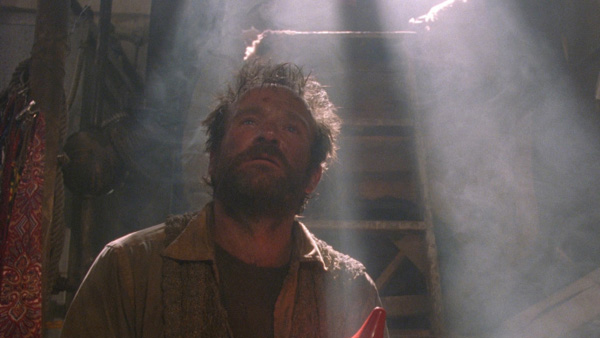
I was doing some cleaning last night, and I came across a memoriam for Robin Williams. Just over a month ago, Mr. Williams took his own life, and the subject of depression and mental illness took to the forefront of our collective conversations. How can we help? What can we do?

And what has been decided, I wonder?

The shootings in Ferguson and in other cities; schools where gunmen take others’ lives, or their own; domestic violence or sexual abuse; brutal murders in the Middle East – there is no shortage of tragedy that can keep our attention. But once our attention moves to the next “big thing”, what happens to those conversations?

Too often we sit idly by, talking about a tragic event until another occurs, and then we tune off. Sadly we are reminded because a similar event is coming, sooner rather than later. And when we stop talking about it, whose responsibility is it to keep the conversation alive?

I posit that it falls to the arts. It is the responsibility of artists, organizations and forms to provoke thought, and keep focus on events that the population as a whole might otherwise forget about. Sometimes that leads to protests. The NY Times article, “At Met’s Opening Night, Protesting a Production,” (9/22/14) illustrates how incendiary the arts can be. “Several hundred protesters gathered outside the Met before the performance of Mozart’s “Le Nozze di Figaro” for a noisy demonstration calling for the company to cancel its production of Johan Adams’s 1991 opera, “The Death of Klinghoffer,” which is to have its Met premiere next month.”

The titular Klinghoffer was a Jewish passenger aboard a cruise ship who was murdered by Palestinian hijackers. Considering the relationship between Israel and Palestine, it’s understandable that such a show could cause backlash. Former Gov. George E. Pataki called the production “the wrong show at the wrong time.”

Prior to the Met listing “The Death of Klinghoffer” in its season, how many Americans were familiar with the story? And if an opera, an art form which has been in declining attendance at least over the past few years, can spur conversations, isn’t that a good thing?

And there are many other cases. Thomas Cott curates a daily email, and today’s included the story of the Met, as well as other sensitive issues. (Read it here). When you’re dealing with hot-button issues, someone is going to protest. But if you let the controversies silence the arts, and the conversations themselves stop happening, eventually something tragic is going to happen again.

Vegas

It’s not funny. It’s not a political statement. It’s not a platform, and it’s not an issue of rights.

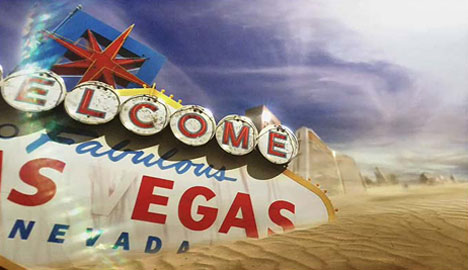
It’s 59 people dead. It’s 59 lives cut short because of one man with a gun. With a lot of guns.

There are so many words, in so many languages, yet nothing even begins to scratch the surface of what has happened. What these losses feel like, and what those families must be going through.

When will it finally be enough? When will the straw break the camel’s back, and finally something will be done?

I join a mourning nation once again for losses that could have been prevented.

The Natural Imperative

How are we programmed to act?

If one had never seen a murder, heard of a murder, knew of the concept of murder – could that person then commit a murder?

If we were to follow our true spiritual instincts, the yearnings we have, where would it lead us?

Some would inevitably be killers. Some would be abusive. But, I wonder, is it a natural imperative, or a product of upbringing? Nature vs. nurture.

What if, for instance, everyone made the effort to treat children, all children, like their own? All children, regardless of race, creed, nationality, sexuality, intelligence, emotional deficiencies, behavioral problems, disabilities. Imagine what that would do for the children, and likewise what it would do to all who interacted with those children.

Wouldn’t children grow up to respect the older generations? Wouldn’t older generations respect a little more?

Yet it doesn’t shine a light on what the natural imperative is. What’s engrained in our biology, and what’s programmed into us through teaching and upbringing.

What is our natural system, in the absence of power struggles and fear?

It’s something I’ve been thinking about, and will continue to think about.

Purpose, it’s that little flame…

We’re here to learn, and these lessons are predetermined. It’s up to us to work through the past karmic debt we carry. We are all connected, aspects of an eternal force, the Godhead, Universe, or Source. We carry with us the possibility for understanding and love.

The meaning of life is to experience. It’s the only rational purpose I can assign to the mystery of it all. Why we suffer, why we grieve, why we continue to love and give of ourselves. It’s a spiritual existence having a temporary physical one.

In that interconnectedness, we must understand that what we do to others is manifest in what will happen to us. Karma. The golden rule. These are the elements of all faiths that show us that behaving well, caring for each other, is a righteous path.

The belief that power over others will somehow fulfill us causes us to seek out status. Financial gains, palatial estates, the ability to hire and fire as we see fit. An ego-driven force that tarnishes our spiritual efforts. 

We are born with a pervasive want, or need, driving us towards some goal. As children, I believe, we have a better grasp of who we are and our place in the Universe. It’s as we age, and become educated, that the neuroses begin to develop. What if we’re not good enough? What if we don’t succeed?

Yet, if happiness can be found in a job well done, and a life well lived, than the other trappings and accoutrement are superfluous. 

When will the revolution revolve?

It’s scary to live today. There’s a resistance to change, and that resistance is showing up in violent ways. Yet, why are we now so change adverse? The industrial revolution was nearly three hundred years ago. Since that time, it’s been non-stop change. The changes that branched out from that revolution are: the industrial mindset and the alternative mindset.

In essence, what you have us the established – the status quo. And then you have the alternative. Thinkers, creatives, revolutionaries, heretics, those that come along and bring the most disruptive tools they can: ideas. And once an idea is hatched, and if it firmly takes hold, it becomes the new status quo. Perhaps the idea originators are satisfied with that. Perhaps they stop generating original ideas. But someone won’t, that much is certain. Someone won’t settle. Someone will not abide the status quo. For every status quo, there is someone who has an alternative idea.

Generally, and I’d argue that it’s a universal truism, though I’m open to the fact that it may not be, that looking to adhere to a past status quo, once it has been replaced, will not bring with it any positive outcome. Adherents to past systems are often the most dangerous, and not in the form of ideation. Rather, they cling unflinchingly to a system already shown to be obsolete. I’m thinking of course of racism, and the violence and rhetoric of the past week.

Clinging to past perceptions and prejudices is no way to inhabit a current moment. Even with what the status quo is now, it is a time of unrest. Movements are springing up, the products of ideas, with the hopes of unifying. Detractors as well, both with the desire to push ahead, and forge new ground, or with the hope to reinstate old patterns – those former glories.

Occasionally it’s hard to tell the difference. Good salesmen will pitch you what seems like an idea – maybe even a good one. But these flim-flam men and women are just pitching rehashed examples of obsolete former glories. It’s not new. It hasn’t been new for some time.

We understand more about our deficiencies when we’re able to look back. We know that black, white, brown and yellow are equals, not subject to class division, segregation or subjugation. We know that women and men are equals and deserve equitable pay and work opportunities. We know that diversity creates more robust team dynamics, leading to better ideas, and that exposure to arts is as important to developing a young brain as is learning the fundamentals of reading, writing, math and science. We know all these things, and yet our application of this knowledge still lacks universal acceptance.

Old ways are hard to break. Status quo is the norm, and that gets easily hard-wired. Easier to stick to the path than forge a new one. Thankfully, there have always been those uncomfortable with the status quo. And we now live in a time when it’s easier than ever before to forge new territory.

“The new leverage available to everyone means that the status quo is more threatened than ever, and each employee now has the responsibility to change the rules before someone else does. This isn’t about working your way up to the top, or following the rules, and then starting down the path of changing your world. Instead, these innovations are examples of leadership. About one heretic, someone with a vision, who understood the leverage available, who went ahead and changed things.”

-Seth Godin, Tribes

And after all that, I can’t help think of that last speech in The American President. If you haven’t seen it, give it a watch.

My other things: theatre

Last week, I wrote about why I write. But there are a number of things that interest me, which is likely why I read so much. As I work on building my WordPress site into something that fully represents me, I wanted to lay out a few things that represent me.

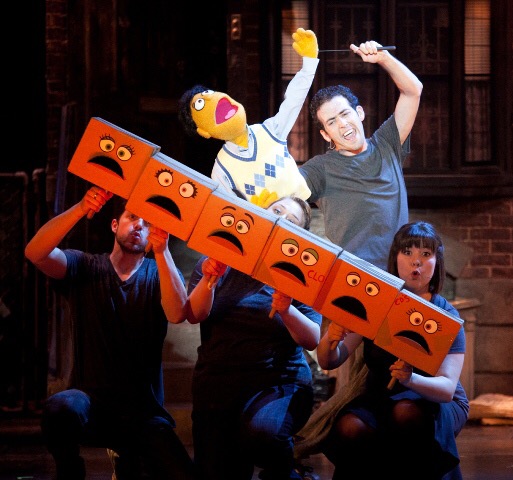
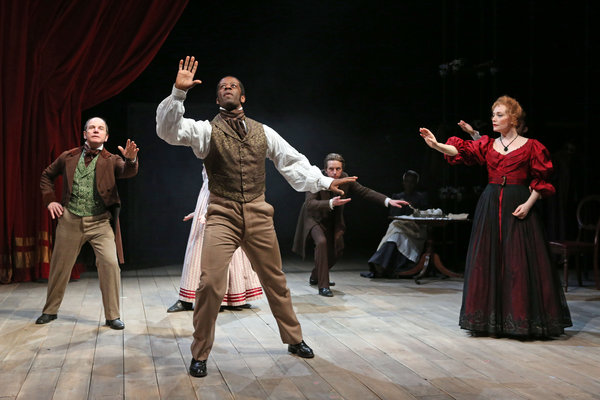
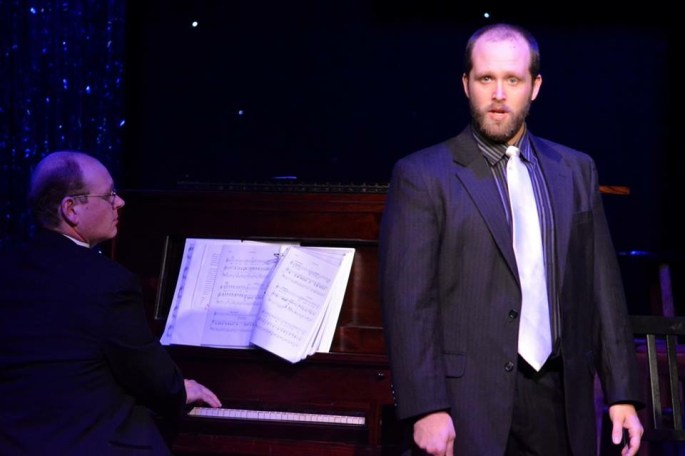
For instance, I’ve been involved in theatre for over ten years now. I have two very clear memories from when I was a child, though I don’t remember exactly when these were. One was a show I was in.

I guess I was always in choirs, because I still sing today. Usually one or two days of practice every week, as well as singing on Sunday.

Anyway, in grade school (maybe first or second grade), I was in a production. I don’t know what it was, or what it was about. I just remember I had to be on stage shirtless. My little butterball self. I was some sort of aboriginal, or Pacific Islander. I wore a lei. (I’m very white, by the way. Perhaps at the time I had a tan.)

There were three of us, shirtless children on stage. The fact that I remember it even now should be some kind of indicator. As if that wouldn’t be scarring enough to a young psyche.

Then there’s the first show I remember seeing. It was when my dad was courting my stepmother, and we all went to see Grease, live on stage at a community theatre. Well, I walked out of that building saying, “What a waste of time. I would never sit through something live on stage again.”

It’s been over a hundred productions later of my own, as well as countless shows I’ve seen or sat in on for their rehearsals. I guess I can safely say: “Boy, was I wrong.”

IMG_2832It’s a joy for me. I love theatre, performing, seeing it, working on it. For over ten years now I’ve been goofing around, on stage. It’s really a wonderful thing.
 

Call me nostalgic

We’re reducing the tactile sensations of our world to nothing more than keyboard and screen interactions. Consider:

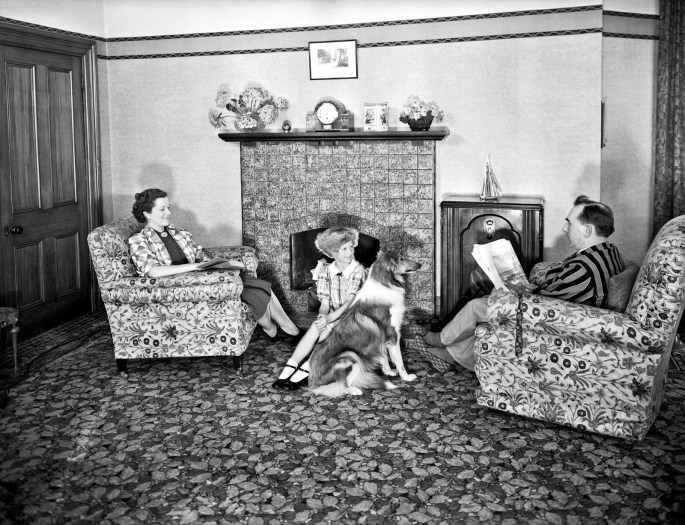
Music early on was heavy; weighty. You picked up the albums and loaded them into gramophones, into record players. You lowered a needle. You would wipe the needle down, and the record off, lest you get the bumps and whine of interference. Perhaps you could listen for thirty minutes, then it was either flip to the B side, or repeat Side A. Then came the cassette, with it’s unique little flip-case. Crack, pop. Crack, pop. Unique sounds and feelings of taking a tape out, inserting it into a tape deck. 

CDs digitized the whole system, and suddenly sound quality changed drastically. Still, you had these CD cases, or maybe you put them in sleeves. You could bring a whole disocragphy with you, if you were so inclined. And then it went further digital with the advent of the digital music player, and multiple discographies were available in something the size of a cassette. 

Similarly books, whose only transitions have been to audio, and then to digital. It seems a bit harder to invent new ways to read rather than listen to music. 

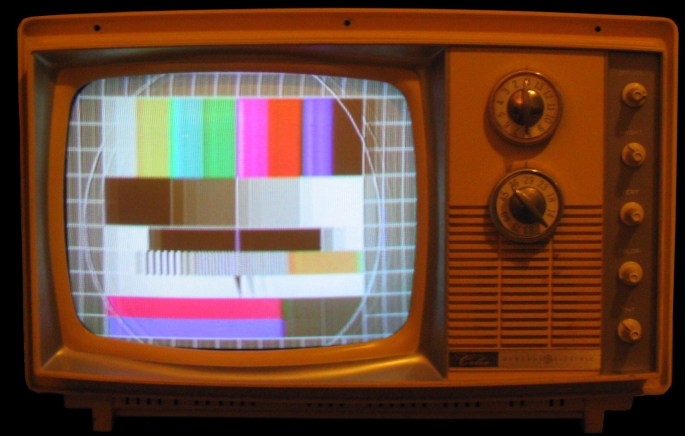
Video also is all stored on the web now, and is available to watch or download at the click of the button. What started as the tactile sensation of adjusting rabbit ear antennae so that the signal would come in clear, then became inserting beta or VHS; laser disc; DVD; HD-DVD and Blu-Ray. Now streaming. 

I think that’s why there’s a return to older sensibilities. Record players becoming en vogue again. Letter writing and stationary. Long has it been said that digital books would kill the print copy, yet even booksellers seem to be feeling the resurgence. We are beings that like touching things, and when too much exists in cyberspace, we just don’t know what to do with our idle hands. 

9P(R)

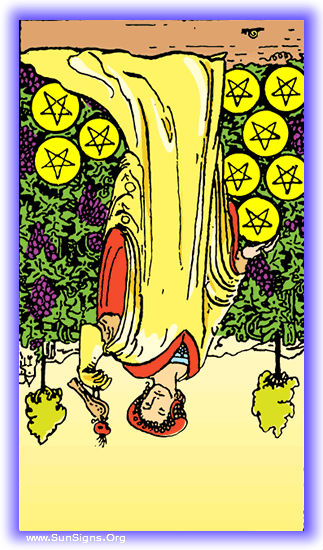
My shorthand for tarot readings, Nine of Pentacles Reversed. I had a rough day at work, and decided it was time to move on; time to leave there and find a new job. I wanted to ask the Universe what today taught me. This was the card I drew.

“This card in reverse may be telling you that something you are spending a lot of time on will not yield financial or personal gain. You may be wasting effort. Consider if it’s time to throw in the towel on something that is not giving you the results you had hoped for.”

Thank you Universe.

I’m listening to Dvorak’s New World Symphony right now, to relax. I picked up a used album at a library sale a few weeks back. I’ve been wearing that vinyl down. There’s something supremely reassuring about the notes of No. 9 in E Minor, Op. 95.

I had listened to a Chamber Ensemble in Prague, and the Second Movement of this symphony was played. It’s one of my all time favorites.

The title of this blog post comes courtesy of watching Shut Eye, on Hulu. I just got around to seeing it, and really enjoyed. Each episode was titled after a Tarot card, and was relevant to the plot.

The overall thoughts on my mind are new beginnings. Learning that life has a path, a plan. To quote Tosha Silver, “Let what wants to come, come. Let what wants to go, go.”

Amen!

Find your true North

Most of my life now is lived in the phrase,”Recently I’ve…” As in, “Recently I’ve been reading…”; or, “Recently I’ve started a practice of…” Very little in my life as it is can date back to before a year and a half ago. I’d say it would be a positive thing (living in the moment, and all that) but recently I’ve noticed that much of what made me who I was has been lost in the shuffle as well.

Like most things, I sat down thinking I’d be writing about the book that recently I’ve started reading, Designing Your Life by Bill Burnett & Dave Evans. I had heard an interview with them on NPR last year and made a mental note to read the book at some point. 

Thinking of the design problems of life (my life in particular) led me to think of another book that recently I’ve started reading: Wanderlust, by Jeff Krasno. This was a companion piece to the fact that recently I’ve started a practice of yoga. Which, in the full circle way my mind works, brought me back to the fact that the past eighteen months has been a whirlwind and I still have no clue what I’m doing. 

Then I thought, that may not be a bad thing. We got lost sometimes. Lose our way. Think we’re following a path only to look down and see that we’re the only set of footprints to be found. But every path had to be discovered that first time. Not every mistake leads to innovation, but every innovation began with a mistake. 

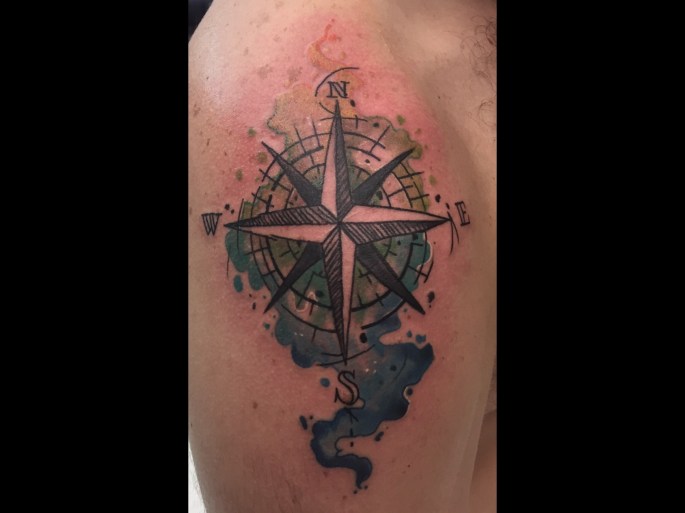
The cover of Wanderlust invites the reader to “find your true north”. I set the picture of my first tattoo as header because I’ve been searching for true North for longer than eighteen months. Maybe that’s the one constant throughout my whole weird and wonderful existence. Who knows if we ever reach it? But I believe that we can keep moving the needle in that direction.

Namaste.  

Turn on, tune in, drop out

Per Timothy Leary: “Like every great religion of the past we seek to find the divinity within and to express this revelation in a life of glorification and the worship of God. These ancient goals we define in the metaphor of the present — turn on, tune in, drop out.”

Now we face an era of turning on the tv, the device, the screen; tuning in to what’s happening there; dropping out of the reality that is around us – family, friends, life as it was. 

I want to take this space and talk of escapism, the exit we experience when we retreat into our screens (phones, televisions, etc). We’re avoiding something, whatever our deficit is in our life, when all we do is escape. Sure, you can hear the talking heads deriding a generation spent staring into their phones, but they’ve been conditioned that way. There needs to be a conscientious return to old practices (such as spontaneous conversation or disconnected, i.e. no phone, meals) otherwise it will not happen. No one is going to fix the problems for us, other than ourselves.

For Leary, “Turn on meant go within to activate your neural and genetic equipment. Become sensitive to the many and various levels of consciousness and the specific triggers that engage them. Drugs were one way to accomplish this end. 

“Tune in” meant interact harmoniously with the world around you – externalize, materialize, express your new internal perspectives. 

“Drop out” suggested an active, selective, graceful process of detachment from involuntary or unconscious commitments. “Drop Out” meant self-reliance, a discovery of one’s singularity, a commitment to mobility, choice, and change. Unhappily my explanations of this sequence of personal development were often misinterpreted to mean “Get stoned and abandon all constructive activity”.