Delinquent Reading Lists

Books Bought:

  • The 4-Hour Workweek – Timothy Ferriss
  • The Subtle Art of Not Giving a F*ck – Mark Manson
  • Awaken The Giant Within  – Tony Robbins
  • Winter – Karl Ove Knausgaard
  • Noir – Christopher Moore
  • The Buddhism of Tibet: Or, Lamaism, with Its Mystic Cults, Symbolism and Mythology, and in Its Relation to Indian Buddhism – L.A. Waddell
  • Daring Greatly – Brene Brown
  • Go Set a Watchman – Harper Lee
  • The Collected Letters of Alan Watts – Edited by Joan Watts & Anne Watts
  • The Blumhouse Book of Nightmares: The Haunted City – Edited by Jason Blum
  • Bushcraft 101: A Field Guide to the Art of Wilderness Survival – Dave Canterbury
  • The Han Solo Adventures (Han Solo at Stars’ End / Han Solo’s Revenge / Han Solo and the Lost Legacy) – Brian Daley
  • Letters from a Stoic – Seneca
  • Zen: The Supreme Experience (The Newly Discovered Scripts – Alan Watts; Edited by Mark Watts
  • Beat Spirit: The Way of the Beat Writers as a Living Experience – Mel Ash
  • Unlimited Power – Anthony Robbins
  • The Haunted Mansion: Imagineering a Disney Classic – Jason Surrell

Books Read:

  • Later Essays – Susan Sontag (unfinished)
  • The 4-Hour Workweek – Timothy Ferriss
  • Oklahoma! – Richard Rogers & Oscar Hammerstein
  • The Subtle Art of Not Giving a F*ck – Mark Manson (unfinished)
  • The Collected Letters of Alan Watts – Edited by Joan Watts & Anne Watts (unfinished)
  • Awaken The Giant Within  – Tony Robbins
  • Homeland – R.A. Salvatore (unfinished)
  • Magic The Gathering: Arena – William R. Forstchen
  • The Way of the Superior Man – David Deida (unfinished)
  • Death Warmed Over – Kevin J. Anderson
  • Blame – Jeff Abbott
  • The Last Minute – Jeff Abbott
  • Braving the Wilderness – Brene Brown
  • Small Favor – Jim Butcher
  • Six of Crows – Leigh Bardugo (unfinished)
  • The 80/20 Principle: The Secret of Achieving More with Less – Richard Koch (unfinished)
  • You Are a Badass – Jen Sincero (unfinished)

Well, here is basically March through June of this year. I’m hoping this is comprehensive, but I know I picked up a few other books here and there. March was a slow month for reading. I had been thinking about the new job, a show opening, etc., it seemed like I just had a lot on my plate. April didn’t seem to go much better in that regard. May I did a little more reading, even revisiting some books I had read previously.

To start, I can’t say enough positive things about 4-Hour Workweek. It was both an enjoyable read as well as highly motivational. Something about the freedom to travel while working has led me to revamping my spending habits as well as my work habits.

The new job is mostly from my home office, though I take a lot of meetings. My plan is that after the first three months, the face-to-face meetings will be condensable into “office days”, where I can batch all my meetings into one or two days for the week. That will free up my time to make those travel arrangements.

I’ve even traded in the Prius for a Rav4, so that I can get a tow-along camper and hit some camp grounds.

That’s some of the effect the book had on me. I listened to the audio book and mostly it was on two business trips, Daytona to Naples and Back, that I was able to listen to it. I recommend getting the physical copy (in addition to the audio book, if need be) so that you can have access to the materials in it. I believe that they are all online at Tim.blog, along with his weekly podcast and other resources. Again, I highly recommend checking it out.

Fresh off the motivational bandwagon that is 4-Hour Workweek, I tried Subtle Art. I liked it, but I haven’t been able to finish it. This one speaks more to changing mindsets, and honestly, my mindset of not giving a f*ck is pretty well established. I’m able to let things go and move with the flow, and this book did not resonate with me as much. I will finish it though, and there are certainly some wonderful highlights in it.

And then I had to try a Tony Robbins book. I had never read anything by him, or listened to anything that was recorded, but I had heard about him for many years so I thought I would try it out. I got the audio book of Awaken the Giant.

I enjoyed it. This was a quick read, and had a lot to do with changing your mindset. But again, having been a convert to the mindset changing your reality, much of the content was not useful in an applicable way, but rather more informational. Found another Tony Robbins book in the library sale bin, so I picked up Unlimited Power. It’s in a stack right now to read, which I’ll get around to.

The rockiness of 2016 taught me how amazing the power of thought, intention and mindset could be. After such a heavy nonfiction motivational slant, I wanted to lean in to some lighter reads. Arena and Small Favor were both books I had read previously (Arena I first read 20 years ago, and have likely read it a half dozen times since). Both are about wizards, each facing great odds too balance the scales of good and evil. Quick reads, mind-easing in their straightforward approaches. I love them both.

I read a few other books in the Magic the Gathering series, tied in to the card game, but found Arena to by far be my favorite. I’ve actually read all the Harry Dresden books Butcher has written, and am eagerly awaiting the new novel. I probably saw the television show, which only lasted one season, but enjoyed it enough to entice my getting into the series.

Early on I had been delving into Susan Sontag’s essays, but it got pushed to the side when I discovered the letters of Alan Watts. As I’ve written before, I find the faith, culture, and language of Asian nations to be extremely interesting. Alan Watts devoted much of his life to understanding Zen Buddhism, and brought that understanding to Western audiences.

I’m only into the 1930s with his letters, reading about his concern for his parents back in England with the coming war, and his newborn daughter with her curiosities.

The idea of letter writing makes me think of how we use language – how when we email, or text, we’re not crafting the sentences as we used to do when letter writing. I believe that’s part of the reason the mailing of letters is gaining some popularity again. I prefer handwriting notes, and pen my journal pages every morning.

Watts’s letters are my before bed ritual, and I usually read three or four before putting the book down and going to sleep. (In my quest for better rhythms, turning lights off, etc, I’d been trying to figure out how best to read before bed. I just purchased a little clip light on sale, something made by French Bull. It’s cute, and seems to do the job.)

Audio books from the library for my daily commutes included 80/20 Principle, Braving the WildernessDeath Warmed OverThe Last MinuteBlame, and Six of Crows. I’ve read a few Abbot books, mostly about former-CIA special operative Sam Capra. I’ve read them out of order, though, and am still playing catch up. Last Minute is number three in the series. (Start with Adrenaline.)

Blame was an interesting one, a standalone about a young woman with amnesia, resulting from a car crash where her passenger, a boy about her age, died. Starting up two years after the crash, some weird things start to happen, making her question what happened the night of the crash.

I remained pretty riveted, waiting to see what was going to happen. A couple plot points that I may have disagreed with, but the characters were fleshed out and it was easy to follow, even when jumping through three separate timelines (pre-crash, immediately following the crash, and two years later).

Put in 80/20, listened for a disc, decided I needed more attention to it. I’m planning on picking it up again once I finish You Are a Badass. I enjoy Badass. There are many elements I recognize, partially from my self-help book exploration, and partially from my own journey over the past two-and-a-half years.

Six of Crows also was another non-starter for me. I think I need to read the other two books in the Grisha trilogy, then maybe I’ll revisit Crows. 

Then there was Brene Brown. Daring Greatly has been on my reading list for many years. I hadn’t picked up a copy. I checked out Braving the Wilderness, and gave it a listen. Holy shit. I remember listening, nodding my head yes, laughing. It’s great. She’s got a wonderful conversational tone, and some good insights. I also listened to her on Super Soul Saturdays with Oprah, both episodes. And bought Daring Greatly.

As you can see, I did some book shopping. I like getting books when life seems to be overwhelming, but I also like getting books on discount. So, used books and remaindered are my go-tos. Or the library. It’s like a book store, only free.

I think I’ll try and be a little more consistent with these lists, so that I’m not cramming four months into one post. Until next time!

Monthly Reading

February 2018

Books Bought:

  • The Emerging Mind: The Reith Lectures – Vilayanur Ramachandran
  • Get in Trouble: Stories – Kelly Link
  • A History of Japan – H.R.P. Mason & J.G. Cainer
  • Magic Words: The Extraordinary Life of Alan Moore – Lance Parkin

Books Read:

  • Later Essays – Susan Sontag (unfinished)
  • Head Strong – Dave Asprey (unfinished)
  • On Tyranny: Twenty Lessons from the Twentieth Century – Timothy Snyder
  • Astrophysics for People in a Hurry – Neil DeGrasse Tyson
  • American Spirit: Who We Are and What We Stand For – David McCullough
  • Origin – Dan Brown

“Working 9 to 5, what a way to make a livin’ barely gettin’ by.” But, I’m usually at work at 8, which means leaving the house by 7. Hopefully I get home by 6 in the evening. Then rehearsals typically start at 7, though when the show started tech week on the 19th last month we were expected at 6:30. That means for the first couple of weeks of February, I didn’t get much reading time.

Tried to make up for it though! Went through a lot of essays this month, purely by accident. Had picked up the Sontag in January purely by happenstance. Have only read three essays in the book, the first three from Under the Sign of Saturn, originally published in 1980 and collected in Later Essays. The three are “On Paul Goodman”, “Approaching Artaud”, & “Fascinating Fascism”.

A week or so ago, I wrote in my journal: “…her seeming mastery of language and the written word is staggering. As I read (or try to read) her essays, the sheer polysyllabic content is overwhelming. I’ve never seen [contemporary] writing (that I can recall) of such eloquence and yet so confusing.”

I say this with respect and admiration, for as many times as I may have to reread a sentence, I know I’m getting something from it. I’m thinking. I need to read her with a notebook nearby, because ideas flow from her writings and I can’t help but grab them and get them onto paper.

Interestingly enough I purchased a secondhand copy of Antonin Artaud’s The Theater and its Double (still unread) several years ago, and while reading Sontag’s critique of Artaud I think I’ve decided to leave it unread, at least for the time being.

So as I delve into Sontag, I seem to be neglecting the prose that I’ve been accumulating (Resurrection BluesTo Kill a MockingbirdA Darker Shade of Magic). The only fiction I managed to consume this month was Dan Brown’s Origin, a novel of the ever-vigilant symbologist Robert Langdon. (Cue Willem Dafoe’s, “Symbolism, symbolism…”)

The book had its triteness, certainly. But parts of it kept me guessing, and I love the research that goes into Brown’s novels. Also, a part of the story takes place in Budapest, which I visited last year for the first time, so it was enjoyable to hear about things that I recall seeing. (Just watched Red Sparrow as well, and it too had scenes in Budapest. I did very much like my time in Hungary.)

The technological futurism and physics-based universal beginnings had a through-line in my reading to Neil DeGrasse Tyson’s Astrophysics. This man is highly informative, fun, and I greatly enjoyed reading this book. My favorite part was in his describing of English astronomer William Herschel, who in 1781 discovered the planet Uranus. Herschel wanted to measure the temperature of light, and using a prism split a sunbeam into its component parts – red, orange, yellow, green, blue, violet. (Tyson: “Yes, the colors do indeed spell Roy G. Biv.”)

Placing a thermometer in each strand of colored light, and one for control just adjacent to the red, which he assumed would be room temperature, he took his readings. Yet, the “control” thermometer ended up rising higher than the red light. Again, Tyson:

“Herschel wrote:

‘[I] conclude, that the full red falls still short of the maximum of heat; which perhaps lies even a little beyond visible refraction. In this case, radiant heat will at least partly, if not chiefly, consist, is I may be permitted the expression, of invisible light; that is to say, of rays coming from the sun, that have such a momentum as to be unfit for vision.’

Holy s#%t!”

I had the pleasure of the audio book the first time through, so hearing Tyson saying, “Holy shit!” was worth the listen alone. But even prior to that, knowing that in the 18th Century this astronomer discovered basically the farthest planet from us in our solar system was attention-grabbing. Tyson loves this material, and it comes through in how he writes it, and how he speaks about it. And it makes the reader just a little more interested in the science, I believe.

Two more books of essays, On Tyranny and American Spirit had to do with what it means to be American, ranging from the beginning of our Nation to today. Enthralling, overall. From McCullough I learned about the founding fathers. About the feud between Jefferson and Adams and how they reconciled (I believe aided by Benjamin Rush), and that they both died on July 4th, 1826. Adams’s last words were, “Jefferson still survives,” yet Jefferson had just five hours preceding Adams.

Some of McCullough’s speeches, collected in American Voices, reverberate with hope, and love for the history of this Country. He shows great admiration for our founding fathers, and in reading his works I’ve found a renewed interest in the early American experiment (also owing to the successful Broadway hit Hamilton.) McCullough writes of history as Tyson writes of physics: with unbridled affection.

For all the optimism that Voices espouses, On Tyranny presents a more pragmatic and cautionary view of the state of our Nation. Snyder writes in his prologue:

“History does not repeat, but it does instruct. As the Founding Fathers debated our Constitution, they took instruction from the history they knew. Concerned that the democratic republic they envisioned would collapse, they contemplated the descent of ancient democracies and republics into oligarchies and empire… In founding a democratic republic upon law and establishing a system of checks and balances, the Founding Fathers sought to avoid the evil that they, like the ancient philosophers, called tyranny.”

What follows are twenty warnings, nineteen of which are accompanied by short essay, cautioning the reader that much of the divisiveness of the past two years looks frighteningly similar to the rise of fascism in Europe during the thirties and forties. The author, Levin Professor of History at Yale University Timothy Snyder, makes convincing arguments, and uses case study and rhetoric to show the potential danger. Yet he advises that the citizenry can make a difference, not to rely on populist sentiment, and be careful  as to avoid complacency.

Some might argue that On Tyranny is a thinly veiled criticism of President Trump and the way in which he ascended to the presidency. My response would be, we need more criticism, lest democracy itself die.

In my *cough* *cough* free time, I listen to a lot of podcasts. Some of my favorites are Marketplace, Echoes, On Being, and Bulletproof Radio. Occasionally I will drink my morning coffee bulletproof, meaning with butter and MCT oil (or coconut oil). Having been diagnosed with RA back in 2012, I recently decided that I wanted to see how far I could hack my system.

I’ve barely gotten into chapter one on Head Strong, so no progress to report yet.

The Alan Moore bio and Kelly Link book were remanded purchases. Any time I walk by those bins, I find myself fishing for at least ten minutes through the titles that they have available. A History of Japan was a purchase prompted by my brother asking me a simple question about imperial history, and I couldn’t recall. For years I was hypnotized by Japanese culture and history. I picked it up for reference, and have been begun Japanese language lessons to refresh my dismal vocabulary.

Emerging Mind is part of a larger collection of books on thought I’m acquiring, for something I intend to write later this year. One part philosophy, one part science. For the rest of March, I think I’m focusing on Sontag.

Until next time…

Reading for that last quarter…

October-December 2017

Books Bought:

  • Autumn – Karl Ove Knausgaard
  • The Art of Asking – Amanda Palmer
  • Through the Shadowlands – Julie Rehmeyer
  • Reincarnation Blues – Michael Poore
  • Fantasy: The Best of the Year 2008 – Rich Horton (Editor)
  • The Marching Dead – Lee Battersby
  • Freedom – Jonathan Franzen

(These are the books that I know I bought. There were others. Yes, there were indeed others. But, enough of that for now,)

Books Read:

  • Autumn – Karl Ove Knausgaard (unfinished)
  • Once Upon a Mattress – Book by Jay Thompson, Marshall Barer and Dean Fuller; Music by Mary Rodgers & Lyrics by Marshall Barer
  • Thanks for the Trouble – Tommy Wallach
  • Writer, Sailor, Soldier, Spy – Nicholas Reynolds (unfinished)
  • Infinity: 1 (TPB)- Hickman, Spencer & Latour (unfinished)
  • It – Stephen King
  • Scott Pilgrim Vol 1: Scott Pilgrim’s Precious Little Life – Bryan Lee O’Malley

It’s been a while since I’ve posted a reading list. My writing over the last few months has been sporadic at best. I’ve addressed that in the last few entries, and will continue to try and resume my regular writing habits. Until then…

Finally I finished It. It was a worthy opponent, and took some considerable time to make it all the way through. But vanquish that tome I did, and I’m happy to say that I was typically engrossed in the work. I can vividly remember watching the 90s movie with Tim Curry (among other notables), and did greatly enjoy the film adaptation last year. So in reading the source material, I could appreciate the references that I got and marvel at what was not included in either production.

Admittedly, I hadn’t read much by King over the years. DesperationSalem’s Lot, and Cycle of the Werewolf that I know of. So adding It to my small list of completed titles was rewarding. The only other actual book that I finished in these last three months was Thanks for the Trouble. It was a library selection audio book, and I wanted something to listen to as I was driving back and forth to Georgia.

It kept me entertained, and guessing. It turned out to be a young adult’s book, but I’ve enjoyed many of those over the years. t held a common theme that I find in many books: that is, two people unique in their own ways will somehow discover each other. It had that theme as well, only two became seven.

I did some shopping during this time, and the books listed here are incomplete. I know I made purchases at Barnes & Noble, Amazon, and, unapologetically, I whored my way through the remainder bins at stores. Fantasy, Marching Dead, and Freedom were all picked up for pennies on the dollar of the sticker price. Art of Asking was at a discount as well.

Let me move on to Autumn, because dear lord. When I first learned of Ove Knausgaard, it was shortly after his autobiography was published. He was doing an interview on NPR, and they were speaking of the scope of his work.

Then I heard about his new collection coming out, basically essays on everyday topics. One topic, one essay. Some examples are apples, twilight, plastic bags, and piss. The hook that got me was his reading of “Thermos Flasks”, of which I exert here:

The steel Thermos looks like it was designed to be fired like a projectile and is not dissimilar in shape to an artillery shell or a shell casing. It is very beautiful.

Something about both the flow of his words and his simplistic straight-forward style grabbed me and couldn’t let me go. So I grabbed a copy of Autumn, but made little headway.

Once Upon a Mattress, a musical that I was in rehearsals for, was unexpectedly cancelled. I did read the script, however, so I add that into my count for the three months. I’d add Evita, a show I’m currently rehearsing, however it is nearly all singing, and I haven’t read through the lyrics.

There were some graphic novels, Marvel’s Infinity and One Press’s Scott Pilgrim. I had recently rewatched Scott Pilgrim vs. the World, and decided to check out the material. In Volume 1, the stylization and content was pretty much the same.

Additionally, I’d pick up a book, read a bit, then stop. Those last three months were just hectic enough that I couldn’t quite make headway. The early part of 2018 has already shown an improvement, but more on that next month.

Tried to read in September

September 2017

Books Bought:

  • Object Lessons: The Paris Review presents ‘The Art of the Short Story’ – Picador (Misc. Authors)
  • 50 Great Short Stories – Bantam Classics (Misc. Authors)
  • Paperbacks from Hell: The Twisted History of ’70s and ’80s Horror Fiction – Grady Hendrix
  • How Proust Can Change Your Life – Alain de Botton
  • At the Existentialist Cafe: Freedom, Being, and Apricot Cocktails – Sarah Bakewell
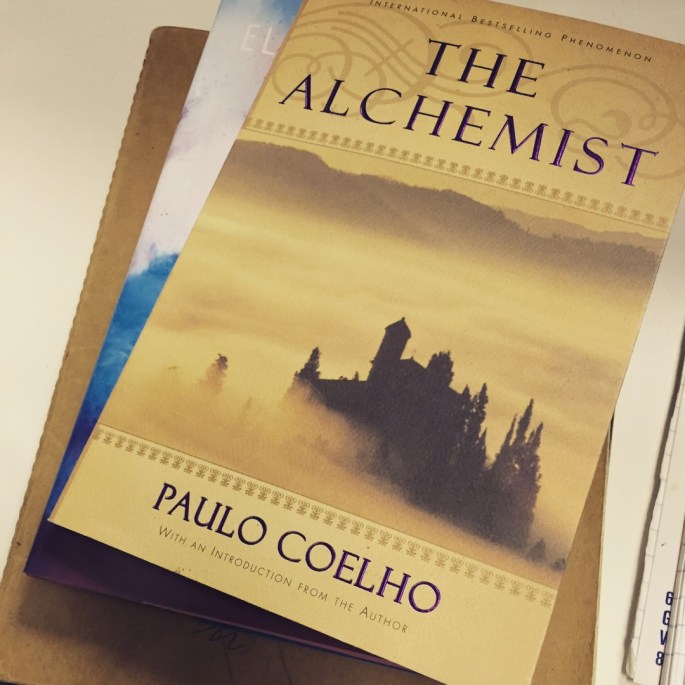
  • The Alchemist – Paulo Coelho
  • Black Wings of Cthulhu 2 – Titan Books (Misc. Authors)

Books Read:

  • Luke Skywalker Can’t Read: And Other Geeky Truths – Ryan Britt
  • Meddling Kids – Edgar Cantero
  • The Alchemist – Paolo Coehlo
  • Paperbacks from Hell: The Twisted History of ’70s and ’80s Horror Fiction – Grady Hendrix (unfinished)
  • We Gon’ Be Alright – (unfinished)
  • The Museum of Extraordinary Things – Alice Hoffman (unfinished)
  • It – Stephen King (unfinished)

Well, Hurricane Irma came and went. I’m still here, if just a bit soggy. The power was out for a few days, so with no power and no work, I sat down with Cantero’s Meddling Kids. I thoroughly enjoyed it, being a throwback to the Scooby-Doo era of my childhood, as well as dark mystery/fantasy with Cthulhu undertones. It’s getting even closer to Halloween, and I’m getting excited.

Cantero tackles issues unique from the animated source material, such as suicide, gender issues, LGBT relationships and mental disorders. He does so deftly and humorously, and thus it’s less likely to be seen as accurate representations of any of those things. But I finished it in just over twenty-four hours, sometimes by candle- or flashlight, and I was happy to be reading it.

It, on the other hand, I barely got into this month. I did see the film, which is a horse of a different color, and boy did I enjoy it. My date for the evening likewise enjoyed it, though she screamed at just about every scare, which made my viewing experience even more memorable, and somewhat interactive.

I recall being a young boy, and my sister was babysitting me. She had rented the original It adaptation, with Tim Curry, and while watching it, we got to the point when Stan had killed himself. Then the power went out in the house. I’m pretty sure that it was jarring enough for me to have a heart attack, even at twelve. The novel just didn’t get much time from me September, so I’ll try to rectify it this coming month.

I’ll be working in Georgia much of the month, so I’m hoping for ample time away from other responsibilities, with which I’ll devote to reading.

Another unfinished attempt, The Museum of Extraordinary Things by Alice Hoffman, was a book that I really tried to get into. I really, really did. The main characters were well-formed and the story was well woven, but it just left me in engaged. I gave it nearly half the book to determine that I was not going to maintain a relationship with these characters, so I sadly put it down. I may try again at some future time.

Unfinished number three – We Gon’ Be Alright. This short collection of essays on the race crisis in America made some strong points that resonated, but it echoes the climate of the Nation so vividly that it was difficult to digest. I intend to finish it this month.

And Paperbacks from Hell! What a lovely little collection from Grady Hendrix, one book showcasing dozens of horror novels from the 70s, 80s, and 90s. I’m only through the introduction, but even some of the displayed cover art has made me laugh and cringe.

With Paulo Coelho’s short novel, I reentered a world that I had become familiar with early last year. This was a book loaned to me as I struggled through spiritual and emotional turmoil that left me questioning many of my decisions in life. Very unlike the protagonist of the book, a shepherd named Santiago who was very content with life the way he was living it. Through his dreams he discovered a Personal Legend that then sent him across the desert to discover his treasure.

This gave me much to consider when I first read it, and I wanted to see if it held up now that I am ostensibly out of that dark night. And it does. The book is hopeful, and anyone feeling lost at any point in life could give it a read. It may or may not resonate, but it’s comforting to know that books can be both inspirational and accessible.

Something entirely different is the collection of essays: Luke Skywalker Can’t Read. I laughed, I had childhood beliefs called into question, and I learned a little bit more about nerd fandom than I had known that I needed. Britt is an author, film critic, and science-fi aficionado, and he took to task Star WarsBack to the Future, and various monster movies, among others.

I think my book purchases this month reflect my newfound interest in short form storytelling and essays. Botton, Hendrix, and the collected short stories are examples of short form, and I’ve been exploring them both as consumer and as writer.

The month didn’t provide me as much time as I would have liked to read. A theatrical production, a hurricane, and commuting to Georgia for work were all time-draining, and this coming month doesn’t look much clearer. But, I’ll certainly try.

Call me nostalgic

We’re reducing the tactile sensations of our world to nothing more than keyboard and screen interactions. Consider:

Music early on was heavy; weighty. You picked up the albums and loaded them into gramophones, into record players. You lowered a needle. You would wipe the needle down, and the record off, lest you get the bumps and whine of interference. Perhaps you could listen for thirty minutes, then it was either flip to the B side, or repeat Side A. Then came the cassette, with it’s unique little flip-case. Crack, pop. Crack, pop. Unique sounds and feelings of taking a tape out, inserting it into a tape deck. 

CDs digitized the whole system, and suddenly sound quality changed drastically. Still, you had these CD cases, or maybe you put them in sleeves. You could bring a whole disocragphy with you, if you were so inclined. And then it went further digital with the advent of the digital music player, and multiple discographies were available in something the size of a cassette. 

Similarly books, whose only transitions have been to audio, and then to digital. It seems a bit harder to invent new ways to read rather than listen to music. 

Video also is all stored on the web now, and is available to watch or download at the click of the button. What started as the tactile sensation of adjusting rabbit ear antennae so that the signal would come in clear, then became inserting beta or VHS; laser disc; DVD; HD-DVD and Blu-Ray. Now streaming. 

I think that’s why there’s a return to older sensibilities. Record players becoming en vogue again. Letter writing and stationary. Long has it been said that digital books would kill the print copy, yet even booksellers seem to be feeling the resurgence. We are beings that like touching things, and when too much exists in cyberspace, we just don’t know what to do with our idle hands. 

On the reading bug

Started reading a book (the intro really, plus a few entries) that I had purchased a few weeks ago. Nick Hornby’s Ten Years in the Tub: A decade soaking in great books. First, I love books. The idea of what Hornby did for The Believer, where each month he would just talk about the books he read and ones he bought, was entirely captivating to me.

So, this being the first entry of the month, I’d like to take a cue from Nick Hornby:

June 2017

Books Bought:

  • The Republic – Plato
  • Atlantis: The Eighth Continent – Charles Berlitz
  • Designing Your Life – Bill Burnett & Dave Evans
  • Conversational Spanish in 20 Lessons – Cortina Method
  • Light on Yoga – B.K.S. Iyengar
  • The War of Art – Steven Pressfield
  • Thinking: The New Art of Decision-Making  – Edited by John Brockman

Books Read:

  • Do the Work! – Steven Pressfield
  • Dirk Gently’s Holistic Detective Agency – Douglas Adams
  • Outrageous Openness – Tosha Silver
  • The Perdition Score – Richard Kadrey
  • Sept. ’03 – Jan. ’04 of Ten Years in the Tub – Nick Hornby
  • Worth Dying For – Lee Child
  • The War of Art – Steven Pressfield (started)

What can I tell you about the books I’ve read? Or bought? Why do we do this? I found a beautiful passage in the intro to Ten Years in the Tub, written by Jess Walter:

“That the books we buy are almost as important as those  we read. From the beginning there were always two columns [referring to Hornby’s monthly article], Books Bought and Books Read. By my crude math, Nick spent somewhere around ten or fifteen grand on books he hasn’t even read. Besides showing that he did his part to support publishing during a tough economic period, this suggests something important about reading. Looking around my own obsessively crowded shelves, I see there are two categories of books I tend to keep: those I love and those I hope one day to read. If the books we read reflect the person we are, the books we hope to read might just be who we aspire to be. There is something profound in that.”

I checked out Do the Work! and Dirk Gently from the library. Both came precariously close to being returned unread, but something about each grabbed me and made me change course. The library and, by extension, book stores, are sort of a second home to me. And in this in-between period, where the old life I lived has fallen away and the new one is just breaking out of its cocoon, they function more as my first home than the place that houses my stuff.

Do the Work! walks us through the creative process, highlighting the role of resistance in creation. Now, I’m a big fan of Seth Godin. Have been since I first stumbled across The Icarus Deception, oh, three years ago. At that time I was creatively stifled, my professional and personal lives not working out the way that I had intended. He begged his readers to do the work, fight resistance, and ship! Yes! I can get on board with that.

Pressfield’s book does much the same, but not as effectively. I do feel inspired to do the work, yet I get stuck on syntax when he delves into his theory on the contradictory nature of the Universe’s role in Resistance/Assistance. I’ll likely come at this book again a year or two down the road, and see if I agree or disagree more with the sentiment. The War of Art has been on my reading list for a few years, so it was time to pull the trigger and buy it. I’m just starting it, and seeing the themes revisited from Do the Work!

Adams is always fun, and Dirk Gently’s was no exception. The thought and connectivity he puts into a book about interconnectivity gives enough laugh-out-loud moments that I found myself flying through it.

Atlantis and the course on Spanish weren’t bought, per se. Rather free books in a stack at the library. There’s a girl from Barcelona I wish I were better able to communicate with, though she speaks  English more fluidly than I do. Atlantis, eh. Always curious about the esoteric and metaphysical.

In The Perdition Score, I got to resist the character Sandman Slim, aka James Stark, as he moved up and down a supernatural Los Angeles, and back into Hell. I began reading Kadrey’s series last February, what is that, fourteen months ago? Since then, I’ve read eight and just committed to reading the ninth when I saw it in the bookstore. Perdition is probably the best of the series since Sandman Slim, but I’m a sucker for watching Stark get even when someone goes after his friends.

Another series that I just began last year but have managed to put a considerable dent in is the Jack Reacher collection, by Lee Child. Worth Dying For is well-plotted mystery, and I had trouble putting it down as well. I spent the better part of two days catching up with Mr. Reacher in a little Nebraska town run by some no-goods that were, par for the course, up to no good. It’s a satisfying read, and moves the story towards him heading back to Virginia, which they adapted for film in last year’s Never Go Back.

Tosha Silver and Iyengar’s books are part of my required reading for the yoga practice. I bought Light on Yoga from a Los Angeles Goodwill on Amazon, so it’ll arrive soon. It was like five bucks. Outrageous Openness we discussed at the yoga studio, and it seems to be of big help to those of us who have trouble letting go and trusting that Divine help will be coming.

My first experience with that concept was back in November, 2015, when I started Cameron’s The Artist’s Way. I know some crazy things can happen, once you say okay and let the Universe/Divine/God/Source start working on you.

I made it though five whole books this month, with two solid starts, and a few dips into other assorted writings. I can’t guarantee that many, but there is that new Sandman Slim out there, as well as a Reacher novel someone loaned me. Plus, there’s a stack of library books on philosophy that need to be returned this month, so it may be more likely that I get a sit down with Spinoza and Kierkegaard.

Why work?

What is the purpose of work? Other than making money, of course. Why are some people so satisfied with their professions, while others are left feeling that what they do doesn’t matter, and they just collect the paycheck and move on with their lives?

To me, work is the calling to something more. We all have gifts, notions about who we are and what we are capable of. I believe that people, deep down, all have a desire to provide help to their fellow man. 
Work is the fulfillment of that desire. Yes, work pays the bills. Or it should. Work is a commitment. Work is the place that we spend a good third of our lives.
Work is not the end-all, be-all. Work is not, or should not be, the daily grind. Work should lift us up, provide a sustainable lifestyle for its employees. We work because we have to, but we should also work because we want to. To do that, the work should be a vocation.
To work is to be interconnected. Within a job, we are part of the whole global economy, not merely isolated in our decisions and choices. What we do, how we do it, and the results of our labors are part of a much larger whole. Neglecting this fact, believing that we operate in a vacuum, is detrimental both to our health and the health of society.

I’m curious right now about the relationship between currency and wealth; of income disparity; the economic state of our Nation and the World. One more topic in the litany of interests I’ll be reading about, or studying, over the coming months. 

Find your true North

Most of my life now is lived in the phrase,”Recently I’ve…” As in, “Recently I’ve been reading…”; or, “Recently I’ve started a practice of…” Very little in my life as it is can date back to before a year and a half ago. I’d say it would be a positive thing (living in the moment, and all that) but recently I’ve noticed that much of what made me who I was has been lost in the shuffle as well.

Like most things, I sat down thinking I’d be writing about the book that recently I’ve started reading, Designing Your Life by Bill Burnett & Dave Evans. I had heard an interview with them on NPR last year and made a mental note to read the book at some point. 

Thinking of the design problems of life (my life in particular) led me to think of another book that recently I’ve started reading: Wanderlust, by Jeff Krasno. This was a companion piece to the fact that recently I’ve started a practice of yoga. Which, in the full circle way my mind works, brought me back to the fact that the past eighteen months has been a whirlwind and I still have no clue what I’m doing. 

Then I thought, that may not be a bad thing. We got lost sometimes. Lose our way. Think we’re following a path only to look down and see that we’re the only set of footprints to be found. But every path had to be discovered that first time. Not every mistake leads to innovation, but every innovation began with a mistake. 

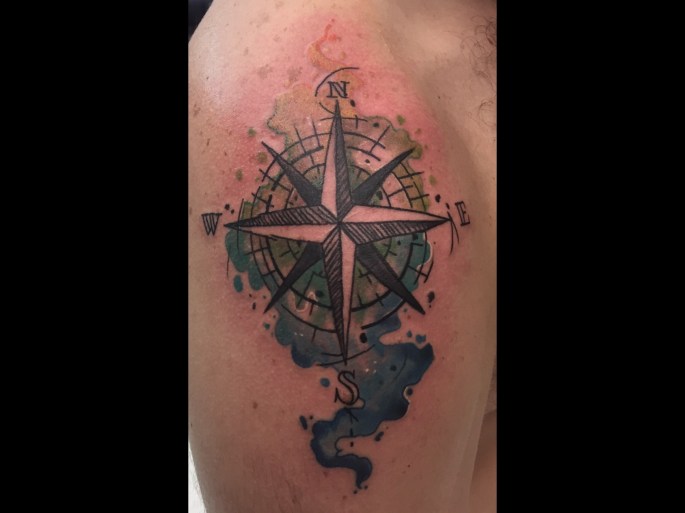
The cover of Wanderlust invites the reader to “find your true north”. I set the picture of my first tattoo as header because I’ve been searching for true North for longer than eighteen months. Maybe that’s the one constant throughout my whole weird and wonderful existence. Who knows if we ever reach it? But I believe that we can keep moving the needle in that direction.

Namaste.  

My Favorite Pearls

Wisdom. Where does it come from? It seems that much of the past fifteen months, for me, has been an unending quest for wisdom and understanding. As of yet, I’m still coming up short. Mostly I quote Socrates (as Plato has written): Ἓν οἶδα ὅτι οὐδὲν οἶδα.” All I know is that I know nothing.

Yet, over the years, people have given me advice in one shape or another. Maybe I’ve read it in books, or seen it on television. One of my favorites has done little more than make me smile, but sometimes that’s all advice needs to do. So I wanted to provide some of that here.

The early bird gets the worm

Obviously. The earlier you start digging in the dirt, the more likely you are to reap the spoils. 

Measure twice, cut once

I’ve never been one for construction, but this can applied to many avenues of life. It’s about being precise – even if it takes a little longer in the beginning to get it right, it saves time and money on the other side if you aren’t redoing your work.

Breathe

Quite possibly the simplest yet most profound peace of advice I’ve ever gotten, and it still shows up for me today, to remind me how important breath is. In my singing, and reading of music, I’ll see hand-scrawled notes indicitating breath marks in the music telling me to breathe. When I’m feeling overwhelmed by external forces, breathing slowly makes the anxiety manageable. If I’m lifting weights, or holding a yoga pose, and it’s becoming impossible – focusing on the slow breathing gets just one more out of me, whether repitition or moment of concentration.

Don’t sweat the little stuff, and it’s all little stuff

This was a book that I never read. But the advice is sound. There are very few things in life that can improve if you worry about them. And when you start worrying about something, suddenly the problem is obfuscated and you can’t focus on the real issue anymore. It seems to happen a lot in relationships, where the one thing is the problem, but every other thing starts being seen in the negative by not fixing the actual problem. When life seems too much, focus on the manageable. 

Don’t eat the yellow snow

Okay. Thanks Dad. I’ve seen snow a handful of times in my life, and never did I want to eat white snow, let alone yellow. Still, when I was a young boy my dad gave me this advice (even though we lived in Florida) and I’ve remembered it to this day. Never will I eat yellow snow, but I can’t help but smile when I think about it.

And I guess, when it comes down to it, advice is just there to make life easier. To make you smile. So don’t eat the yellow snow. 

Back From Abroad

To wit, I’ve been back stateside now for nearly a month. I had every intention of keeping this blog going while I travelled through Europe, but there was so little time to sit and ruminate, let alone write. 

I did finish On the Road, which I started on the flight from Toronto to Amsterdam. I think I wrapped up the book on the ferry ride from Swinoujscie, Poland to Ystad, Sweden. Since being back, I’ve read a few more. Right now I’m working through Brian Weiss’s Many Lives, Many Masters. Most of the time back has been spent working, or applying to jobs, and practicing music. 

I’m enjoying the warm Florida weather and a cool tropical breeze out on the back patio. My dog is lounging by my feet, drooling contentedly. I had started a blog post two weeks ago, but it’s been lost in the nether regions of cyberspace, likely never to be seen again. I was lamenting the fact that many people will call someone who is well-read nerdy. 

Mind you, it’s been a long time since someone called me a nerd. Dork, yes. But I’ve been a gym rat for years, at least I was before I developed RA. I was also an avid partier, so people forgave my intelligence and habit of being well-read. No, I was volunteering, writing in one of my notebooks, and someone asked if I liked to read. Of course I like to read. She said that she didn’t, but her son did. He’d even started a book club with his friends, and was trying to read a book a week this year. I thought that was an admirable aspiration. She called him a nerd. So, I ask you, when did reading books & being generally well-educated become nerdy?

That was the crux of that lost post. More later!