Blog

Why work?

What is the purpose of work? Other than making money, of course. Why are some people so satisfied with their professions, while others are left feeling that what they do doesn’t matter, and they just collect the paycheck and move on with their lives?

To me, work is the calling to something more. We all have gifts, notions about who we are and what we are capable of. I believe that people, deep down, all have a desire to provide help to their fellow man. 
Work is the fulfillment of that desire. Yes, work pays the bills. Or it should. Work is a commitment. Work is the place that we spend a good third of our lives.
Work is not the end-all, be-all. Work is not, or should not be, the daily grind. Work should lift us up, provide a sustainable lifestyle for its employees. We work because we have to, but we should also work because we want to. To do that, the work should be a vocation.
To work is to be interconnected. Within a job, we are part of the whole global economy, not merely isolated in our decisions and choices. What we do, how we do it, and the results of our labors are part of a much larger whole. Neglecting this fact, believing that we operate in a vacuum, is detrimental both to our health and the health of society.

I’m curious right now about the relationship between currency and wealth; of income disparity; the economic state of our Nation and the World. One more topic in the litany of interests I’ll be reading about, or studying, over the coming months. 
I Lost a Poem

I lost a poem last night.

“Where,” you ask?
“Did you mislay it, or place it
on a shelf, behind some
knickknacks, or under that
pair of old, wooden Foo Dogs?

“And I looked,” so I’d answer,
simply. “I lost a poem.”

“Well which one?” you might reply.

“It was unnamed,” I’d say.
“It came to me while I lay in bed,
awake, though I had tried
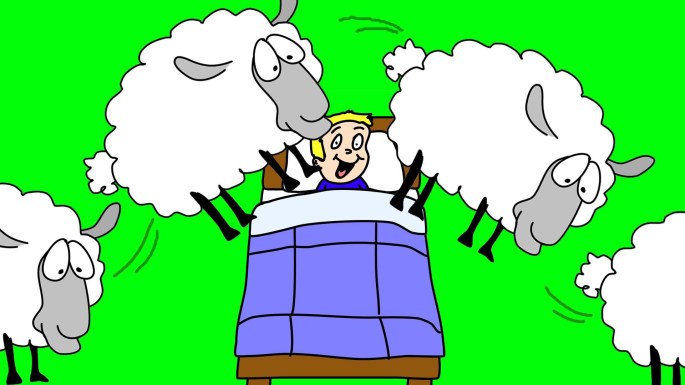
counting clumsy sheep.

“It blew in on a cold air,
streaming up from the
open bedroom window.
It settled on me, along
with the cool air, and I
struggled with the thought
of getting up, the first
few lines still fresh in my
mind, or staying warm and
oh so sweetly near the confining embrace of slumber.

“And so you lost the poem?”

“I did,” I say sadly.
“But I found this one while looking.”

Find your true North

Most of my life now is lived in the phrase,”Recently I’ve…” As in, “Recently I’ve been reading…”; or, “Recently I’ve started a practice of…” Very little in my life as it is can date back to before a year and a half ago. I’d say it would be a positive thing (living in the moment, and all that) but recently I’ve noticed that much of what made me who I was has been lost in the shuffle as well.

Like most things, I sat down thinking I’d be writing about the book that recently I’ve started reading, Designing Your Life by Bill Burnett & Dave Evans. I had heard an interview with them on NPR last year and made a mental note to read the book at some point. 

Thinking of the design problems of life (my life in particular) led me to think of another book that recently I’ve started reading: Wanderlust, by Jeff Krasno. This was a companion piece to the fact that recently I’ve started a practice of yoga. Which, in the full circle way my mind works, brought me back to the fact that the past eighteen months has been a whirlwind and I still have no clue what I’m doing. 

Then I thought, that may not be a bad thing. We got lost sometimes. Lose our way. Think we’re following a path only to look down and see that we’re the only set of footprints to be found. But every path had to be discovered that first time. Not every mistake leads to innovation, but every innovation began with a mistake. 

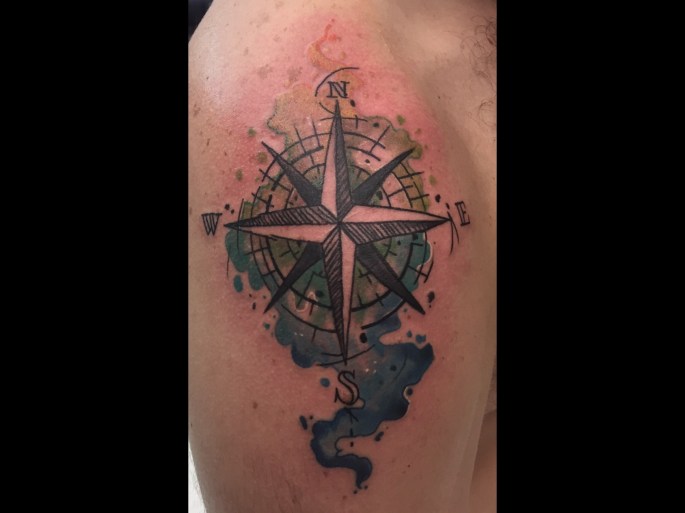
The cover of Wanderlust invites the reader to “find your true north”. I set the picture of my first tattoo as header because I’ve been searching for true North for longer than eighteen months. Maybe that’s the one constant throughout my whole weird and wonderful existence. Who knows if we ever reach it? But I believe that we can keep moving the needle in that direction.

Namaste.  

Turn on, tune in, drop out

Per Timothy Leary: “Like every great religion of the past we seek to find the divinity within and to express this revelation in a life of glorification and the worship of God. These ancient goals we define in the metaphor of the present — turn on, tune in, drop out.”

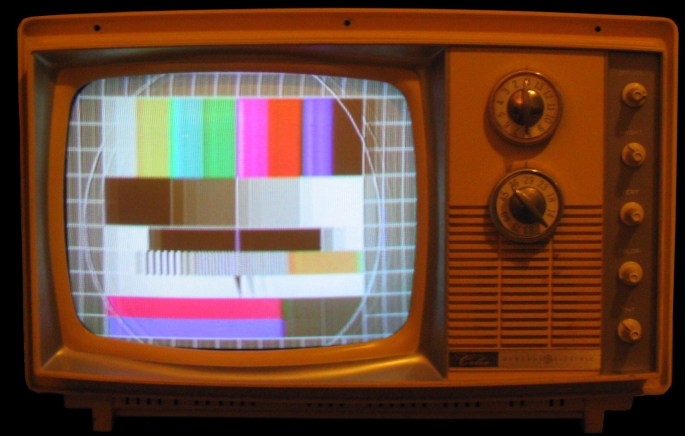
Now we face an era of turning on the tv, the device, the screen; tuning in to what’s happening there; dropping out of the reality that is around us – family, friends, life as it was. 

I want to take this space and talk of escapism, the exit we experience when we retreat into our screens (phones, televisions, etc). We’re avoiding something, whatever our deficit is in our life, when all we do is escape. Sure, you can hear the talking heads deriding a generation spent staring into their phones, but they’ve been conditioned that way. There needs to be a conscientious return to old practices (such as spontaneous conversation or disconnected, i.e. no phone, meals) otherwise it will not happen. No one is going to fix the problems for us, other than ourselves.

For Leary, “Turn on meant go within to activate your neural and genetic equipment. Become sensitive to the many and various levels of consciousness and the specific triggers that engage them. Drugs were one way to accomplish this end. 

“Tune in” meant interact harmoniously with the world around you – externalize, materialize, express your new internal perspectives. 

“Drop out” suggested an active, selective, graceful process of detachment from involuntary or unconscious commitments. “Drop Out” meant self-reliance, a discovery of one’s singularity, a commitment to mobility, choice, and change. Unhappily my explanations of this sequence of personal development were often misinterpreted to mean “Get stoned and abandon all constructive activity”.

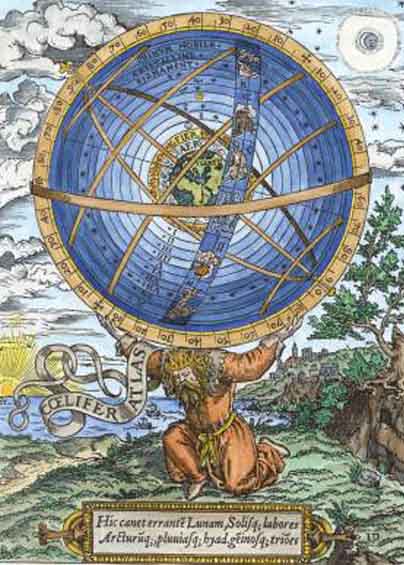
On Heavenly Spheres

Where are we going?

This great spinning rock carrying us along?

Could it have a destination?

Does this globe know its course?

This dance with its sisters, and with the sun; an endless, graceful performance piece with music from the stars.

What are we, then, both onlookers and passengers?

Looking up, we know that beyond the veil there is something more.

A choreographer, who created these steps long ago. Also, as architect, built the floor for our waltz through the sky; set these heavenly spheres on their course, and insisted we hang on for the ride.

spow_may26_03c

When everything is tragedy

This week more than twenty people lost their lives in an explosion. This week more than twenty families grieve the loss of loved ones. This week a world, once again, looks for reason and rationale. 

When everything is tragedy, where does one find hope? 

I don’t know the answer. I know that there are cries for justice. Cries for a cessation to needless killing. Cries for understanding, for tolerance, for recourse.

But where should we look? What is the meaning, the purpose? Why does it keep happening? 

It feels as if we’re on the edge of something, and pretty soon it’s going to tip. What will we find on the other side?

When everything is tragedy, where does one find love?

My Favorite Pearls

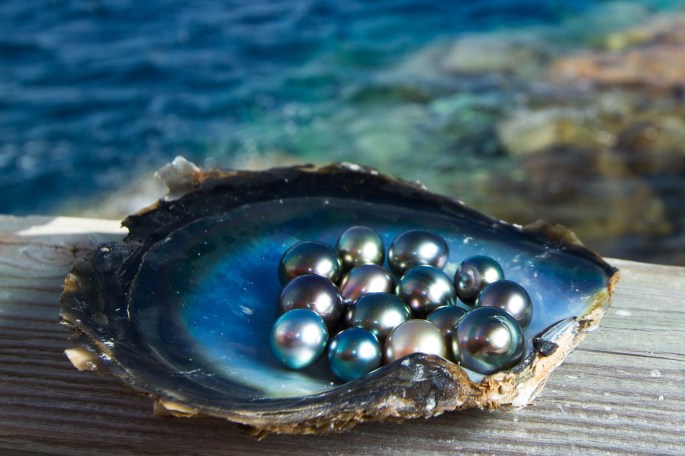
Wisdom. Where does it come from? It seems that much of the past fifteen months, for me, has been an unending quest for wisdom and understanding. As of yet, I’m still coming up short. Mostly I quote Socrates (as Plato has written): Ἓν οἶδα ὅτι οὐδὲν οἶδα.” All I know is that I know nothing.

Yet, over the years, people have given me advice in one shape or another. Maybe I’ve read it in books, or seen it on television. One of my favorites has done little more than make me smile, but sometimes that’s all advice needs to do. So I wanted to provide some of that here.

The early bird gets the worm

Obviously. The earlier you start digging in the dirt, the more likely you are to reap the spoils. 

Measure twice, cut once

I’ve never been one for construction, but this can applied to many avenues of life. It’s about being precise – even if it takes a little longer in the beginning to get it right, it saves time and money on the other side if you aren’t redoing your work.

Breathe

Quite possibly the simplest yet most profound peace of advice I’ve ever gotten, and it still shows up for me today, to remind me how important breath is. In my singing, and reading of music, I’ll see hand-scrawled notes indicitating breath marks in the music telling me to breathe. When I’m feeling overwhelmed by external forces, breathing slowly makes the anxiety manageable. If I’m lifting weights, or holding a yoga pose, and it’s becoming impossible – focusing on the slow breathing gets just one more out of me, whether repitition or moment of concentration.

Don’t sweat the little stuff, and it’s all little stuff

This was a book that I never read. But the advice is sound. There are very few things in life that can improve if you worry about them. And when you start worrying about something, suddenly the problem is obfuscated and you can’t focus on the real issue anymore. It seems to happen a lot in relationships, where the one thing is the problem, but every other thing starts being seen in the negative by not fixing the actual problem. When life seems too much, focus on the manageable. 

Don’t eat the yellow snow

Okay. Thanks Dad. I’ve seen snow a handful of times in my life, and never did I want to eat white snow, let alone yellow. Still, when I was a young boy my dad gave me this advice (even though we lived in Florida) and I’ve remembered it to this day. Never will I eat yellow snow, but I can’t help but smile when I think about it.

And I guess, when it comes down to it, advice is just there to make life easier. To make you smile. So don’t eat the yellow snow. 

Back From Abroad

To wit, I’ve been back stateside now for nearly a month. I had every intention of keeping this blog going while I travelled through Europe, but there was so little time to sit and ruminate, let alone write. 

I did finish On the Road, which I started on the flight from Toronto to Amsterdam. I think I wrapped up the book on the ferry ride from Swinoujscie, Poland to Ystad, Sweden. Since being back, I’ve read a few more. Right now I’m working through Brian Weiss’s Many Lives, Many Masters. Most of the time back has been spent working, or applying to jobs, and practicing music. 

I’m enjoying the warm Florida weather and a cool tropical breeze out on the back patio. My dog is lounging by my feet, drooling contentedly. I had started a blog post two weeks ago, but it’s been lost in the nether regions of cyberspace, likely never to be seen again. I was lamenting the fact that many people will call someone who is well-read nerdy. 

Mind you, it’s been a long time since someone called me a nerd. Dork, yes. But I’ve been a gym rat for years, at least I was before I developed RA. I was also an avid partier, so people forgave my intelligence and habit of being well-read. No, I was volunteering, writing in one of my notebooks, and someone asked if I liked to read. Of course I like to read. She said that she didn’t, but her son did. He’d even started a book club with his friends, and was trying to read a book a week this year. I thought that was an admirable aspiration. She called him a nerd. So, I ask you, when did reading books & being generally well-educated become nerdy?

That was the crux of that lost post. More later!

Day Of

There’s excitiement, waiting for the day of travel. Richard (my traveling companion for this trip) and I just had southwestern style egg burritos. His cat Jay is now wandering around the dining room table looking for scraps. In less than an hour we head to the airport and prepare to take off for Amsterdam.

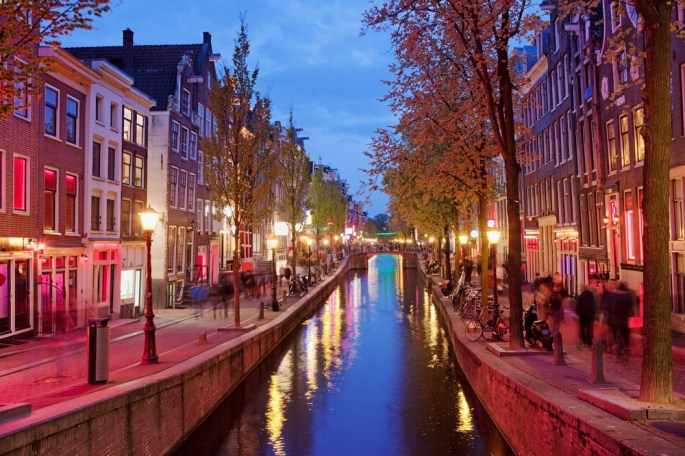
This is a new country for me – Netherlands. It’s one of those places that, in my youth, I had always joked about going to. Prevalent drug use, partying, the looser moral systems. I suppose I thought that as I got older I may not go. Now, in going, I’m actually excited to visit the canals, see the open air markets and take a walking tour.

It may not be quite what I had anticipated in my youth, but I look forward to the journey of discovery that is Amsterdam.

Siri Bums

I think about Kerouac and Siri, that AI phone thingy, I wonder what words, pedantic or brusque, might come from such a pairing.

“I first met Dean not long after my wife and I split up” he may start.

“I’m sorry, I didn’t get that” she’d reply.

“This man who walked from coast to coast, doing a pancake tour of America?”

“Are you looking for the International House of Pancakes? There’s one nearby.”

He’d pause. “Yes” he’d say. “That sounds nice.”

“But you’re not listening.”

“I’m sorry, Jack. What can I help you with?”

“Dean Cassidy” Jack would say.

“There’s no one by that name in your Contacts. Do you mean…?

“No, No!” Would be his answer, frustrated now. He’d start again.

“I first met Dean…”