Blog

Contentious is the brand

Another week, and another political topic I’ve tasked myself with coming up with. Several ideas sped past my desk over the past few days (incarceration levels, oil pipeline, greenhouse emissions), but I want to do more extensive research on each of these.

It’s difficult to produce content that remains somewhat level-headed, when the right rails against the left, the left against the right; vegetarians against meat-eaters, vegans against both; organic vs. Monsanto; etc., etc., ad nauseum.

When did having an opinion make a person …?

In this book I’ve picked up to start reading, Tibet, the format is contrasting essays by people advocating both sides of the contentious issue as to whether Tibet should have autonomy, or should the People’s Republic of China maintain control.

This book, one in a series titled “Opposing Viewpoints”, has this to say about considering opposing viewpoints:

“In our media-intensive culture it is not difficult to find differing opinions. Thousands of newspapers and magazines and dozens of radio and television talk shows resound with differing points of view. The difficulty lies in deciding which opinion to agree with and which ‘experts’ seem the most credible. The more inundated we become with differing opinions and claims, the more essential it is to hone critical reading and thinking skills to evaluate these ideas.”

So where is the civil in civic discourse? This is a question I’ve been pondering for some time. The greatest minds in American history at least opened up to listen to the opposing side. They may have remained unpersuaded following their interactions, but at least they listened.

“The only way in which a human being can make some approach to knowing the whole of a subject is by hearing what can be said about it by persons of every variety of opinion and studying all modes in which it can be looked at by every character of mind. No wise man ever acquired his wisdom in any mode but this.”

-John Stuart Mill, On Liberty

At the end of the day

“…you’re another day older.”

I love Les Mis. Have since I first got the symphonic recording back in 2009. Obviously I was late to the party on that particular musical.

But what I’m thinking about is aspirations. At the end of the day, we only have what we want to be tomorrow. Who we want to be. That thing that we’re aspiring to.

Sure, we may replay the day in our head, or the past events that have been nagging us for however long. And trust me when I say this, I am a keen accountant of nagging thoughts. It’s one of the primary reasons I decided to keep a blog in the first place. To muse a bit, as it were.

So as I lay here, at the end of the day, I’m working through the things that I want to see happen. I’m stretching my legs out, because my hips are a little sore from yoga this morning.

At the end of a yoga practice, the practitioner lays in savasana, or corpse pose. Death of the ego. The Buddhists would call this the principle of “no-self,” or the release of attachments. You’re allowing the ego to pass away, letting go, and coming back into the world a new creation.

All this dances through mind as I think, “What will tomorrow bring?”

So ask yourself:

What are your aspirations for the coming day?

My other things: theatre

Last week, I wrote about why I write. But there are a number of things that interest me, which is likely why I read so much. As I work on building my WordPress site into something that fully represents me, I wanted to lay out a few things that represent me.

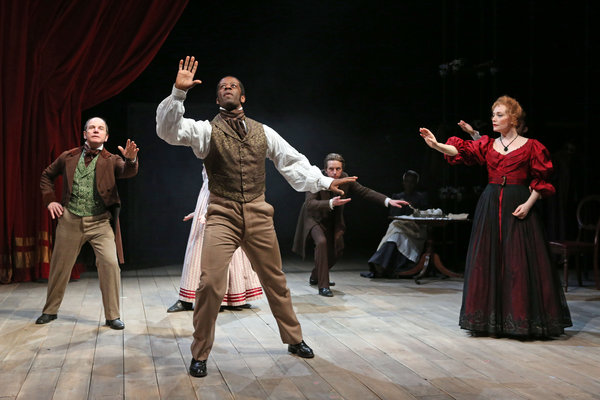
For instance, I’ve been involved in theatre for over ten years now. I have two very clear memories from when I was a child, though I don’t remember exactly when these were. One was a show I was in.

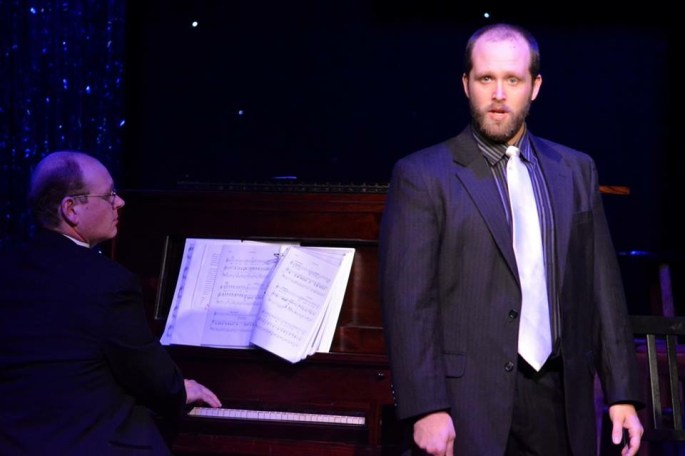
I guess I was always in choirs, because I still sing today. Usually one or two days of practice every week, as well as singing on Sunday.

Anyway, in grade school (maybe first or second grade), I was in a production. I don’t know what it was, or what it was about. I just remember I had to be on stage shirtless. My little butterball self. I was some sort of aboriginal, or Pacific Islander. I wore a lei. (I’m very white, by the way. Perhaps at the time I had a tan.)

There were three of us, shirtless children on stage. The fact that I remember it even now should be some kind of indicator. As if that wouldn’t be scarring enough to a young psyche.

Then there’s the first show I remember seeing. It was when my dad was courting my stepmother, and we all went to see Grease, live on stage at a community theatre. Well, I walked out of that building saying, “What a waste of time. I would never sit through something live on stage again.”

It’s been over a hundred productions later of my own, as well as countless shows I’ve seen or sat in on for their rehearsals. I guess I can safely say: “Boy, was I wrong.”

IMG_2832It’s a joy for me. I love theatre, performing, seeing it, working on it. For over ten years now I’ve been goofing around, on stage. It’s really a wonderful thing.


Title II Protections of Net Neutrality

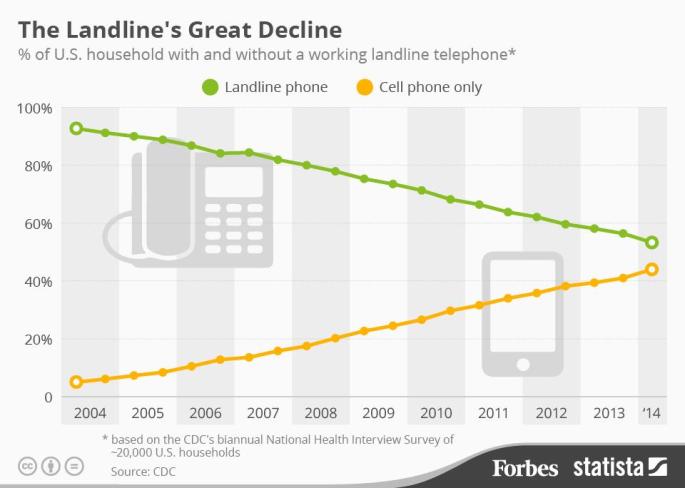
Using any previous ruling as a basis for the extent and prevalence of internet activities is misguided. The technology is rapidly surpassing anything policy-makers could have envisioned even ten years ago. When the 1998 Telecommunications Act was approved by President Clinton, more than 90% of American households maintained landlines. By 2014, that number had dropped to just over 50%, the bulk of that drop occurring between 2004 and 2014 (statistics from the CDC and the US Census Bureau). Considering a drop of nearly 40% in just ten years, it’s conceivable that landlines be irrelevant within the coming decade.

20150226_Landline_FO.jpg

That leaves primary communication capabilities entirely reliant on wireless and internet infrastructures. And the cost-benefit analysis must be equitable and profitable for companies providing such services, as well as for consumers using those services. However, the term service can be misleading in the context with which it is used.

Right now it’s apparent that the focus is on internet as a service. In reality it is more like the route on which services are provided. When the term “communication superhighway” was popularized by then-Vice President Al Gore in the 1990s, it was more than mere hyperbolic language. Consider the free flow of traffic on the web, and how advertisers can set up banners (much like billboards) for visitors and users to see. It is just as beneficial for all users to have access to any sites, much the same way that roads allow clear paths throughout the United States. Limiting net neutrality, the very principle of which is the requiring the same speed and terms with which all internet traffic travels, could be devastating to entire markets of the internet.

In all situations of early, unregulated technological advancements, consumer backlash has led to governmental oversight and regulatory policies and agencies. The Communications Act of 1934, regulating telephony in its nascent stages. Likewise, the Cable Television Consumer Protection and Competition Act (“Cable Act”) of 1992, protecting consumers of unfair practices in cable pricing, and made way for competition in the home entertainment market.

Protection acts are created to ensure fairness and promote new entries into the marketplace. Both the Cable Act and the 2015 Open Internet Order were policies enacted in response to problematic regulation (the former rectifying policies introduced in the 1984 Cable Communications Policy Act, the latter tackling the Telecommunications Act of 1996).

Even in the post-Communications Act era, new technologies led to competitors entering the market, thus improving the experience for users nationwide. For instance, the advent of microwave technologies created improvements in long-distance communications. Under the former monopolistic environment, such competitors may have never been able to get a foothold, and innovations may have been stalled, or even stifled.

When new technologies are introduced to usurp the internet as the primary means of communication, and it certainly will, though as to what form it is going to assume is as of yet unclear, policy changes will be necessary. But at this time it is in the Country’s best interest to maintain net neutrality.

Any rollback of net neutrality could greatly alter the communication landscape of the nation going forward. Knowing this, prior to 2015 the FCC made previous attempts at introducing net neutrality policy. The Courts rejected two earlier attempts and told the agency that if it wanted to adopt such protections it needed to use the proper legal foundation – Title II. Which they turn responded did, by creating the 2015 Open Internet Order.

The argument that the Title II classification reduces the amount of infrastructure investment is flawed. Francis J. Shammo, Executive VP and CFO of Verizon, told shareholders at the 2014 fourth quarter holdings call that the change “does not influence the way [they] invest.” That they would continue investing in networks and platforms, increasing their infrastructure.

Additionally, there are free speech concerns over the adoption or eradication of any guidelines that would prevent companies from blocking or limiting content from websites they deem questionable. As there are currently few alternatives to accessing websites, companies could, in theory, completely undermine entire business models that operate solely on the internet.

Net neutrality is good for internet users, and the free-flow of democratic ideas.

Why I write

I was cleaning out some drawers today, and found an old note, possibly ten or twelve years old. It made me laugh.

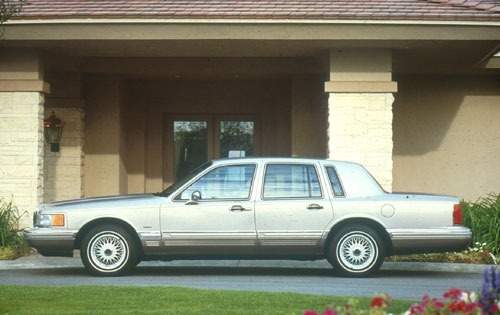
It said: "I’m struggling to write. I’m searching for inspiration in an automobile drive. ’91 Lincoln Town Car around Chicago. Lights, towering buildings."

Not sure what my Town Car had to do with Chicago, because I don't recall ever driving it there. But, it's possible. There were some crazy weekends back then.

The thing that stuck out was the struggling to write. I don't recall ever wanting to be a writer. But I liked writing. Always. I used to write poetry, and stories. I have numerous scripts and longer stories, started or abandoned. Ideas always popped up, but I never took them to fruition.

I was actually taking all these old papers out of the drawer and getting them on my cloud in a document called Collected Junk Writings.

But, in a way, this blog is the creative interpretation of my enjoyment of writing. Things I think about I get down in a post, I leave it up for whoever happens across it, and I'm honing an activity that I like doing.

I'm passionate about so few things right now, in this awkward between state that I'm in. Now I'm looking for a job, having quit my other one. I'm thinking about whether I want to stay in Central Florida or move away. About whether to try and start a Ph.D. program next fall, or wait another year.

All these things rattle on in my head, and still I give this blog weekly attention. Now, it's three posts a week, and I'm ahead (for the most part) by about a week. Which means I'm writing this on Tuesday, and you may not see it until next Friday.

I'm sure that when life comes crashing in, and the Universe points me in that direction, I'll not be so ahead on my blog. I'll probably be scrambling for deadlines.

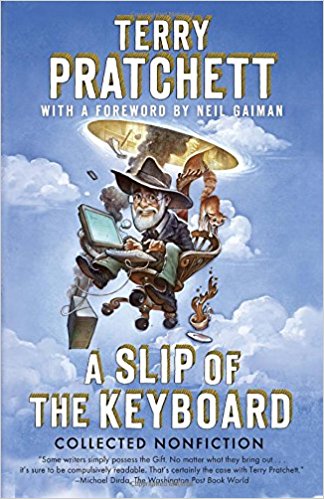
51YdazcA5yL._SX322_BO1,204,203,200_I love the bit in Terry Pratchett's A Slip of the Keyboard: Collected Nonfiction, where he describes what he calls "A bit of writing about writing."

"Get up, have breakfast, switch on word processor, stare at screen.
Stare at screen some more."

This staring at screen, plus elements of procrastination come in for about the next thirty paragraphs. Finally: "Midnight…"

"Stare at screen. Vaguely aware right hand has hit keys to open new file. Start breathing very slowly. Write 1,943 words. Bed. For a day there, thought we weren't going to make it."

This is my blog. I write I because I like it. It's not an exceptional blog, and it's not terrible. But it's mine, and I get to share with you, the reader.

Call me nostalgic

We’re reducing the tactile sensations of our world to nothing more than keyboard and screen interactions. Consider:

Music early on was heavy; weighty. You picked up the albums and loaded them into gramophones, into record players. You lowered a needle. You would wipe the needle down, and the record off, lest you get the bumps and whine of interference. Perhaps you could listen for thirty minutes, then it was either flip to the B side, or repeat Side A. Then came the cassette, with it’s unique little flip-case. Crack, pop. Crack, pop. Unique sounds and feelings of taking a tape out, inserting it into a tape deck. 

CDs digitized the whole system, and suddenly sound quality changed drastically. Still, you had these CD cases, or maybe you put them in sleeves. You could bring a whole disocragphy with you, if you were so inclined. And then it went further digital with the advent of the digital music player, and multiple discographies were available in something the size of a cassette. 

Similarly books, whose only transitions have been to audio, and then to digital. It seems a bit harder to invent new ways to read rather than listen to music. 

Video also is all stored on the web now, and is available to watch or download at the click of the button. What started as the tactile sensation of adjusting rabbit ear antennae so that the signal would come in clear, then became inserting beta or VHS; laser disc; DVD; HD-DVD and Blu-Ray. Now streaming. 

I think that’s why there’s a return to older sensibilities. Record players becoming en vogue again. Letter writing and stationary. Long has it been said that digital books would kill the print copy, yet even booksellers seem to be feeling the resurgence. We are beings that like touching things, and when too much exists in cyberspace, we just don’t know what to do with our idle hands. 

Unerring Independence

On 2 July, 1776, the Continental Congress declared freedom from Britain. The Declaration of Independence was signed 4 July, 1776, and the majority of signatures were given to this document in August.

“We hold these truths to be self-evident, that all men are created equal, that they are endowed by their Creator with certain unalienable Rights, that among these are Life, Liberty and the pursuit of Happiness.”

John Adams said of this new nation, “It was patched and piebald policy then, as it is now, ever was and ever will be, world without end.” We see even today the unique challenges and opportunities of this “American Experiment”.

Alexander Hamilton, in Federalist I, pleads to the people, “Yes, my countrymen, I own to you that, after having given it an attentive consideration, I am clearly of opinion that it is your interest to adopt [the Constitution]. I am convinced that this is the safest course for your liberty, your dignity, and your happiness.”

Two-hundred forty-one years later, we stand with history at our backs. The great men and women of American upbringing, countless immigrants who have made these lands their homes, masters of industry and political prowess; they made way for what we now experience – the boons of prosperity, and the burdens we endure.

When this government was founded, it was a upon a belief of freedom from tyranny, and these new “Americans” died for this conviction.

We the People of the United States, in Order to form a more perfect Union, establish Justice, insure domestic Tranquility, provide for the common defence, promote the general Welfare, and secure the Blessings of Liberty to ourselves and our Posterity, do ordain and establish this Constitution for the United States of America.”

Two documents: a Declaration and a Constitution. These are the backbone of America. We, the people… We comprise everything else. One no greater or lesser than any other. The military is our great skin, protecting us from external forces, and ensuring “common defence.” The three branches of government allows for “domestic Tranquility,” “Justice,” & promoting the “general welfare” of the citizenry.

The “Blessings of Liberty” are ours, and it is with great pride that one can call themselves an American. The political tides will change from time to time in this Country, and it is still at best “patched and piebald policy.” But the belief in this experiment, this liberty and justice for all, guides the people of this Nation towards the unknown future, as it always has done.

George Washington had this to say in his farewell address:

“The unity of government which constitutes you one people is also now dear to you. It is justly so, for it is a main pillar in the edifice of your real independence, the support of your tranquility at home, your peace abroad; of your safety; of your prosperity; of that very liberty which you so highly prize. But as it is easy to foresee that, from different causes and from different quarters, much pains will be taken, many artifices employed to weaken in your minds the conviction of this truth; as this is the point in your political fortress against which the batteries of internal and external enemies will be most constantly and actively (though often covertly and insidiously) directed, it is of infinite moment that you should properly estimate the immense value of your national union to your collective and individual happiness; that you should cherish a cordial, habitual, and immovable attachment to it; accustoming yourselves to think and speak of it as of the palladium of your political safety and prosperity; watching for its preservation with jealous anxiety; discountenancing whatever may suggest even a suspicion that it can in any event be abandoned; and indignantly frowning upon the first dawning of every attempt to alienate any portion of our country from the rest, or to enfeeble the sacred ties which now link together the various parts.

For this you have every inducement of sympathy and interest. Citizens, by birth or choice, of a common country, that country has a right to concentrate your affections. The name of American, which belongs to you in your national capacity, must always exalt the just pride of patriotism more than any appellation derived from local discriminations. With slight shades of difference, you have the same religion, manners, habits, and political principles. You have in a common cause fought and triumphed together; the independence and liberty you possess are the work of joint counsels, and joint efforts of common dangers, sufferings, and successes.”

In closing, I am of the opinion that people may fail, and policies may falter. But the notions with which this Country was established will remain in perpetuity, so long as someone still remains that will say they are American. Happy Fourth of July.

A night in blue

I turn on the jazz
The city unfolds before my eyes
Night sky with bright lights
Blazing from imaginary windows
Smoke and fog drifts soundlessly
Creeping over weary streets
From my private perch I watch
Listening to the sounds of the night
The song of the city
A tune that echoes in drums and lobes
Different in percussion for every skull
Notes still piping
Slow, vivid and hot
The picture it paints
Across the scape of my eye
Pupil and cornea alive with musical notation
Dancing, streaming, playing raw
Heat, fire, life.
It is where the soul lives
The heart beats
The mind creates
Those moments that cannot stop
But you can never experience again
Once they pass, gone
And you, holding on in the night
Wait to feel it again
See it again
Live it and know again
That it breathes into you
Inspiration
While I watch this happen
Inhaling air, tobacco and sweat
Breathing heavily
Night not cooling my body
Air just promising to break the heat
While my body feels the beat
The rhythm of music long since played
Echoing over these weary streets
And my bleary eyes
Take in the sights
Feeing no pain
And hoping the morning doesn’t come too soon

On the reading bug

Started reading a book (the intro really, plus a few entries) that I had purchased a few weeks ago. Nick Hornby’s Ten Years in the Tub: A decade soaking in great books. First, I love books. The idea of what Hornby did for The Believer, where each month he would just talk about the books he read and ones he bought, was entirely captivating to me.

So, this being the first entry of the month, I’d like to take a cue from Nick Hornby:

June 2017

Books Bought:

  • The Republic – Plato
  • Atlantis: The Eighth Continent – Charles Berlitz
  • Designing Your Life – Bill Burnett & Dave Evans
  • Conversational Spanish in 20 Lessons – Cortina Method
  • Light on Yoga – B.K.S. Iyengar
  • The War of Art – Steven Pressfield
  • Thinking: The New Art of Decision-Making  – Edited by John Brockman

Books Read:

  • Do the Work! – Steven Pressfield
  • Dirk Gently’s Holistic Detective Agency – Douglas Adams
  • Outrageous Openness – Tosha Silver
  • The Perdition Score – Richard Kadrey
  • Sept. ’03 – Jan. ’04 of Ten Years in the Tub – Nick Hornby
  • Worth Dying For – Lee Child
  • The War of Art – Steven Pressfield (started)

What can I tell you about the books I’ve read? Or bought? Why do we do this? I found a beautiful passage in the intro to Ten Years in the Tub, written by Jess Walter:

“That the books we buy are almost as important as those  we read. From the beginning there were always two columns [referring to Hornby’s monthly article], Books Bought and Books Read. By my crude math, Nick spent somewhere around ten or fifteen grand on books he hasn’t even read. Besides showing that he did his part to support publishing during a tough economic period, this suggests something important about reading. Looking around my own obsessively crowded shelves, I see there are two categories of books I tend to keep: those I love and those I hope one day to read. If the books we read reflect the person we are, the books we hope to read might just be who we aspire to be. There is something profound in that.”

I checked out Do the Work! and Dirk Gently from the library. Both came precariously close to being returned unread, but something about each grabbed me and made me change course. The library and, by extension, book stores, are sort of a second home to me. And in this in-between period, where the old life I lived has fallen away and the new one is just breaking out of its cocoon, they function more as my first home than the place that houses my stuff.

Do the Work! walks us through the creative process, highlighting the role of resistance in creation. Now, I’m a big fan of Seth Godin. Have been since I first stumbled across The Icarus Deception, oh, three years ago. At that time I was creatively stifled, my professional and personal lives not working out the way that I had intended. He begged his readers to do the work, fight resistance, and ship! Yes! I can get on board with that.

Pressfield’s book does much the same, but not as effectively. I do feel inspired to do the work, yet I get stuck on syntax when he delves into his theory on the contradictory nature of the Universe’s role in Resistance/Assistance. I’ll likely come at this book again a year or two down the road, and see if I agree or disagree more with the sentiment. The War of Art has been on my reading list for a few years, so it was time to pull the trigger and buy it. I’m just starting it, and seeing the themes revisited from Do the Work!

Adams is always fun, and Dirk Gently’s was no exception. The thought and connectivity he puts into a book about interconnectivity gives enough laugh-out-loud moments that I found myself flying through it.

Atlantis and the course on Spanish weren’t bought, per se. Rather free books in a stack at the library. There’s a girl from Barcelona I wish I were better able to communicate with, though she speaks  English more fluidly than I do. Atlantis, eh. Always curious about the esoteric and metaphysical.

In The Perdition Score, I got to resist the character Sandman Slim, aka James Stark, as he moved up and down a supernatural Los Angeles, and back into Hell. I began reading Kadrey’s series last February, what is that, fourteen months ago? Since then, I’ve read eight and just committed to reading the ninth when I saw it in the bookstore. Perdition is probably the best of the series since Sandman Slim, but I’m a sucker for watching Stark get even when someone goes after his friends.

Another series that I just began last year but have managed to put a considerable dent in is the Jack Reacher collection, by Lee Child. Worth Dying For is well-plotted mystery, and I had trouble putting it down as well. I spent the better part of two days catching up with Mr. Reacher in a little Nebraska town run by some no-goods that were, par for the course, up to no good. It’s a satisfying read, and moves the story towards him heading back to Virginia, which they adapted for film in last year’s Never Go Back.

Tosha Silver and Iyengar’s books are part of my required reading for the yoga practice. I bought Light on Yoga from a Los Angeles Goodwill on Amazon, so it’ll arrive soon. It was like five bucks. Outrageous Openness we discussed at the yoga studio, and it seems to be of big help to those of us who have trouble letting go and trusting that Divine help will be coming.

My first experience with that concept was back in November, 2015, when I started Cameron’s The Artist’s Way. I know some crazy things can happen, once you say okay and let the Universe/Divine/God/Source start working on you.

I made it though five whole books this month, with two solid starts, and a few dips into other assorted writings. I can’t guarantee that many, but there is that new Sandman Slim out there, as well as a Reacher novel someone loaned me. Plus, there’s a stack of library books on philosophy that need to be returned this month, so it may be more likely that I get a sit down with Spinoza and Kierkegaard.

We’re all a little sick sometimes

Healthcare. What a broken system. Same with education. Same with criminal justice. As a matter of fact, any system that should be in place to provide services and care to a country’s population, once it moves to the private sector, becomes a cash cow, pumping returns into wealthy investors’ pockets and political coffers to keep sympathetic lawmakers in power.

Want to fix healthcare? Stop letting the insurance companies run the industry.

We’ve been watching premiums rise, yes, since the advent of the Affordable Care Act (Obamacare), but even before then. There have been grumbling among insurers that costs are just to great under the new political policies to keep premiums at the same level.

However, consider this:

According to an November, 2016 article on Consumer Affairs, Amy Martyn reports that, “UnitedHealth announced record-breaking profits in 2015, followed by an even better year this year. In July 2016, UnitedHealth celebrated revenues that quarter totalling $46.5 billion, an increase of $10 billion since the same time last year.  And company filings show that UnitedHealth’s CEO Stephen J. Hemsley made over $20 million in 2015. To be fair, that is a pay cut. The previous year, in 2014, Hemsley took home $66 million in compensation.”

Okay. Obviously an isolated incident.

However, Ms. Martyn continues on to say: “Aetna, whose CEO Mark Bertolini reported to the Securities and Exchange Commission a $27.9 million compensation in 2015, has similarly celebrated sky-high profits. “In 2015, we reported annual operating revenue of over $60.3 billion, a record for the Company,” Aetna recently told investors.

Yet in this article from an issue last week of the Waco Tribune-Herald, written by guest columnist Merrill Matthews, there’s a little discrepancy regarding Aetna: “Also in May, Aetna said it would pull out of several other states. According to CNN, “The company said it expects to lose more than $200 million in its individual business line this year, on top of nearly $700 million in losses between 2014 and 2016. Aetna withdrew from 11 of its 15 markets for 2017.”

A simple Google search gives me CNBC’s report on quarterly profits for Aetna from January of  this year:

“Aetna’s net profit fell to $139 million, or 39 cents per share, in the fourth quarter ended Dec. 31, from $321 million, or 91 cents per share, a year earlier.

Excluding items, Aetna earned $1.63 per share, handily beating analysts’ average estimate of $1.44 per share, according to Thomson Reuters I/B/E/S.”

Well, man, this is confusing. Either they’re making money, or they’re losing money, but whatever it is it’s in the hundreds of millions of dollars. Okay. Let’s read on in this CNBC report:

“Aetna said its total health care medical benefit ratio — the percent of premiums spent on claims — rose to 82.1 percent from 81.9 percent, a year earlier, mainly due to higher medical costs in its individual commercial products.”

Which means they get to keep 20% of what they bring in, hundreds of millions of dollars. Just for taking money, than turning around and paying to medical professionals.

Yes, they’re moving money from healthy people to sick people. That’s the nature of insurance. But their business model is taking as much in as they can, and pay out as little as they can. That’s profit.

If you want to fix healthcare, get rid of insurance for profit’s sake. Otherwise, it’s one person’s best interest against a corporation driven by profits and shareholders’ best interests.