Walking a fine line

I’ve been thinking lately about the types of posts I make here. Some are little thoughts I have about this and that (theatre and performance, or books I’m reading/have read);  advice I’ve been given or came across; bits of motivation; very personal thoughts on loss and struggling; finance and investing; or even poetry. All these things are a hodgepodge of who I am and what I’m thinking right now.

Some of it may be interesting to someone. Many more may not find anything here. Others may not want to read each and every post I make, because who knows what I’ll be writing about on any given day.

I struggle with that – providing content (even content that no one may see) which goes back and forth from business to personal, and relevant to downright absurd. But, it’s who I am.

I started writing this blog because I’d kept a journal since 2015. Some times I’ve written daily. Right now I’m best at weekly in the journal, with other writing thrown in during the week. But it was entirely private, and no one was going to come across it. I may even pull a Dickens and have them all burnt before I go. Who knows…

So I put it up online, just another WordPress blog. And I’ve grown it a bit. I’ve grown a bit myself. Now it’s out there for anyone to see. Maybe no one will. But it’s out there.

What the reviewer sees

A book review is nothing more than emotional snapshot of how an author’s work speaks to the reviewer. 

Anyone can go through a book and mark syntax or grammatical errors. That is the purview of elementary educators. What we expect reviewers to do is to read a work and tell us whether the devices the author used worked for the reviewer. Do the analogies seem out of place? Is there too much ambiguity in story. Can the protagonist be understood adequately with the given backstory?

And these understandings of the author’s work is subjective on the part of the reviewer, and the subsequent review is then only useful to someone with similar taste and understanding as the reviewer has. 

Many things are more subjective than we consider, and we are often more opinion-based than we acknowledge. Remember that when making decisions.

Purpose

A podcast host said in a recent episode that I was listening to that “there are over one-hundred fifty-thousand books on Amazon about how to find your way in life.”

Are we truly that lost? I mean, granted, at times I feel as if I don’t know what the hell I’m doing. We all do. But, we’re it.

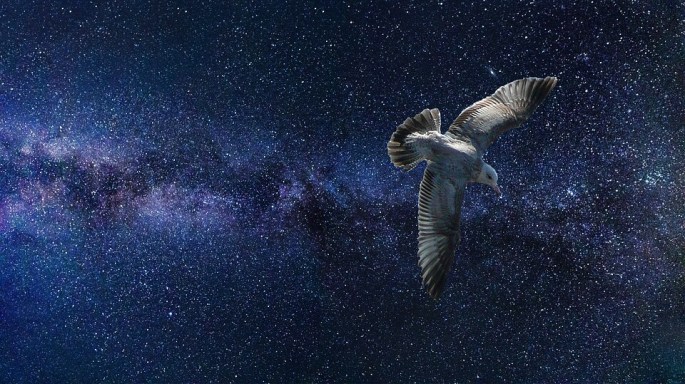
The bird doesn’t question what it means to be a bird. It doesn’t wonder as to the meaning of its flight. It just flies.

Man alone questions the nature of existence, and our place in the world.

That is our blessing. And our curse.

Summer Time, and the Books are Easy

July 2018

Books Bought:

  • Principles – Ray Dalio
  • England and Other Stories – Graham Swift
  • The Silver Dream – Michael Reaves & Mallory Reaves
  • The Complete Cold Mountain: Poems of the Legendary Hermit Hanshan – Translated by Kazuaki Tanahashi & Peter Levitt
  • Tribe of Mentors – Timothy Ferriss

Books Read:

  • Later Essays – Susan Sontag (unfinished)
  • The Collected Letters of Alan Watts – Edited by Joan Watts & Anne Watts (unfinished)
  • You Are a Badass – Jen Sincero
  • Homeland – R.A. Salvatore
  • Exile – R.A. Salvatore
  • The Power of Now – Eckart Tolle (unfinished)
  • The Complete Cold Mountain: Poems of the Legendary Hermit Hanshan – Translated by Kazuaki Tanahashi & Peter Levitt (unfinished)
  • Tribe of Mentors – Timothy Ferriss (unfinished)
  • Achieving Excellence in Fund Raising – Hank Rosso (unfinished)
  • Getting Things Done: The Art of Stress-Free Productivity – David Allen (unfinished)

Well here it is. I hope it was worth a few days’ waiting.

Some things continually crept up as the month played out. Ira Glass’s quote on beginning an artistic endeavor:

“Nobody tells this to people who are beginners, I wish someone told me. All of us who do creative work, we get into it because we have good taste. But there is this gap. For the first couple years you make stuff, it’s just not that good. It’s trying to be good, it has potential, but it’s not. But your taste, the thing that got you into the game, is still killer. And your taste is why your work disappoints you. A lot of people never get past this phase, they quit. Most people I know who do interesting, creative work went through years of this. We know our work doesn’t have this special thing that we want it to have. We all go through this. And if you are just starting out or you are still in this phase, you gotta know its normal and the most important thing you can do is do a lot of work. Put yourself on a deadline so that every week you will finish one story. It is only by going through a volume of work that you will close that gap, and your work will be as good as your ambitions. And I took longer to figure out how to do this than anyone I’ve ever met. It’s gonna take awhile. It’s normal to take awhile. You’ve just gotta fight your way through.”

Aside from this quote, other recurring elements included: a need to escape to the outdoors – including a trip to an REI Co-op. I had never been. Seeing all three Hotel Transylvania films (and a musical based of Adam Sandler’s 80s extravaganza The Wedding Singer).

Also Dr. Brene Brown, Simon Sinek, and David Allen.

In restructuring my days, I’ve found increased time for reading – actually scheduling in at least an hour of reading daily (with few exceptions). At night I was putting a chapter in (at least) of R.A. Salvatore’s Drizzt Do’Urden saga. The first three books were loaned to me by a friend of mine. We had had an open discussion on Urban Fantasy following my finishing of Arena last month (or the month before).

Another odd thing about me – when I walk into someone’s house, I am drawn to their books. The more books on a shelf, the more intrigued I am by what’s there. I know that I’m not alone in this interest, but it’s also apparent that many people I spend time with don’t have that compulsion. I could literally spend minutes to hours staring at collections of books.

So, when I entered my friend’s house, I found reason to linger in the room with the book shelves, housing Salvatore, Gaiman, Tolkien, and other notable fantasy and science fiction writers. He wholly recommended the Drizzt series, and I told him I’d give it a try.

Homeland was a slow start. I had committed to reading it, but it was a little bit of a drag at first. (Similar to the drag I experienced reading Tolle’s The Power of Now, but I’ll get to that later.)

The origin story of Drizzt Do’Urden began on his birth night, and showed the conniving and cunning nature of the dark elves – of which Drizzt is a noble born son. But as the story progresses, we learn that Drizzt is more kind; more empathetic. That he doesn’t share the bloodlust or the vanity of his kin. And he begins to hate his surroundings more and more, until (and this leads to Exile), he finds refuge without his city. This too proves trying, and with an undead assassin on his tale, he needs all the help he can get.

All in all, Drizzt is a very well-written character, and I received an email from Barnes & Noble stating the new Drizzt trilogy is to start releasing in September. I’ll be reading more of this adventure in the coming months.

Two remanded books purchased this month – England and Silver Dream. I’m still trying to hone in on the short story format, England being just that, but haven’t been able to ready my mind to read a short story collection. Several have been purchased in the past year, including a collection from The Paris Review. I just came across it while boxing some stuff up to take to storage.

I’m currently preparing to move, with all intention of getting into my new place next month, or by October at the latest. We’ll see how all of that plays out, and whether it affects my reading time.

Silver Dream had Neil Gaiman’s name on the top – it seems that he helped with the story of the original book (this one being a sequel). I suppose I’ll have to read the original. So, it goes in a box to move to the next house.

In my spiritual reconciliation, I often find myself quoting the likes of Julia Cameron, Pedram Shojai, and now even Jen Sincero. So as my girlfriend and I were watching the third Hotel Transylvania, there was a scene where Johnny (pictured above), speaks in a very zen way about the flow of the universe. She looks over to me and says, “Look. It’s you.”

In fact, it was indeed a very me thing to say. I’ve been speaking for two years on the essence of flow in the universe, and how our ability to connect to that Source energy allows us the freedom and ability to achieve our goals and desires.

All this to say, I thought Johnny would make a very good featured image for this post. And thus there he is. My animated self. (I’ve also backpacked in Europe twice over the last 30 months, and am planning a Costa Rica trip later this year.)

Spiritually, July didn’t offer me much I suppose. Really, since starting work at the theatre, it seems that much of my free-thinking time is devoted to nonprofit strategies. I’ve broken out the Rosso, a primer on philanthropy, and one that I had to read parts of during my master’s program at SCAD.

I know that I’ve lost track of books as well, and occasionally I’ll come across one that I’ve either read, or purchased, and forgot to add.

I love poetry, and I’m fascinated my Buddhism as well as Asian mysticism. Cold Mountain was a Shambhala publication, and I just had to buy it. I’ve read very little of it so far – again, nonprofits seem to be inhabiting the bulk of my reading capacity – but it’s there on my desk for me to peruse at my leisure.

With all that said, I think that is likely the best representation of reading for last month. Was there more? Maybe. Was it anything I want to talk about? Meh.

I recommend the Drizzt books, as well as Jen Sincero. Tolle’s Power of Now is something that, though beneficial, it’s better to knock it out in one sitting, at least I think. I’ve now started and stopped at least a dozen times. Everything else will need more focus for August.

The Art of Stopping Time

I’m often contemplating the lack of time that I have. Mostly I believe it’s self-inflicted. For instance, I’ve signed on to two new shows over the coming six months, and I’m currently working up in Georgia.

For starters, we all have problems. Little foibles that make us who we are, the struggles that define us. Or, that we assume define us.

In some of my recent reading, I’ve found that we can exert more control over how we spend out time. Get off the social media (I barely use it myself now). Quit checking email (but what if I miss something?). We’re all guilty of time-wasters. The things that we tell ourselves are important, when really it’s just FOMO: fear of missing out.

I like this tale from Ferriss’s 4-Hour Work Week:

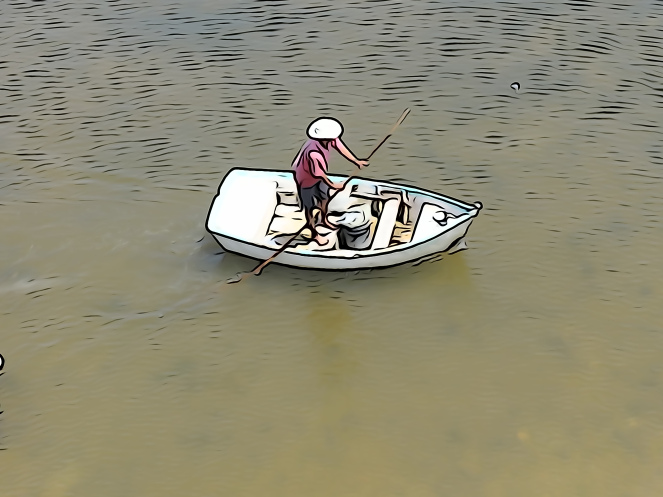
An American investment banker was at the pier of a small coastal Mexican village when a small boat with just one fisherman docked.  Inside the small boat were several large yellow-fin tuna.  The American complimented the Mexican on the quality of his fish and asked how long it took to catch them.

The Mexican replied, “only a little while. The American then asked why didn’t he stay out longer and catch more fish? The Mexican said he had enough to support his family’s immediate needs. The American then asked, “but what do you do with the rest of your time?”

The Mexican fisherman said, “I sleep late, fish a little, play with my children, take siestas with my wife, Maria, stroll into the village each evening where I sip wine, and play guitar with my amigos.  I have a full and busy life.” The American scoffed, “I am a Harvard MBA and could help you. You should spend more time fishing and with the proceeds, buy a bigger boat. With the proceeds from the bigger boat, you could buy several boats, eventually you would have a fleet of fishing boats. Instead of selling your catch to a middleman you would sell directly to the processor, eventually opening your own cannery. You would control the product, processing, and distribution. You would need to leave this small coastal fishing village and move to Mexico City, then LA and eventually New York City, where you will run your expanding enterprise.”

The Mexican fisherman asked, “But, how long will this all take?”

To which the American replied, “15 – 20 years.”

“But what then?” Asked the Mexican.

The American laughed and said, “That’s the best part.  When the time is right you would announce an IPO and sell your company stock to the public and become very rich, you would make millions!”

“Millions – then what?”

The American said, “Then you would retire.  Move to a small coastal fishing village where you would sleep late, fish a little, play with your kids, take siestas with your wife, stroll to the village in the evenings where you could sip wine and play your guitar with your amigos.”

-found on BeMoreWithLess.com

Books books books (and then some)

Books sometimes aren’t read. They’re purchased. They’re kept, usually. Some of the more popular ones get read quickly once acquired (Grisham, Patterson, Grafton, Steele). Others linger, like David Foster Wallace, Ron Chernow, Robert Pirsig, and James Joyce.

I once read the entirety of Ayn Rand’s Atlas Shrugged, with the exception of the thirty-page speech that John Gault gives towards the end of the novel. I just couldn’t stay focused that long.

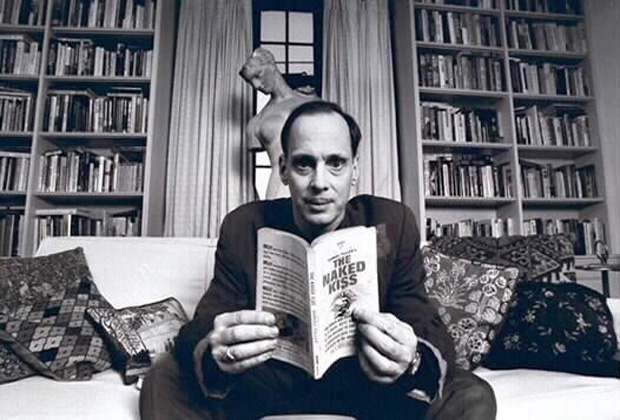
Now I will often quote John Waters (of Hairspray fame) who says: “Collect books, even if you don’t plan on reading them right away. Nothing is more important than an unread library.”

Even Nick Hornby’s book Ten Years in the Tub (which I’m still working through) mentions that books we buy and don’t read reveal something about the person we are, or at least want to be.

I notice this type of inconsistency throughout my life. My girlfriend keeps telling me that I need to watch The Dallas Buyer’s Club. It’s on Netflix, I own the movie on Blu-Ray, and I have yet to watch it. Every night that I’m visiting, if we’re lying in bed thinking of things to watch, she asks, “Tonight?”

“No.” By the time we get to bed, it’s too late for that kind of movie. I don’t really watch tv in bed, unless I’m staying with her. Not anymore.

So, movies that are going to invoke thinking require a chunk of time and the attitude that such a movie is going to require. The seriousness. And I think books are the same way.

We tear through the legal mysteries and thrillers. Rejoice in the light-hearted fantasies and romances. But when it’s time for those books that are going to fire more neurons than we’re comfortable with, we have to give them time.

Maybe that’s a result of the way our culture is, throwing so much at us all the time. Our neurons feel so inundated with information that it’s hard to devote a full allotment of attention to anything that we think could be challenging material.

In the heat of August nights

August 2017

Books Bought:

  • Meddling Kids – Edgar Cantero
  • The Yamas & Niyamas: Exploring Yoga’s Ethical Practice – Deborah Adele
  • Hamlet – William Shakespeare
  • Schubert’s Winter Journey: Anatomy of an Obsession – Ian Bostridge
  • On Writing – Stephen King
  • The Call of Cthulhu and Other Weird Stories – H.P. Lovecraft
  • The Icarus Deception – Seth Godin
  • The Once and Future King – T.H. White
  • Invisible Acts of Power: Channeling Grace in Your Every Day Life – Caroline Myss 

Books Read:

  • Welcome to Night Vale – Joseph Fink & Jeffrey Cranor (unfinished)
  • Awake in the World – Michael Stone (unfinished)
  • Religion for Atheists – Alain de Botton (unfinished)
  • Tibet: Opposing Viewpoints – Greenhaven Press (unfinished)
  • It – Stephen King (unfinished)
  • Full Wolf Moon – Lincoln Child
  • The Icarus Deception – Seth Godin
  • Tribes – Seth Godin
  • A Field Guide to Lies: Critical Thinking in the Information Age – Daniel J. Levitin
  • Churchill & Orwell: The Fight for Freedom – Thomas E. Ricks (unfinished)
  • The House of the Worm – Mearle Prout (Short story)
  • Manuscript Found in a Milkbottle – Neil Gaiman (Short story)
  • Blood Monster – Neil Gaiman (Even shorter comic)
  • Invisible Acts of Power: Channeling Grace in Your Every Day Life – Caroline Myss (unfinished)
  • Ten Years in the Tub – Nick Hornby (Aug ’04 – Oct ’04)

The month came and went much as anticipated. Work has ramped up, days at different locations across Central Florida, nights at rehearsal, and plans, as they most frequently do, change at the drop of a hat. Several of those plans were unfinished books. 

First of all, Welcome to Night Vale I had been meaning to read for some time. I had learned of the podcast (not listened to it yet either) and then the book, possibly through a spot on NPR. I thought I’d knock the novel out pretty quickly. Well, best laid plans and all that. I could not find a groove to read it in. It’s witty, it’s playful, and it borders on the absurd (all things I immensely enjoy in my reading), and yet I struggled to get through the first hundred and fifty pages, at which point I decided I would put the book down. That’s not quite halfway.

If you make it halfway through a book, you might as well keep reading it. Prior to the half, you should have some options at giving it up. Film critic Mike D’Angelo wrote about watching the first 10 minutes of a movie in much the same way I’m describing the principle of setting down the book before getting to the midpoint. “Basically, I give the movie 10 minutes to grab my attention. Most of them [non-reviewed or poorly-reviewed films] fail, and get turned off at that point. If I’m still interested, though, I’ll watch for another 10 minutes. There are two more potential bail-out points at 0:30 and 0:40; if I still want to keep going after 40 minutes, I commit to watching the entire film, even if it turns awful later” (My italics added).

Obviously ten minutes with a book is not enough time to give you the full breadth of what you’re sitting down with. But you can probably get a feel for whether you’re going to like it or not. Anyway, Night Vale just didn’t grab me in the way I wanted to be grabbed. It could be an off month for reading, though, and I do accept fault for some great books that I just can’t get through. (I’m looking at you, A Hundred Years of Solitude; Great Expectations; and Zen and the Art of Motorcycle Maintenance.)

In an odd twist of fate, I got a bookstore email advertising the new Night Vale novel, It Devours!. And the guilt just keeps piling on.

Awake in the World, Religion for Atheists, and Invisible Acts maintain a pretty consistent theme. Spirituality, theology and philosophy keep me interested, and I do tend to gravitate towards those nonfiction titles, when I’m not in the mood for escapist fiction. All remain unfinished, as my intention was more ambitious than I was capable of achieving. Alain de Botton’s book is something I learned about while listening to On Being, oh, some months ago. I was fascinated in listening to his interview, and planned to get the book. The concept of what atheism lacks in terms of how the non believers interact is the fundamental point of the study, and I got through a swath of community before finally understanding that it wasn’t to be finished this month.

Now I’m neither overtly religious, nor am I an atheist. One of the problems I have with religions is typically a group-think mentality, where heretical views are shunned out of hand. Atheism, conversely, I feel leaves little sense of wonder to the Universe, so vast and amazing that try as we might for generations to come, we’ll only scratch the surface of understanding it. So, I fit somewhere along the interior of the scale.

Ms. Myss’s book was assigned for the book club at yoga studio I practice at. In addition to not reading the bulk of the book (and at just a couple of hundred pages, I really am only making excuses), I was not able to attend book club, and let them know in person that I had barely cracked it open.

Awake in the World is a book of excerpts from talks given by the author, Buddhist and yogi Michael Stone. It’s a continuation of my exploration of the yogic arts, meditation, mindfulness, relaxation, spirituality and the like. This was a nice, quick read, and I enjoyed the tone of this book for much. Some takeaways include the paradox of entering life fully while still existing in the realm of language and thought, the practice of yoga as it applies to living (not just practicing forms, and the inherent duality in the commonality of the Universe. Boom! (That is the sound of my mind being blown. Feel free to imagine doing the outstretched hands beside my head as well).

I purchased Yamas & Niyamas to read at a later time, or to study over the course of my yoga practice.

Both of Godin’s books also touched on faith or religion in one form or another. I had remembered reading The Icarus Deception a few years ago. As a matter of fact, it was one book I commonly cited as inspirational to my planning back then, before the “incident.” (The incident, which at some point I’m sure I will be comfortable enough to describe in detail in a post, or several, was round about a year and a half ago. I’m still seeing the effects of that incident, and the choices I made following. It’s one of the reasons I dedicated myself to keeping this blog.)

Going back to Godin, Icarus is a book I would suggest to everyone, but especially those who are artists, or creatives; those who feel stuck at work, or capable of doing great things yet don’t know where to start; and those who are searching for their purpose. I sat there with about twenty new projects popping to my head, and I just wish I had the time and resources to go after them all right now. Tribes I had also read before, but didn’t remember it until I was a few chapters in. For me, not as resonant as Icarus, and yet still bursting with anecdotes and suggestions for being a leader.

Two other nonfiction books were Churchill & Orwell, and Field Guide to Lies. I finished the latter but not the former, though I enjoyed both in what I did read. I really only got through pre-WWII information in Ricks’s book. The two men lived extraordinary lives, and I was particularly taken by the section on Churchill’s love life, such as it was.

In Lies, it’s a lot of information. Basically, unless you know the source of statistical data, you should probably be dubious of what you’re told anecdotally or by the media.

Additionally, I’ve had a feeling of Halloween nearly this entire month. Part of that is owing to It, which I decided to read prior to the film coming out. At over a thousand pages in its paperback version, I had my work cut out for me. I made it halfway this month, and intend to finish it off for next month.

Full Wolf Moon was an odd little read, but I enjoyed the suspenseful nature of it. I’ve had a love affair with lycanthropy since I was a young boy. (I believe all young boys like werewolves, or like to be scared of werewolves. That’s normal, right?) Yet, and not to give away much, the villain wasn’t quite what I anticipated, and the supernatural elements left me equally unfulfilled. It seemed to me to be a right-brainer’s werewolf book.

Feeling in the spirit of a pagan holiday nearly two months away, I picked up copies of Call of Cthulu and Meddling Kids. Hell, even Hamlet has a ghost! I picked up this copy because it was an Arden printing, and on sale.

Let me mention Edgar Cantero, who I discovered several years ago with The Supernatural Enhancements. I enjoyed the book, loved the premise, the style, and the writing. I had been out from work for a week with a flare-up of arthritis, and started reading it. I finished it within a day or two. When I learned that he had a new work coming out, this one a loose take on Scooby-Doo, well, yeah, I had to get that. Hoping to read it over the next few weeks, as I’m giving It my full-ish attention.

Winter Journey and On Writing (King again) are books that I’ll read over the coming months, interspersed within my other endeavors. For those of you unfamiliar with Schubert’s Winterreise, and if you like male operatic singing, give it a listen. It’s lonely, sad, and evokes the seasonal isolation of snowy winter. Nothing like sunny Florida.

Then there’s Once and Future King, a lovely edition in yellow that is added to my book shelf more for aesthetic than reading. Somewhere I have a beat-up paperback of the book, along with a similarly ragged copy of The Book of Merlyn.

In spare time (hah!) I was able to knock out a couple short stories. Neil Gaiman remains generally my favorite author, and I had purchased his Humble Bundle a few years back as well, and still had some unread works in there. Honestly, I haven’t finished View from the Cheap Seats or even started Norse Mythology. So, that’s in my pile of books waiting for me to show them love and affection.

I found a journal entry, maybe from early last year, where I wrote, “…why I buy books. I seem to buy them to avoid reading what I have.” Then I come across this little gem in Ten Years in the Tub: “[So Many Books author Gabriel] Zaid’s finest moment, however, comes in his second paragraph, when he says that ‘the truly cultured are capable of owning thousands of unread books without losing their composure or their desire for more.'”

As I think about my growing library, and how long I’ll continue collecting thoughts about what I’ve read, I look forward to knowing that I could spend a small fortune on books. Or, maybe I’m just resigned to the fact. Time to get another bookshelf.