Blog

Opening Night

Here it is, another opening night. I’ve been on stage in over fifty productions in the past twelve years. It’s probably over seventy-five now, but I can’t keep track. It had been one of the driving forces of my life.

This show has welcomed me back to theatre, and I appreciate it. Yet it still feels very different from before. Less joyful. Less exciting. That, sadly, has more to do with me than the show.

There are wonderful moments: the camaraderie between the fellow cast, being up on stage in front of people, singing and (pretending to be) dancing.

For a time, performing was a very social thing for me. As I got better at it, realized that I had talent and natural instincts as a performer, I started to take it more seriously. I worked professionally around Central Florida for some time. Things started going south, I guess, when I got sick.

The illness was eventually diagnosed as RA, and I continue to struggle with joint paint, fatigue, and stiffness.

I started this post to just mention that I was happy to be doing a show again. But what I’ve realized is that I have baggage tied up in performing. Baggage I’m going to have to sort it, if I plan to continue doing this.

In the heat of August nights

August 2017

Books Bought:

  • Meddling Kids – Edgar Cantero
  • The Yamas & Niyamas: Exploring Yoga’s Ethical Practice – Deborah Adele
  • Hamlet – William Shakespeare
  • Schubert’s Winter Journey: Anatomy of an Obsession – Ian Bostridge
  • On Writing – Stephen King
  • The Call of Cthulhu and Other Weird Stories – H.P. Lovecraft
  • The Icarus Deception – Seth Godin
  • The Once and Future King – T.H. White
  • Invisible Acts of Power: Channeling Grace in Your Every Day Life – Caroline Myss 

Books Read:

  • Welcome to Night Vale – Joseph Fink & Jeffrey Cranor (unfinished)
  • Awake in the World – Michael Stone (unfinished)
  • Religion for Atheists – Alain de Botton (unfinished)
  • Tibet: Opposing Viewpoints – Greenhaven Press (unfinished)
  • It – Stephen King (unfinished)
  • Full Wolf Moon – Lincoln Child
  • The Icarus Deception – Seth Godin
  • Tribes – Seth Godin
  • A Field Guide to Lies: Critical Thinking in the Information Age – Daniel J. Levitin
  • Churchill & Orwell: The Fight for Freedom – Thomas E. Ricks (unfinished)
  • The House of the Worm – Mearle Prout (Short story)
  • Manuscript Found in a Milkbottle – Neil Gaiman (Short story)
  • Blood Monster – Neil Gaiman (Even shorter comic)
  • Invisible Acts of Power: Channeling Grace in Your Every Day Life – Caroline Myss (unfinished)
  • Ten Years in the Tub – Nick Hornby (Aug ’04 – Oct ’04)

The month came and went much as anticipated. Work has ramped up, days at different locations across Central Florida, nights at rehearsal, and plans, as they most frequently do, change at the drop of a hat. Several of those plans were unfinished books. 

First of all, Welcome to Night Vale I had been meaning to read for some time. I had learned of the podcast (not listened to it yet either) and then the book, possibly through a spot on NPR. I thought I’d knock the novel out pretty quickly. Well, best laid plans and all that. I could not find a groove to read it in. It’s witty, it’s playful, and it borders on the absurd (all things I immensely enjoy in my reading), and yet I struggled to get through the first hundred and fifty pages, at which point I decided I would put the book down. That’s not quite halfway.

If you make it halfway through a book, you might as well keep reading it. Prior to the half, you should have some options at giving it up. Film critic Mike D’Angelo wrote about watching the first 10 minutes of a movie in much the same way I’m describing the principle of setting down the book before getting to the midpoint. “Basically, I give the movie 10 minutes to grab my attention. Most of them [non-reviewed or poorly-reviewed films] fail, and get turned off at that point. If I’m still interested, though, I’ll watch for another 10 minutes. There are two more potential bail-out points at 0:30 and 0:40; if I still want to keep going after 40 minutes, I commit to watching the entire film, even if it turns awful later” (My italics added).

Obviously ten minutes with a book is not enough time to give you the full breadth of what you’re sitting down with. But you can probably get a feel for whether you’re going to like it or not. Anyway, Night Vale just didn’t grab me in the way I wanted to be grabbed. It could be an off month for reading, though, and I do accept fault for some great books that I just can’t get through. (I’m looking at you, A Hundred Years of Solitude; Great Expectations; and Zen and the Art of Motorcycle Maintenance.)

In an odd twist of fate, I got a bookstore email advertising the new Night Vale novel, It Devours!. And the guilt just keeps piling on.

Awake in the World, Religion for Atheists, and Invisible Acts maintain a pretty consistent theme. Spirituality, theology and philosophy keep me interested, and I do tend to gravitate towards those nonfiction titles, when I’m not in the mood for escapist fiction. All remain unfinished, as my intention was more ambitious than I was capable of achieving. Alain de Botton’s book is something I learned about while listening to On Being, oh, some months ago. I was fascinated in listening to his interview, and planned to get the book. The concept of what atheism lacks in terms of how the non believers interact is the fundamental point of the study, and I got through a swath of community before finally understanding that it wasn’t to be finished this month.

Now I’m neither overtly religious, nor am I an atheist. One of the problems I have with religions is typically a group-think mentality, where heretical views are shunned out of hand. Atheism, conversely, I feel leaves little sense of wonder to the Universe, so vast and amazing that try as we might for generations to come, we’ll only scratch the surface of understanding it. So, I fit somewhere along the interior of the scale.

Ms. Myss’s book was assigned for the book club at yoga studio I practice at. In addition to not reading the bulk of the book (and at just a couple of hundred pages, I really am only making excuses), I was not able to attend book club, and let them know in person that I had barely cracked it open.

Awake in the World is a book of excerpts from talks given by the author, Buddhist and yogi Michael Stone. It’s a continuation of my exploration of the yogic arts, meditation, mindfulness, relaxation, spirituality and the like. This was a nice, quick read, and I enjoyed the tone of this book for much. Some takeaways include the paradox of entering life fully while still existing in the realm of language and thought, the practice of yoga as it applies to living (not just practicing forms, and the inherent duality in the commonality of the Universe. Boom! (That is the sound of my mind being blown. Feel free to imagine doing the outstretched hands beside my head as well).

I purchased Yamas & Niyamas to read at a later time, or to study over the course of my yoga practice.

Both of Godin’s books also touched on faith or religion in one form or another. I had remembered reading The Icarus Deception a few years ago. As a matter of fact, it was one book I commonly cited as inspirational to my planning back then, before the “incident.” (The incident, which at some point I’m sure I will be comfortable enough to describe in detail in a post, or several, was round about a year and a half ago. I’m still seeing the effects of that incident, and the choices I made following. It’s one of the reasons I dedicated myself to keeping this blog.)

Going back to Godin, Icarus is a book I would suggest to everyone, but especially those who are artists, or creatives; those who feel stuck at work, or capable of doing great things yet don’t know where to start; and those who are searching for their purpose. I sat there with about twenty new projects popping to my head, and I just wish I had the time and resources to go after them all right now. Tribes I had also read before, but didn’t remember it until I was a few chapters in. For me, not as resonant as Icarus, and yet still bursting with anecdotes and suggestions for being a leader.

Two other nonfiction books were Churchill & Orwell, and Field Guide to Lies. I finished the latter but not the former, though I enjoyed both in what I did read. I really only got through pre-WWII information in Ricks’s book. The two men lived extraordinary lives, and I was particularly taken by the section on Churchill’s love life, such as it was.

In Lies, it’s a lot of information. Basically, unless you know the source of statistical data, you should probably be dubious of what you’re told anecdotally or by the media.

Additionally, I’ve had a feeling of Halloween nearly this entire month. Part of that is owing to It, which I decided to read prior to the film coming out. At over a thousand pages in its paperback version, I had my work cut out for me. I made it halfway this month, and intend to finish it off for next month.

Full Wolf Moon was an odd little read, but I enjoyed the suspenseful nature of it. I’ve had a love affair with lycanthropy since I was a young boy. (I believe all young boys like werewolves, or like to be scared of werewolves. That’s normal, right?) Yet, and not to give away much, the villain wasn’t quite what I anticipated, and the supernatural elements left me equally unfulfilled. It seemed to me to be a right-brainer’s werewolf book.

Feeling in the spirit of a pagan holiday nearly two months away, I picked up copies of Call of Cthulu and Meddling Kids. Hell, even Hamlet has a ghost! I picked up this copy because it was an Arden printing, and on sale.

Let me mention Edgar Cantero, who I discovered several years ago with The Supernatural Enhancements. I enjoyed the book, loved the premise, the style, and the writing. I had been out from work for a week with a flare-up of arthritis, and started reading it. I finished it within a day or two. When I learned that he had a new work coming out, this one a loose take on Scooby-Doo, well, yeah, I had to get that. Hoping to read it over the next few weeks, as I’m giving It my full-ish attention.

Winter Journey and On Writing (King again) are books that I’ll read over the coming months, interspersed within my other endeavors. For those of you unfamiliar with Schubert’s Winterreise, and if you like male operatic singing, give it a listen. It’s lonely, sad, and evokes the seasonal isolation of snowy winter. Nothing like sunny Florida.

Then there’s Once and Future King, a lovely edition in yellow that is added to my book shelf more for aesthetic than reading. Somewhere I have a beat-up paperback of the book, along with a similarly ragged copy of The Book of Merlyn.

In spare time (hah!) I was able to knock out a couple short stories. Neil Gaiman remains generally my favorite author, and I had purchased his Humble Bundle a few years back as well, and still had some unread works in there. Honestly, I haven’t finished View from the Cheap Seats or even started Norse Mythology. So, that’s in my pile of books waiting for me to show them love and affection.

I found a journal entry, maybe from early last year, where I wrote, “…why I buy books. I seem to buy them to avoid reading what I have.” Then I come across this little gem in Ten Years in the Tub: “[So Many Books author Gabriel] Zaid’s finest moment, however, comes in his second paragraph, when he says that ‘the truly cultured are capable of owning thousands of unread books without losing their composure or their desire for more.'”

As I think about my growing library, and how long I’ll continue collecting thoughts about what I’ve read, I look forward to knowing that I could spend a small fortune on books. Or, maybe I’m just resigned to the fact. Time to get another bookshelf.


Fighting for something

“On this Sabbath… in our homes in the midst of our American families, let us calmly consider what we have done and what we must do.”

– President Franklin D. Roosevelt

This introduction to a 1940 fireside chat was the result of troubling times in Europe, and the realization that Roosevelt had come to – that the United States would not be able to avoid that conflict. The fascist regimes in Italy, Germany, and Japan (the Axis powers) were fast becoming a threat to a Country trying to turn a blind-eye to the plight of non-Americans. The isolationists were content in believing that something in Europe was okay as long as it wasn’t happening to them.

Beyond the expansion, genocide and looming threat of the Axis were the fascists. “Fascism is a form of radical authoritarian nationalism, characterized by dictatorial power, forcible suppression of opposition, and control of industry and commerce, that came to prominence in early 20th-century Europe”.

Wilhelm Reich argued that fascism “does not spring exclusively either from the economic factors, or from the activities of political leaders. Much rather, it is the collective expression of average human beings, whose primary biological needs have been ruthlessly crushed by an authoritarian and sexually inhibited society. Any form of organized mysticism, such as the authoritarian family or church, feeds on the longings of the masses, and we must be forced to realize its potential destructiveness.”

Collective expression of average human beings. I think that we sometimes forget that all great things, all terrible things, anything of note that has occurred in recorded history, started with people – average human beings. Tragedy occurs, and its typically the loss of human life. Dictators rise, but before that, they were merely a cog in the system. Mussolini was a rifleman; Hitler was an Austrian draft dodger.

The anti-fascist movement, ANTIFA, has been receiving a great deal of attention. Fears over the Trump Administration, concerns of racism and, yes, fascism, have prompted the growth of these loosely organized groups. No leadership, no core mission, no real understanding of purpose that’s consistent throughout. It’s a response to what is felt to be wrong. A feeling that we’re all just average human beings, and how some of us are being treated is intolerable.

Nazism. White supremacy. Fascism.

So what to do? Is taking to the street, wearing all black and balaclava masks, carrying signs and weapons the answer? When the frustration boils over, violence is always possible. And the events in Charlottesville, VA, Berkeley, CA, and others show that clashes between ANTIFA groups and Alt-Right or white nationalist demonstrators are inevitable, and likely to be dangerous, perhaps even deadly.

Now I support freedom of expression, and I oppose white supremacy and white nationalist movements. To be frank, the climate in the US right now seems frighteningly like what I imagined the periods of the Civil Rights movement and the era prior to World War II to look like – nationalist sentiments, ethnic slurs, and turmoil.

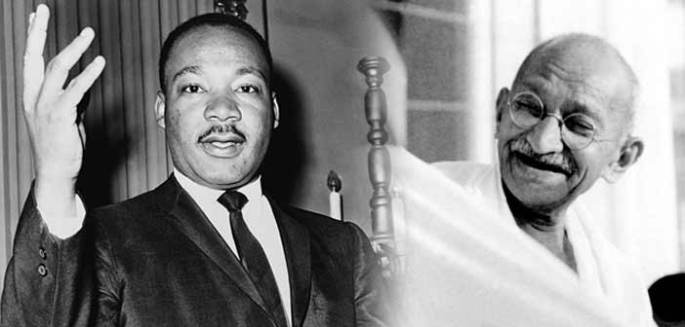
Is there another way? During the Civil Rights Movement of the 50s and 60s, Dr. Martin Luther King, Jr. trumpeted nonviolent resistance. “While others were advocating for freedom by “any means necessary,” including violence, Martin Luther King, Jr. used the power of words and acts of nonviolent resistance, such as protests, grassroots organizing, and civil disobedience to achieve seemingly impossible goals.”

I would advocate nonviolence as well. To refrain from resorting to “any means necessary,” it is important to remember that it is not antagonism that solves disputes, but in the opposition of error. Dr. King took many of his ideas from Mahatma Gandhi, who had led the Indian independence movement against British rule. It was accomplished through nonviolent resistance, which Gandhi felt was “infinitely superior to violence.” (47)

Gandhi wrote, “On the political field, the struggle on behalf of the people mostly consists in  opposing error in the shape of unjust laws. When you have failed to bring the error home to the law-giver by way of petitions and the like, the only remedy open to you, if you do not wish to submit to error, is to compel him by physical force to yield to you or by suffering in your own person by inviting the penalty for the breach of the law. Hence satyagraha largely appears to the public as Civil Disobedience or Civil Resistance. It is civil in the sense that it is not criminal.”

Ultimately, tolerance is needed for this Country to survive. Tolerance of immigrants, and ethnicities, and even political parties. Otherwise it’s just a disparate powder keg waiting to explode.

Hate groups, by their very definition, embody a lack of tolerance, and should be responded to accordingly. Nazis, and Neo-Nazis, are pretty clearly a hate group.

I would rather a group like ANTIFA to not be assailable in their actions – to not have members that may be classified as domestic terrorists. I want an organization, or a group of organizations, that promotes tolerance, that finds creative ways of fighting against inequality.

The violence is a symptom, revealing underlying fears and angers. I get it. I’m just as frustrated. And we can’t look to our politicians, because right now it seems that too few of them are there to help. But aren’t there some other ways of promoting tolerance? It feels as if the heart of the Country is broken, and that there are too few stepping up to help it heal.

A Golden Apple

I’ve reached it, as high as I could,
A Golden Apple, far in the branches.
(They will get that wrong.
No matter. In my mouth
The meat is the same. Juices.)
A juice. Sweeter than any in the Garden.
I open my eyes, closed involuntarily.
Ecstasy in that taste.
Not realizing, I chew my lower lip,
Longing for more.

The air is crisp and I nearly shiver,
Water molecules licking my skin.
Another bite.

My tongue rolls over my lip, 
Capturing some escaping nectar.
Laughing, hugging myself, I spin where I stand.
My heart races and an unusual feeling
Rises in my stomach. A flutter.
I shudder,
Knowing my need.

My husband lies in the grass.
He is naked.
My stomach flutters again, and it is good.
I offer him my apple.
He takes it. He eats it.
I do not have to offer him
     What else I have.
     He takes it.
It is good.

The Natural Imperative

How are we programmed to act?

If one had never seen a murder, heard of a murder, knew of the concept of murder – could that person then commit a murder?

If we were to follow our true spiritual instincts, the yearnings we have, where would it lead us?

Some would inevitably be killers. Some would be abusive. But, I wonder, is it a natural imperative, or a product of upbringing? Nature vs. nurture.

What if, for instance, everyone made the effort to treat children, all children, like their own? All children, regardless of race, creed, nationality, sexuality, intelligence, emotional deficiencies, behavioral problems, disabilities. Imagine what that would do for the children, and likewise what it would do to all who interacted with those children.

Wouldn’t children grow up to respect the older generations? Wouldn’t older generations respect a little more?

Yet it doesn’t shine a light on what the natural imperative is. What’s engrained in our biology, and what’s programmed into us through teaching and upbringing.

What is our natural system, in the absence of power struggles and fear?

It’s something I’ve been thinking about, and will continue to think about.

Alas, Poor Yorick

It’s an interesting cross roads, along one path – civilization; and the other – barbaric punishment.

I’d mentioned in the earlier post, “It’s the W-Word!!!“, a statement made by Gandhi: “A nation’s greatness is measured by how it treats its weakest members.”

There are similar quotes, by similarly great men and women, on similar topics. Another that stokes the flames is from Dostoyevsky: “The degree of civil action in a society can be judged by entering its prisons.”

I’ve seen the criminal justice system. I believe the criminal justice system in the United States does not work. There are statistics. There are first-hand accounts. There are horror stories.

Privatization, capitalism, dehumanization drive a criminal justice system that is unsustainable. The criminal justice bubble, if you will. A bubble that is sure a break.

And I’ve mentioned the issues I’ve had with the criminal justice system before in passing. But right now I’m thinking about the death penalty. This was prompted by the scheduled Tuesday execution of Missouri inmate Marcellus Williams. Newly discovered DNA evidence prompted the Governor to stay the execution. (As I’m working on the finishing touches of this piece, I just got a notice for an execution in my home state of Florida.)

It’s an aspect of our belief that the threat of death will keep citizens in line. That punishment for crimes is the most obvious deterrent. If you can create a punishment harsh enough, eventually it will inevitably prevent all crime. Yet that doesn’t seem logical.

Anyway you slice it, here the numbers are skewed.

A recent study by Professor Michael Radelet and Tracy Lacock of the University of Colorado found that 88% of the nation’s leading criminologists do not believe the death penalty is an effective deterrent to crime.”

Personally, I am an ardent detractor of the death penalty. From a moral standpoint, the taking of someone’s life is something that I will not support. (In a kind of extremist view, I admit I did go vegetarian last year.)

Coming at this from a religious standpoint, I think of the various conservative Christians who will decry abortion, yet at the same time demand retributive justice. This post from Christian Today, 2002, gives you a glimpse:

“Many evangelical christians believe that when it comes to wrongdoers (or criminals), the state’s first task is to make them suffer for the wrong they have done. Whether the lash, or exile from one’s homeland, or a stretch on the rack, or exposure to public shame (The Scarlet Letter), or confinement in jail—or even the noose—punishment is expected.

Is there a Christian principle from which retributive justice is derived? Retributive justice did not arise from any Christian principle; almost every pre-Christian society dealt with wrongdoers by causing them pain. Even so, retributive justice is supported by biblical example.”

A commonly cited verse for retributive punishment is Exodus 21:23:

“But if there is any further injury, then you shall appoint as a penalty life for life, eye for eye, tooth for tooth, hand for hand, foot for foot, burn for burn, wound for wound, bruise for bruise.”

And yet, I’ve heard it taught that even this was to encourage leniency in punishment. Prior to the Torah, death would be a common punishment for many crimes. Then Jesus came along, and theoretically upended the whole system. “Love thy enemy”, “turn the other cheek”, et al.

It’s believed now that most religious systems argue for grace and mercy when meting out punishments. Yet, Christians in America have been at the forefront of hateful behaviors. Radical Islamists vie for power and incite fear through terrorist acts. And some Hasidic Jews are still accused of misogynistic treatment of their wives, moving into the realm of domestic abuse.

We don’t seem to have it down yet.

Currently thirty-two states have the death penalty. There are right now over thirteen-hundred people on death row in the US. And from this fact sheet, it seems that roughly 61% of the polled Americans would be favorable to alternatives to the penalty. It’s my hope that eventually we’ll move from this form of retributive justice, in favor of more humane treatment of our citizenry.

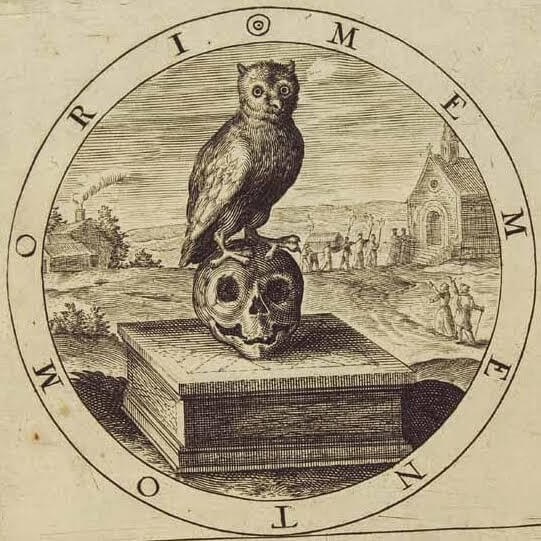
Memento Mori

Latin for “remember you have to die.”

This crosses my mind. I had just reread The Icarus Deception by Seth Godin, and he discusses this principle. Art is transitory, all things come to an end, etc. etc.

I’m telling myself this as I look at the cracked face of my new Fossil Q smart watch. It’s a small crack. I banged it on the corner of a keyboard while I was at rehearsal. It is irksome, to say the least.

My first inclination is to send it back (actually, the warranty might cover it, and I’ll certainly check it out). But after the first few moments of discomfort over a broken, fairly-expensive item, I get to look at it from a higher elevation. Memento mori – remember you have to die.

We all die. Everything we know ends. Even the seeming permanence of stone and mountain is but a transitory state, eventually eroded away, though we will certainly be long gone by the time the great mountains have been made flat.

Things of beauty are beautiful because beauty cannot last.

Purpose, it’s that little flame…

We’re here to learn, and these lessons are predetermined. It’s up to us to work through the past karmic debt we carry. We are all connected, aspects of an eternal force, the Godhead, Universe, or Source. We carry with us the possibility for understanding and love.

The meaning of life is to experience. It’s the only rational purpose I can assign to the mystery of it all. Why we suffer, why we grieve, why we continue to love and give of ourselves. It’s a spiritual existence having a temporary physical one.

In that interconnectedness, we must understand that what we do to others is manifest in what will happen to us. Karma. The golden rule. These are the elements of all faiths that show us that behaving well, caring for each other, is a righteous path.

The belief that power over others will somehow fulfill us causes us to seek out status. Financial gains, palatial estates, the ability to hire and fire as we see fit. An ego-driven force that tarnishes our spiritual efforts. 

We are born with a pervasive want, or need, driving us towards some goal. As children, I believe, we have a better grasp of who we are and our place in the Universe. It’s as we age, and become educated, that the neuroses begin to develop. What if we’re not good enough? What if we don’t succeed?

Yet, if happiness can be found in a job well done, and a life well lived, than the other trappings and accoutrement are superfluous. 

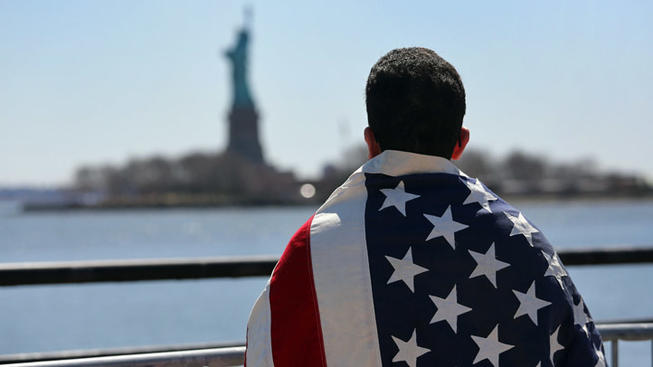
America the hateful?

What a terrible week for the Country. External threats, such as North Korea and Iran loom large in the political arena, but it’s the domestic disturbances that are invading the national consciousness.

  • On Tuesday, President Trump retweeted a cartoon of a train bearing the Trump logo killing a CNN reporter, just days after a protester at a white-nationalist rally in Charlottesville, Virginia, was fatally run down by a driver who participated in that rally. The cartoon reads “Fake news can’t stop the Trump train.” Thirty minutes later it was deleted from Trump’s Twitter feed.
  • Texas A&M University has called off a white-supremacist rally that was scheduled on campus next month. The rally organizer said he was inspired by the Unite the Right demonstration in Charlottesville for his White Lives Matter event planned for Sept. 11. Known white supremacist Richard Spencer was invited to speak at the event.
  • Charlottesville riots left one dead and nineteen injured, following a car slamming into a crowd of people. The gathering of alt-right protestors coming to oppose the removal of a statue of Robert E. Lee collided with leftist counter-protestors, and a large-scale riot erupted, with white supremacist driver plowing into a crowd of people.
  • Protesters in Durham, North Carolina, brought down a Confederate monument Monday night. The monument, which is engraved with “The Confederate States of America,” is of a Confederate soldier. Activists had previously campaigned for its removal. Protesters tied a rope around the statue and pulled until it fell over, doing extensive damage to the piece.
  • Boston Police arrested one person suspected of shattering part of the city’s New England Holocaust Memorial. The person is suspected of throwing a rock at one of the memorial’s six glass towers at around 6:40 p.m. Monday. The memorial was also vandalized in June. A 21-year-old man was arrested for the first incident.
  • The Lincoln Memorial was vandalized with red spray paint, stating what appears to be: “Fuck (law, or perhaps Islam)”.
  • A Google software engineer wrote a contentious memo that has “enraged advocates of greater diversity in the technology industry. The memo has also served as a rallying cry for conservatives and the alt-right who view Google — and Silicon Valley — as a bastion of groupthink where people with different opinions are shamed into silence.” The memo proposed that differences between men and women — like a woman having a lower tolerance for stress — help explain why there were fewer women in engineering and leadership roles at the company. He said efforts by the company to reach equal representation of women in technology and leadership were “unfair, divisive, and bad for business.”

-Stories as reported in New York Times, Daily Beast,
CNN, Fox News, and Washington Post

I get through all of these, and there are more that I could list, but I feel sick. This is what we’re dealing with right now.

But, I continue on, finding that the father of the poor young woman who was murdered at the Charlottesville rally forgives the man who had driven the car. His compassion, even in the face of unimaginable grief, is something that I think many of us would have a hard time practicing.

Yes, the world is terrifying. Or it can be. And it’s contentious being an American. But we can do better. We can be better.

America is beautiful because of its diversity, and its tenacity.

When will the revolution revolve?

It’s scary to live today. There’s a resistance to change, and that resistance is showing up in violent ways. Yet, why are we now so change adverse? The industrial revolution was nearly three hundred years ago. Since that time, it’s been non-stop change. The changes that branched out from that revolution are: the industrial mindset and the alternative mindset.

In essence, what you have us the established – the status quo. And then you have the alternative. Thinkers, creatives, revolutionaries, heretics, those that come along and bring the most disruptive tools they can: ideas. And once an idea is hatched, and if it firmly takes hold, it becomes the new status quo. Perhaps the idea originators are satisfied with that. Perhaps they stop generating original ideas. But someone won’t, that much is certain. Someone won’t settle. Someone will not abide the status quo. For every status quo, there is someone who has an alternative idea.

Generally, and I’d argue that it’s a universal truism, though I’m open to the fact that it may not be, that looking to adhere to a past status quo, once it has been replaced, will not bring with it any positive outcome. Adherents to past systems are often the most dangerous, and not in the form of ideation. Rather, they cling unflinchingly to a system already shown to be obsolete. I’m thinking of course of racism, and the violence and rhetoric of the past week.

Clinging to past perceptions and prejudices is no way to inhabit a current moment. Even with what the status quo is now, it is a time of unrest. Movements are springing up, the products of ideas, with the hopes of unifying. Detractors as well, both with the desire to push ahead, and forge new ground, or with the hope to reinstate old patterns – those former glories.

Occasionally it’s hard to tell the difference. Good salesmen will pitch you what seems like an idea – maybe even a good one. But these flim-flam men and women are just pitching rehashed examples of obsolete former glories. It’s not new. It hasn’t been new for some time.

We understand more about our deficiencies when we’re able to look back. We know that black, white, brown and yellow are equals, not subject to class division, segregation or subjugation. We know that women and men are equals and deserve equitable pay and work opportunities. We know that diversity creates more robust team dynamics, leading to better ideas, and that exposure to arts is as important to developing a young brain as is learning the fundamentals of reading, writing, math and science. We know all these things, and yet our application of this knowledge still lacks universal acceptance.

Old ways are hard to break. Status quo is the norm, and that gets easily hard-wired. Easier to stick to the path than forge a new one. Thankfully, there have always been those uncomfortable with the status quo. And we now live in a time when it’s easier than ever before to forge new territory.

“The new leverage available to everyone means that the status quo is more threatened than ever, and each employee now has the responsibility to change the rules before someone else does. This isn’t about working your way up to the top, or following the rules, and then starting down the path of changing your world. Instead, these innovations are examples of leadership. About one heretic, someone with a vision, who understood the leverage available, who went ahead and changed things.”

-Seth Godin, Tribes

And after all that, I can’t help think of that last speech in The American President. If you haven’t seen it, give it a watch.