Blog

Twas the Night Before Christmas

I’ve been playing fast and loose with my writing the past few weeks. Whereas I’m getting my morning pages done every day, my posts have been hit or miss on content and creativity. With Christmas just a day away, I’m hopeful that my schedule will be more manageable in just a few days.

That being said, thanks for keeping up with the blog.

This day always makes me think of the poem, A Visit from St. Nicholas, as my dad would read it to me every year – for many years. In 2008, I received a DVD copy of his reading it, so that I could have it in perpetuity.

So, as the poem ends, I’ll too end by saying, “Happy Christmas to all, and to all a good night.”

Is Christmas ruined?

I overheard in a break room that “Working retail has ruined Christmas…” for the woman who said this. And that got me thinking. Is commercialism ruining Christmas?

Radio stations start playing Christmas music in November, or maybe even October. Do they do it to get the spirit going? No, they do it to catch radio listeners, and thus sell more ads.

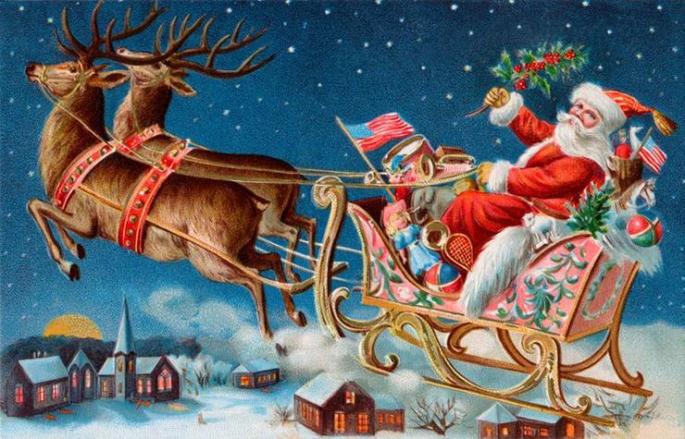
Television, stores, nonprofits, and other businesses use Christmas to bring in or make more money. But what does that do to Christmas? Many of our cherished Christmas traditions were marketing campaigns during the holidays, including Rudolph the Red-Nosed Reindeer (Montgomery Ward Department Store) and Santa’s Red Suit (Designed by Thomas Nast in Harper’s Weekly, but which was popularized by Haddon Sundblom’s Coca-Cola campaign).

Even Dicken’s A Christmas Carol created some traditions we still use today.

To answer the question of a ruining of Christmas, it must be understood what Christmas is. And that answer is so many things to different people.

So celebrate Christmas your way, and find moments to enjoy the season. It comes just once each year…

Last shopping weekend

Here we are, the last shopping weekend before Christmas. Are you done shopping?

Yesterday was what retailers call Super Saturday, the biggest single shopping day of the year.

“The last Saturday before Christmas has become the biggest shopping day of the year and we expect an impressive turnout.” – NRF President and CEO Matthew Shay

Nearly 150 million Americans are expected to shop this weekend. Now, I like stuff as much as the next person. I even did some shopping myself. But what’s the takeaway from all the spending and gifting?

Hopefully it’s that what’s important is family and loved ones, and not who’s the best shopper.

Managing

I’m considering the managers I know, and who’s doing good work and where some may falter. A while back I posted on leadership qualities. This one is standing out to me:

  • They thought and said “we” rather than “I.”

We’re all teams, and we work in teams. No person produces work alone. I wish all managers thought about the we a little bit more.

Weekly Rundown

The week that was, Dec. 20th. More work; started making end-of-year plans; brainstorming goals for 2020. The next ten days will be pretty crammed full. But I had some good highlights this week.

What I’m reading: Light the Dark: Writers on Creativity, Inspiration, and the Artistic Process edited by Joe Fassler. Oddly enough, I first started reading this a year ago, December 2018. I did not finish it, but something made me pick it up this week. I have the Kindle edition, and with reading on my iPad I sometimes find it less intrusive when I don’t continue reading. The unfinished book stays on my nightstand, screaming at me to pick it up again. The iPad doesn’t say much at all. But led to Jack Gilbert while reading this, so I’m curious to see what other gems may come out of it.

What I’m listening to: Not impeachment proceedings, and only some Christmas music. This week I bounced mostly from podcasts to trying to pick the next audiobook I want to dive into. I’ve got several in the queue, but I haven’t been quite ready to pull the trigger on one. I’m hoping inspiration strikes.

What I’m spending time with: This week it’s a quote – “If the locomotive of the Lord runs us down, we should give thanks that the end had magnitude.” I hadn’t read Jack Gilbert before. I may have read that bit in Light the Dark last year, but I didn’t feel it like I feel it now. Another quote which has some meaning to me comes from another Jack, this one named Kerouac. “I saw that my life was a vast glowing empty page and I could do anything I wanted.

Other things of interest this week:


Thinking fuzzy

Back in 2013, Fast Company featured an article on 10 things about the brain. Item number one is: “Your brain does creative work better when you’re tired.”

The article quotes a study published in Scientific American, stating “Insight problems involve thinking outside the box. This is where susceptibility to “distraction” can be of benefit. At off-peak times we are less focused, and may consider a broader range of information. This wider scope gives us access to more alternatives and diverse interpretations, thus fostering innovation and insight.”

So what does that mean practically? When you need to come up with clever and innovative ideas, it’s better to do it from the side rather than straight on. Allow yourself to be distracted, or tired, or not even think about the problem at hand. Allow the unconscious mind some time to come up with the solution or find a breakthrough.

Live Bravely

“If the locomotive of the Lord runs us down, we should give thanks that the end had magnitude.” – Jack Gilbert

In Light the Dark, Elizabeth Gilbert (author of Big Magic) wrote about finding the work of poet Jack Gilbert (no relation). Shortly after reading this over the past few days I came across a quote by Benjamin Franklin which stated, “Either write something worth reading, or do something worth writing.” And the two seemed to complement each other.

Elizabeth writes, “Live bravely when you’re young, we say. And maybe again when you retire, if you play your cards right. Jack Gilbert refused that argument: No, I’m just going to live that way every single day of my life, thanks.”

What would that look like? To live bravely throughout our days? For Jack Gilbert, who worked at steel mills before becoming a poet, that looked like a Pulitzer nomination for his first book. Then, accepting relative obscurity, he went to live and travel in Europe and Asia. He published five collections in five decades, and two novels. But he stayed away from mainstream literature and academia.

But he lived truthfully, to himself, and to others. He experienced life and sampled all it had to offer. Fellow poet and lover Linda Gregg said of him, “”All Jack ever wanted to know was that he was awake—that the trees in bloom were almond trees—and to walk down the road to get breakfast. He never cared if he was poor or had to sleep on a park bench.”

Life is different for all of us, but bravely living it will leave a mark on those around us regardless of who we are or where we come from.

In other words, do something worth writing.


Just a quick one

Today I wanted to share a couple of things.

First, the new short-format podcasts from Tim Ferris on Books I’ve Loved. There are two of these so far, the first with Ferriss’s suggestions, and the second with book suggestions from Seth Godin and Esther Perel.

Also on books, this Laura Vanderkam article on How to Make Time to Read, from Medium.

My recent posts have been about books and reading, and these two offerings seemed to fit right in.

Why books?

Another thought following the past two posts. Why books?

I was in Amsterdam two years ago, riding the tram across town, and there were passengers in large numbers reading books. The same was true in Belgium, Germany, Ireland, etc. Not when I take the bus or train here in the States. Why are books still so popular over there, while not so much here?

I may explore that in more detail when I travel over there next (not sure when).

But as for now, I know that I like my books. I like reading them. I like bookstores and libraries. And that’s not going to change.

Wasted time

After looking at Vonnegut’s rules for writing fiction more closely in my last post, I thought I’d take the first one to consider today.

Information used to be difficult to come by. Before written languages, oral tradition was the only way to communicate ideas and stories. Written forms of communication allowed for external storage of ideas, and facilitated the dissemination of those ideas,

Now we live in a world where instantaneous transmission of ideas is common. What I wonder is whether there are ideas that aren’t worth sharing. That “waste people’s time”, so to speak.

Vonnegut, I believe, was saying that a writer should choose words carefully and craft a satisfactory story. Not so much worry about wasting time as just being expeditious in the writing.

But as to stories or writing wasting time, I doubt that you can waste someone else’s time by putting your ideas out there, provided that they are original ideas. It’s an extension of communication, and your audience will find you.

Or they won’t. Maybe no one reads what you’ve put out there. And no one’s time is wasted. But you’ve put it out there.

Consider Van Gogh, who for his entire life lived in poverty and relative obscurity, as well as some notable infamy. Had he felt that his paintings were a waste of time for others to see, he might have given painting altogether.

We just don’t know how our work will be received, and we can’t self-impose our own limitations. Doing so would be wasting our time.