What if we were right?

We often second guess ourselves. The question more often than not is what if I was wrong? Then we replay the scenario, the events leading up to the decision, and the consequences. 

Leaving that job, buying this house, ending the partnership. All of the thinking that drags us down emotionally, and wastes precious decision-making capital on past choices. 

Instead, why not flip the narrative. Ask yourself “What if I was right?” Then all the supporting dialogue can be replaced with forward thinking. Suddenly, it matters more what you do next, rather than what led you to making the decision in the first place. 

The technical

With a blog I’ve been working on for about three years (on and off), and other social media accounts I’ve had for longer – as well as the new website, a podcast, a radio show, and a new media showcase about to start production on Sunday, sorting through the technology requirements on a limited schedule is complicated.

Right now I’m working on batching blog posts so that I can have at least five done each day. The last two weeks were pretty well shot with rehearsals, a new office, and advisory council appointment orientation. As everything settles and I work on processing incoming data efficiently, I’ll lay out those inbox sorting techniques here (somewhere.)

Beware

Well, I missed the Ides of March. But what I’ve found more insidious is the barrenness of a busy life.

“Beware the barrenness of a busy life.” – Socrates

There’s so many variables in the busy life, and yet it was the same 2,100 years ago as it is today. If we don’t make time for what’s important in our life, not only do we fill our time with the unimportant but we neglect what is truly vital. Thus our life is barren.

What the reviewer sees

A book review is nothing more than emotional snapshot of how an author’s work speaks to the reviewer. 

Anyone can go through a book and mark syntax or grammatical errors. That is the purview of elementary educators. What we expect reviewers to do is to read a work and tell us whether the devices the author used worked for the reviewer. Do the analogies seem out of place? Is there too much ambiguity in story. Can the protagonist be understood adequately with the given backstory?

And these understandings of the author’s work is subjective on the part of the reviewer, and the subsequent review is then only useful to someone with similar taste and understanding as the reviewer has. 

Many things are more subjective than we consider, and we are often more opinion-based than we acknowledge. Remember that when making decisions.

Authenticity

“One must know what one wants to be,” the eighteenth-century French mathematician Émilie du Châtelet wrote in weighing the nature of genius. (From Brain Pickings).

Lots of smart people have spoken or written about being true to yourself. Why is that? What is so important about being your authentic self?

There are two elements to this. The first is: an authentic person is doing that thing which she was put here to do. The feeling of absolute joy that comes from being authentic is contagious, and that’s why authentic people are viewed as charismatic, agreeable, and engaging.

Everyone has a purpose. And, according to Oprah Winfrey, ‘Your real job in life is to figure out as soon as possible what that is, who you are meant to be, and begin to honor your calling in the best way possible.'” (Oprah’s new book, The Path Made Clear).

The other element is the concern of authenticity preventing some from showing up. As Seth Godin puts it in his interview on the Tim Ferriss show, “Which means, and this is someplace I’ve gotten in trouble before, authenticity is totally overrated, totally. That I don’t want an authentic surgeon who says, ‘I don’t really feel like doing knee surgery today.’ I want a professional who shows up whatever they feel like, right?

While I view that as a valid point, and I greatly admire Seth Godin and all the work he’s done (I’ve read a number of his books, some multiple times), I believe that this example is more about a lazy authenticity, rather than it being authentic.

The surgeon in Godin’s example is (hopefully) being authentic in being a surgeon. That’s what fuels his life. If he come in and says he doesn’t feel like doing knee surgery today, then it’s not in line with his authentic self. Or, he didn’t want to be a knee surgeon to begin with.

Authenticity, in my view, is something that will give us energy.

Now I do believe that we may find ourselves aligned to our authenticity, while not fully being authentic. That’s why you see so many Generation X and Y switching careers, rather than staying in one for their whole life. (One of the reasons.) Because they are searching for authenticity. But in the job you’re doing – the one you’ve agreed to do for the time being – you still need to show up. To do your best.

The problem with applications

I’ve filled out a lot of applications. Online mostly, though still some on paper. The online revolution and conversion was ushered in between the times that I was looking for work. In 2003 I fell into my first after high school job, which I don’t even recall if I filled out an application for. It was an office manager for a nonprofit, and until the office space we had was lost, I thought it was going okay. I learned a lot about business skills in that one-man shop, though maybe not enough.

After that, I started what could have been my first career I suppose you could say. Had I not resigned to pursue professional acting, maybe I’d still be there. It was a service organization affiliated with NASCAR, and while I have many problems with the way some of that went down, I can remember fondly my times at the track.

I think from there I learned that work should be fun. Could be fun, at the very least. I was a highly effective worker, and given increasing responsibility during my time there. (In five years, I received two promotions and was asked to handle several increasing complicated aspects of the job – mostly related to computer systems or point-of-sales.) And I had fun, mostly. When the crowds started slowing to the races, then concern gripped the corporatists – cut budgets, watch the bottom dollar, churn out the returns. 

But we’re not robots. Not cogs that, if tightened, can produce two more widgets. (This theme has been coming up recently – the production of widgets.)

Long story short, when it was time to go, I knew it was time to go. The exact phrasing of my last meeting with my boss and my boss’s boss (Office Space anyone?) went like this:

My Boss: “It’s either you quit your outside activities and commit to this, or you should go somewhere else.”

Me: “I have my two weeks notice ready. Let me grab it for you.”

Now my outside activities were my first volunteer endeavors with community theatre, and I had requested a day off a week after the Daytona 500 to be involved with a professional production of an opera. Whether or not either of us were right or wrong is just a lot of conjecture, but we both did what we did. 

I go by my gut a lot. Every job I’ve known it was time to leave, I went ahead and did it. Sometimes without a safety net. Thankfully, I’ve managed to land on my feet. (This time is a little harder, as I’m more keenly aware of the level of debt I’m carrying from my student loans.)

So when I go out and look for those jobs, and I come to a website where I am filling out over and over again the same information. Name. Number. Address. Work history. Education. Etc., etc.

Exactly why we have resumes. And, truth be told, nearly all of my jobs have come through people I knew, or people who knew those people. Not online applications. So what then is the point there? 

When they ask you in their application (posted online, and responded to in the same way by every applicant) “what about this company makes you want to work here?” – the most likely honest answer is “if hired, you’ll give me a paycheck.”

Company culture isn’t bought into in an online application. And good companies will have trouble matching good applicants in that way. 

Companies – if you want good workers (and to retain them), be different. Don’t be another online application for a hopeful paycheck.

Applicants – if you want to work for a good company (and do well), be different. Bring your talents to someone who will take those talents, and let you use them. Let you fail. And then help back up.


The lives we live

I wonder how many of us shape the life that we truly want. The sheer presence of choices in how we do our daily lives – jobs, housing, spouse or SO, children, etc. – a simpler time (maybe one or two-hundred years ago) was simpler to navigate.

Choice. I know I’ve written about choice before. But, it’s true that our brain can only handle a finite number of actual decisions per day. Higher weight decisions cost more of our choice capital than choosing between coffee and tea. But the more we can automate or days, the more capital we have to make the weightier decisions.

It’s not just work either. It’s health. It’s finances. It’s relationships.

I started watching the Marie Kondo series on Netflix. I had read the book some time ago, The Life Changing Magic of Tidying Up. I’m not sure if it was pre or post-shake up in my life. Surprisingly, that altered more than just my decision-making abilities. I digress.

The couple in the first episode have one minor relationship issues. Bickering. Picking at faults perceived in the other. The capital for choice is being used stressing about house, and poor decisions are made when addressing each other.

Limiting the mess, the clutter – freeing capital – allows more data to be processed from a framework of less stress. Less stress in itself frees capital, because the mind isn’t fighting the basic fight or flight choice impulse and hormone secretions. Freeing the mind from material restraints opens up your true potential.

It’s for this. Reason the Buddha taught that desire leads to suffering. Material possessions are as a rock in a bottle floating in the sea. After so many rocks, the bottle can no longer remain afloat. It is imperative that we mindfully cultivate our possessions, and use the choice capital we have in the most productive outputs possible.

Growth mindset

The world is not a zero sum game. We all work towards our own self interest, but not necessarily at the expense of another’s goals.

Ask yourself – is what you’re doing benefiting only you? If it is, look for methods to include others. Collaborate. Expand.

When you and another work towards common betterment, the collaborative effect is greater then the sum of its parts.

1 + 1 ≤ 3

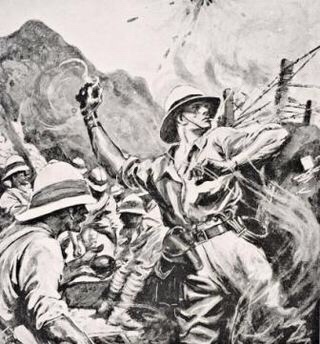
Stop throwing grenades

I know in the past I have talked about energy in life, that can be used as a grenade or as a rocket. If the two were to have the same amount of potential force, the grenade’s footprint would be a spherical area, relatively small.

The rocket, on the other hand, would have a singular trajectory, propelled a much greater distance.

How can we direct our energy towards that one singular point?

Goals. Without goals, all we’re doing is lobbing grenades. A grenade makes a quick, forceful impact, but you’re limited in scope.

The rocket gets you places.

On personal struggles

A volunteer situation shed some light on a personal situation recently, as well as the significance of those “gut decisions”.

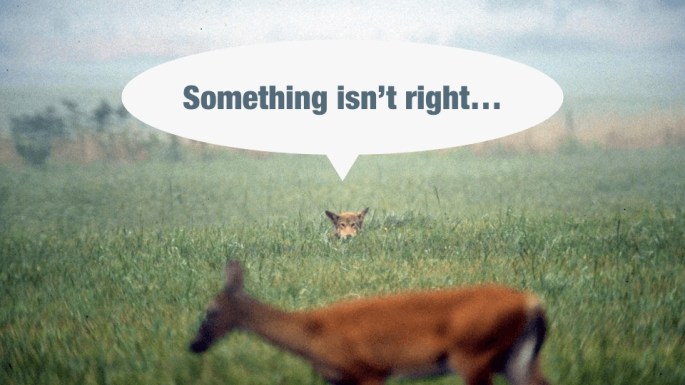
In the volunteering situation, there was an issue of some debate over a matter of a money shortage. First off, I knew that something felt wrong, but I couldn’t quite articulate what about it was off. The perception I had was incorrect, but not for the reason it actually was.

It was shortsighted of me to not explore all possibilities, but the one assumption I had fit so perfectly I couldn’t get past it. Only when I stopped, and investigated where the money wasn’t adding up did I realize – look in a separate bucket. Thus, the shortage was resolved. The two issues were unrelated, though occurring at once.

Thus, when trying to facilitate a family matter I did my best to explore other possibilities. Unfortunately this family member that I was trying to help was unwilling to stop and investigate, maintaining her assumptions and ostracizing herself.

We all go through those times when we believe something so fervently that we are unable to explore any other rationale. But, there may be two issues overlapping, and even when have a gut feeling (often a true intuitive instinct), we may be blind to that secondary issue – preventing us from coming to the best possible outcome.