Blog

After…

I wrote this post several years ago, once again thinking of the tragic events of that time. Recalling it following last week’s tragedy, I thought I would post it again.


I was doing some cleaning last night, and I came across a memoriam for Robin Williams. Just over a month ago, Mr. Williams took his own life, and the subject of depression and mental illness took to the forefront of our collective conversations. How can we help? What can we do?

And what has been decided, I wonder?

The shootings in Ferguson and in other cities; schools where gunmen take others’ lives, or their own; domestic violence or sexual abuse; brutal murders in the Middle East – there is no shortage of tragedy that can keep our attention. But once our attention moves to the next “big thing”, what happens to those conversations?

Too often we sit idly by, talking about a tragic event until another occurs, and then we tune off. Sadly we are reminded because a similar event is coming, sooner rather than later. And when we stop talking about it, whose responsibility is it to keep the conversation alive?

I posit that it falls to the arts. It is the responsibility of artists, organizations and forms to provoke thought, and keep focus on events that the population as a whole might otherwise forget about. Sometimes that leads to protests. The NY Times article, “At Met’s Opening Night, Protesting a Production,” (9/22/14) illustrates how incendiary the arts can be. “Several hundred protesters gathered outside the Met before the performance of Mozart’s “Le Nozze di Figaro” for a noisy demonstration calling for the company to cancel its production of Johan Adams’s 1991 opera, “The Death of Klinghoffer,” which is to have its Met premiere next month.”

The titular Klinghoffer was a Jewish passenger aboard a cruise ship who was murdered by Palestinian hijackers. Considering the relationship between Israel and Palestine, it’s understandable that such a show could cause backlash. Former Gov. George E. Pataki called the production “the wrong show at the wrong time.”

Prior to the Met listing “The Death of Klinghoffer” in its season, how many Americans were familiar with the story? And if an opera, an art form which has been in declining attendance at least over the past few years, can spur conversations, isn’t that a good thing?

And there are many other cases. Thomas Cott curates a daily email, and today’s included the story of the Met, as well as other sensitive issues. (Read it here). When you’re dealing with hot-button issues, someone is going to protest. But if you let the controversies silence the arts, and the conversations themselves stop happening, eventually something tragic is going to happen again.

Vegas

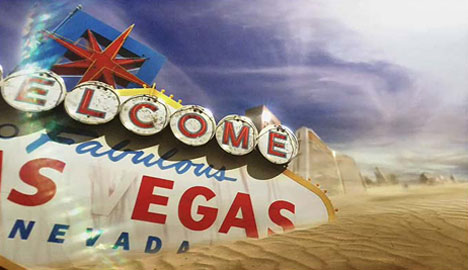
It’s not funny. It’s not a political statement. It’s not a platform, and it’s not an issue of rights.

It’s 59 people dead. It’s 59 lives cut short because of one man with a gun. With a lot of guns.

There are so many words, in so many languages, yet nothing even begins to scratch the surface of what has happened. What these losses feel like, and what those families must be going through.

When will it finally be enough? When will the straw break the camel’s back, and finally something will be done?

I join a mourning nation once again for losses that could have been prevented.

Moving Forward

I burned a few bridges
As I walked these paths
Made forward the only
Way to go

Where I’ll end up
And who I’ll be
I guess that
God only knows

I’ve seen cities in Europe
And rode ships on the sea
Found love in the arms
Of another

I gave up on dreams
As new dreams took shape
And went off
To search for wonder

I went off to school
And I had me a time
I learned more than
I needed to know

There are joys and sorrows
In what we call life
And I savored
The highs and the lows

The journey’s begun
There’s no turning back
There are mistakes
I’d rather undo

Quite a few dreams
I wish I had held
A bit longer
Then I held onto

I’ve hiked through the mountains
Surfed in the oceans
Found myself while
Searching for more

And now what I see
Is only before me
As I step outside
My door

Tried to read in September

September 2017

Books Bought:

  • Object Lessons: The Paris Review presents ‘The Art of the Short Story’ – Picador (Misc. Authors)
  • 50 Great Short Stories – Bantam Classics (Misc. Authors)
  • Paperbacks from Hell: The Twisted History of ’70s and ’80s Horror Fiction – Grady Hendrix
  • How Proust Can Change Your Life – Alain de Botton
  • At the Existentialist Cafe: Freedom, Being, and Apricot Cocktails – Sarah Bakewell
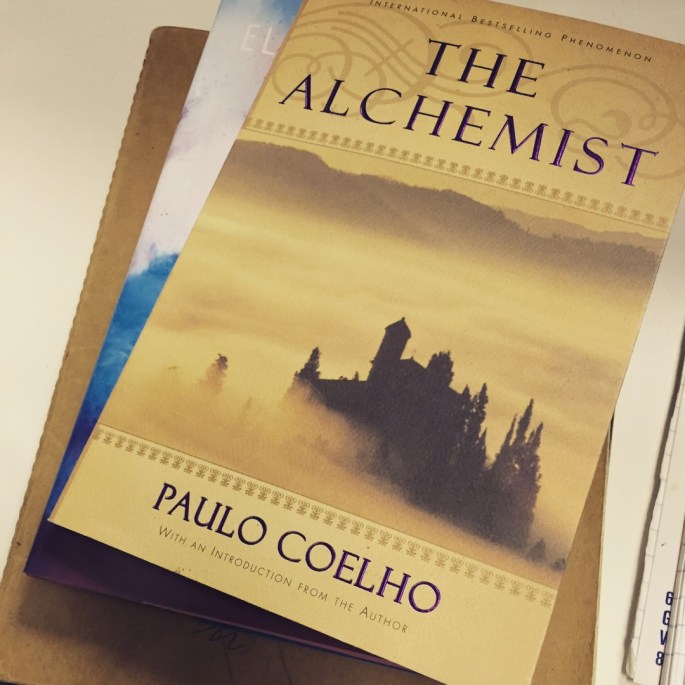
  • The Alchemist – Paulo Coelho
  • Black Wings of Cthulhu 2 – Titan Books (Misc. Authors)

Books Read:

  • Luke Skywalker Can’t Read: And Other Geeky Truths – Ryan Britt
  • Meddling Kids – Edgar Cantero
  • The Alchemist – Paolo Coehlo
  • Paperbacks from Hell: The Twisted History of ’70s and ’80s Horror Fiction – Grady Hendrix (unfinished)
  • We Gon’ Be Alright – (unfinished)
  • The Museum of Extraordinary Things – Alice Hoffman (unfinished)
  • It – Stephen King (unfinished)

Well, Hurricane Irma came and went. I’m still here, if just a bit soggy. The power was out for a few days, so with no power and no work, I sat down with Cantero’s Meddling Kids. I thoroughly enjoyed it, being a throwback to the Scooby-Doo era of my childhood, as well as dark mystery/fantasy with Cthulhu undertones. It’s getting even closer to Halloween, and I’m getting excited.

Cantero tackles issues unique from the animated source material, such as suicide, gender issues, LGBT relationships and mental disorders. He does so deftly and humorously, and thus it’s less likely to be seen as accurate representations of any of those things. But I finished it in just over twenty-four hours, sometimes by candle- or flashlight, and I was happy to be reading it.

It, on the other hand, I barely got into this month. I did see the film, which is a horse of a different color, and boy did I enjoy it. My date for the evening likewise enjoyed it, though she screamed at just about every scare, which made my viewing experience even more memorable, and somewhat interactive.

I recall being a young boy, and my sister was babysitting me. She had rented the original It adaptation, with Tim Curry, and while watching it, we got to the point when Stan had killed himself. Then the power went out in the house. I’m pretty sure that it was jarring enough for me to have a heart attack, even at twelve. The novel just didn’t get much time from me September, so I’ll try to rectify it this coming month.

I’ll be working in Georgia much of the month, so I’m hoping for ample time away from other responsibilities, with which I’ll devote to reading.

Another unfinished attempt, The Museum of Extraordinary Things by Alice Hoffman, was a book that I really tried to get into. I really, really did. The main characters were well-formed and the story was well woven, but it just left me in engaged. I gave it nearly half the book to determine that I was not going to maintain a relationship with these characters, so I sadly put it down. I may try again at some future time.

Unfinished number three – We Gon’ Be Alright. This short collection of essays on the race crisis in America made some strong points that resonated, but it echoes the climate of the Nation so vividly that it was difficult to digest. I intend to finish it this month.

And Paperbacks from Hell! What a lovely little collection from Grady Hendrix, one book showcasing dozens of horror novels from the 70s, 80s, and 90s. I’m only through the introduction, but even some of the displayed cover art has made me laugh and cringe.

With Paulo Coelho’s short novel, I reentered a world that I had become familiar with early last year. This was a book loaned to me as I struggled through spiritual and emotional turmoil that left me questioning many of my decisions in life. Very unlike the protagonist of the book, a shepherd named Santiago who was very content with life the way he was living it. Through his dreams he discovered a Personal Legend that then sent him across the desert to discover his treasure.

This gave me much to consider when I first read it, and I wanted to see if it held up now that I am ostensibly out of that dark night. And it does. The book is hopeful, and anyone feeling lost at any point in life could give it a read. It may or may not resonate, but it’s comforting to know that books can be both inspirational and accessible.

Something entirely different is the collection of essays: Luke Skywalker Can’t Read. I laughed, I had childhood beliefs called into question, and I learned a little bit more about nerd fandom than I had known that I needed. Britt is an author, film critic, and science-fi aficionado, and he took to task Star WarsBack to the Future, and various monster movies, among others.

I think my book purchases this month reflect my newfound interest in short form storytelling and essays. Botton, Hendrix, and the collected short stories are examples of short form, and I’ve been exploring them both as consumer and as writer.

The month didn’t provide me as much time as I would have liked to read. A theatrical production, a hurricane, and commuting to Georgia for work were all time-draining, and this coming month doesn’t look much clearer. But, I’ll certainly try.

#takeaknee

Wow. What a week. It seems that every week for the past few months has left that feeling echoing throughout the populous.

  • North Korean bombs.
  • Healthcare.
  • Puerto Rico’s plight.
  • Increased tensions with Russia.
  • Burmese human rights violations.
  • Mexico City damages.
  • Church shooting in Nashville.
  • And the NFL facing off with President Donald trump.

I want to devote this to free speech. To using our platforms to speak up against what we consider to be societal wrongs. If the president of the United States can say just about anything he wants on his twitter, rant and rave, insult, etc, where does he find the moral high ground to verbally attack peaceful protestors with legitimate complaints?

You may disagree with NFL players sitting or kneeling during the National Anthem. But to say they are “disrespecting” America by not standing is a short-sighted indictment of them. Rather, you’re saying that they’re disagreeing with the way the you think that they should respect America.

But what the hell is America, if it is not the constant growth and deliberation of ideas and criticisms that allow us as a nation to move forward? We grew out of our distaste with how the elite were treating us. Why is it suddenly so distasteful to criticize how the elite are treating us?

“U.S. historians and political scientists often classify dissident movements along a spectrum from left to right, with the left side encompassing Communists, socialists, and others committed to greater economic and political equality, often achieved through government intervention, and the right side including those who embrace capitalist economics with little or no state regulation.”

Dissidence is an element of first amendment-protected free speech, and is often a symptom of more pervasive odious behavior occurring in the nation. Black men and women in America are suffering injustices in greater percentages than their white brothers and sisters. The reasons for this are varied and range across the spectrum, but black unarmed men being shot by police had been a rallying point for the energy to protest.

Is there a best way to protest? I don’t know. But the shear fact that we’re talking about it at the national level is a clear indicator that something was done right. Again, you may disagree with the way the protest was conducted, or with the facts of what is being protested, or both. But we are talking about it.

The thing is, when President Trump tweets, “If NFL fans refuse to go to games until players stop disrespecting our Flag & Country, you will see change take place fast. Fire or suspend!”, I’ll agree with the first part. If you feel offended by players who taking a knee, you don’t have to watch the game. You don’t have to buy tickets, or merchandise. That’s your choice. And then the onus is on owners and managers, and marketers and sponsors to decide how they want to respond. But telling a private citizen to fire someone for exercising their Constitutional right to expression is a slap in the face of all who have fought for those rights.

It’s also possible that those stakeholders, those managers and owners, are fed up, and they’ll double down, much like what happened on last Sunday. Some owners taking to the field with their players. They all think something isn’t right in this country. And they’re not alone. The ones who disagree, they think something is wrong as well.

Why is this such a hot topic? Is it that football is the American pastime? Is it that an elected official is going against public citizens? Is it a race issue, an economic issue, and a first amendment issue?

Yes. Yes to all of it. And there are only few answers to the many questions. But I believe that a man who attacks his detractors rather than listening to them fails to learn anything from them, even when they have valid points to make.

Perhaps this video gets the message across:

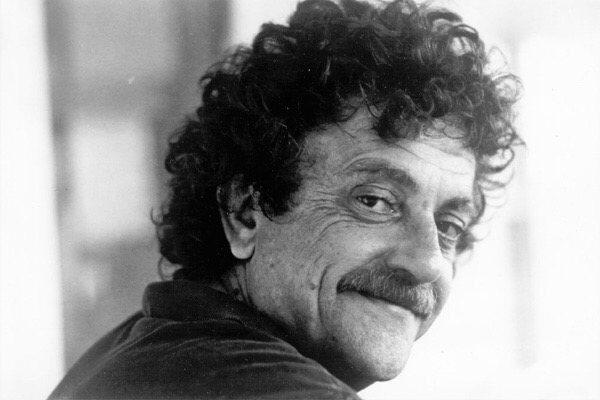
8 Rules from Vonnegut

Started on some fiction based on a creepy dream I had. This was sitting nearby, and has come in handy.

Eight rules for writing fiction:

1. Use the time of a total stranger in such a way that he or she will not feel the time was wasted.

2. Give the reader at least one character he or she can root for.

3. Every character should want something, even if it is only a glass of water.

4. Every sentence must do one of two things – reveal character or advance the action.

5. Start as close to the end as possible.

6. Be a sadist. Now matter how sweet and innocent your leading characters, make awful things happen to them – in order that the reader may see what they are made of.

7. Write to please just one person. If you open a window and make love to the world, so to speak, your story will get pneumonia.

8. Give your readers as much information as possible as soon as possible. To heck with suspense. Readers should have such complete understanding of what is going on, where and why, that they could finish the story themselves, should cockroaches eat the last few pages.

Vonnegut, Kurt Vonnegut, Bagombo Snuff Box: Uncollected Short Fiction (New York: G.P. Putnam’s Sons 1999), 9-10.

The F-Word

I was thinking the other day. Fuck isn’t an unpleasant word. The soft eff-sound stays forward in the mouth, not like finger or finch. The crisp kah-sound at the end could obtain a harshness, but it so rarely does. It’s a brief, multi-faceted, one-syllable word that can range from playful to surprised, angry to erotic.

It gets a bad rap, I guess owing to its connection to sexuality. But maybe it’s a word that just needs further research, and a bit of love.

Divided Nations

Dear Abby:

I’m torn. I’ve been in an open relationship for quite a while now. We share partners between us. There’s a few. Occasionally one will quarrel with another, but on the whole it’s worked out really well. Until recently.

Within the past year one of the lovers has become increasingly erratic. He takes time to berate some of us, then tries to be nice. Though, we don’t actually believe he’s sorry for what he said. Actually, he doesn’t even apologize.

He lauds over us his superiority and says that his stuff is more important than ours. He has always given more to the communal property in the relationship, but now he’s saying that he’s been doing too much.

I just don’t know how long we can last with him. Some of our neighbors are actually threatening him. He just goads them, tells them to go ahead and try. I’m afraid any fight is something some or all of us will get dragged into.

We’re at our wits end! What should we do?

Sincerely,

-Formerly United Guys and Gals

Of course, this is a thinly veiled commentary on President Trump’s rhetoric regarding the United Nations.

The United Nations, or UN was founded by president Franklin Delano Roosevelt and 50 other member states in 1945. Its function was mainly to provide defense and secure against another world war.

Intergovernmental associations of OC the utmost importance to national security and prosperity, and downplaying the cooperative nature of the United Nations is a danger to all.

Award Shows

So the Emmys just passed. A few months ago the American Theatre Wing presented the Tony Awards. We’re moving into Oscar season, and films will inevitably start vying for position. And we’re left wondering – is it worth it?

There are questions of racism and sexism. Shonda Rhimes had this to say. Amber Tamblyn also made the news this week, bringing the industry as a whole to task.

Yet, viewers tune in to the congratulatory events, rooting for our favorites, almost American Idol-style. We want our picks to win.

I get a unique cross-section of opinions when the conversations start up around me. Though I haven’t done much in theatre or film the past couple of years, many of my colleagues and friends still work in the industry. Listening to them I hear of the problems going on set or backstage.

Sexual harassment among a prominent improv troupe. Pay discrepancies for actresses vs. actors. Unfair practices in casting when it comes to non-white performers.

And still, being entertainers, many people not in the industry would chalk it up to inflated egos not getting their way. They say it when it comes to sports, and authors, and performers.

“Get a real job,” they might say. And, in the face of their individual struggles, they are justified in that opinion.

As with most things, it’s not a simple cut-and-dry matter.

So go watch the movies. Get a Movie Pass for ten bucks a month. Make your pick for Best Film. The Academy Awards are right around the corner.

An unfinished symphony

I come back to my questions, the uncertainty of who I am, what I see around me, and my place in the world. The great symphony that is creation is confusing, and I’ve no idea what instrument I am, nor do I know the notes to play.

An actor’s nightmare is showing up onstage unfamiliar with the show and not knowing the lines.

Showing up to class naked is another common nightmare.

But isn’t that what happens to all of us? We show up here on Earth to learn, to love, to fail. And we’re naked and uncertain. As we age, we think that we’re the only one unprepared, but that’s not the case. Everyone else is just as uncertain.

The great showmen, the sales team, marketers, educators – they’d have you believe that they had it all figured out. But it’s a ruse. What do they have figured out?

Time and again, technology shifts industry. Discovery shifts learning. Goods and services are transitory, as are we all.

I guess all we can do is a pick a note and play it loud. If it doesn’t happen to sound good, play another.