“The most wasted of days is one without laughter.” – E.E. Cummings
The enjoyment of life is predicated upon joy. barring that, life is scarcely worth the struggle.
“The most wasted of days is one without laughter.” – E.E. Cummings
The enjoyment of life is predicated upon joy. barring that, life is scarcely worth the struggle.
Once again, my time in Japan has elapsed. I’m flying back home, to a pile of uncertain work that requires my immediate attention.
Oh how I long for a vacation.
There are these deer. And, you see, they kind of run the town.
Not in the literal sense. But, they do what they want.
Temples, tourists, traffic. All of it seems second to the deer.
But, i can’t help but wonder – is it good for the deer?
A word meaning eat oneself into ruin, which we did with gusto in Osaka. Probably too much gusto.
The food in Osaka is famous, and street vendors kept us full all night.
Recovering the next day required a little more rest.
For work, I travel frequently by myself.
On excursions, more often with someone else.
I enjoy the company, but think that, perhaps, alone time is preferable. No schedules, no pressures.
No other need than what might strike your fancy in the moment.
I’ve taken trains in a number of places – Northeastern US, for example. Through Germany, Poland, and the Czech Republic.
I’ve ridden the historic Skagway line in Alaska, and several scenic rails.
And of course, Japan.
One trip I’ve considered for awhile is the cross country Amtrak – from coast to coast across the US.
Moving this way is different, slower, and gives you more opportunities to appreciate place.
I don’t know that we realize how quickly time can move. What seems like a moment, suddenly a year is gone.
And the past year has been no different. There is so much still to do, but only so much time to squeeze it into.
Make sure to make time for the important things.
My brother and I knew we were in trouble when, not 20 minutes up from the fifth station, we were already sucking air.
Neither one of us might be in the best shape of our lives, but we are fairly fit.
Still, the elevation caused notable shifts and breathing, and that walk was indeed arduous.
Being in Japan, trying to assimilate to the time change. Not sure what day is what.
And still trying to write, though fitting in the routine is certainly a challenge.
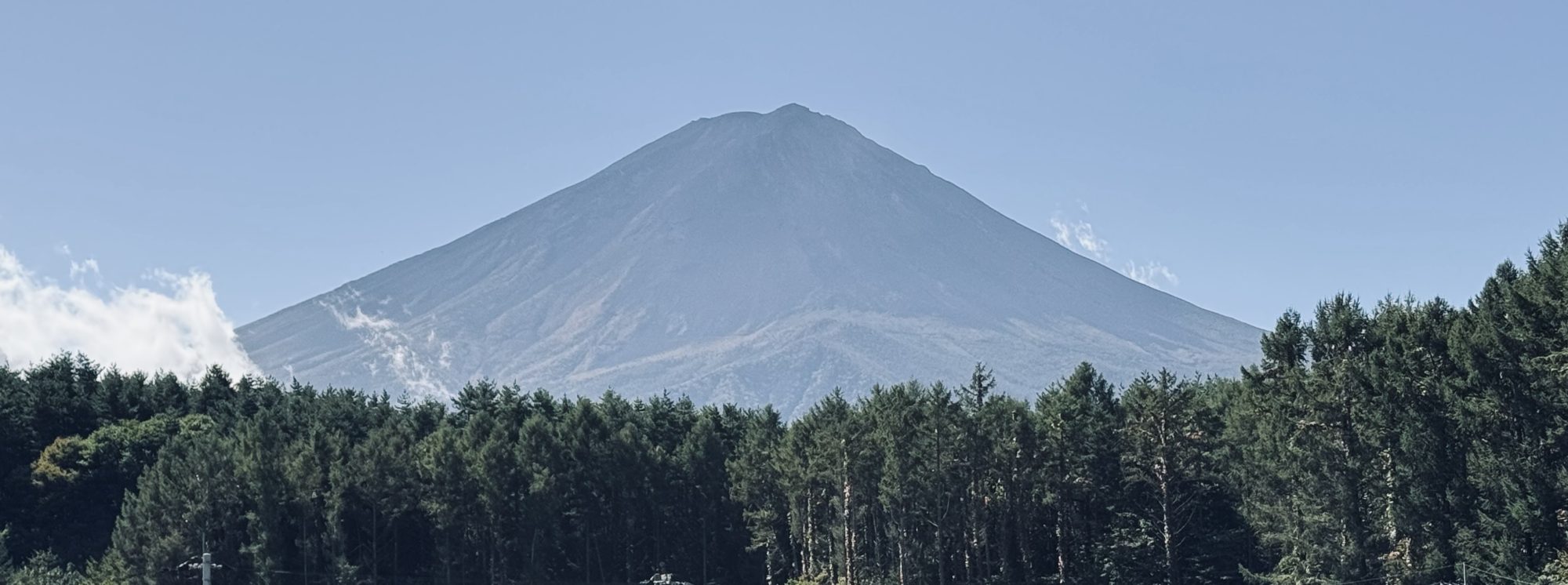
Back down from hiking Mt. Fuji, I’m struck by a number of things.
First, that is a walk. I am beat.
Second, there’s a mix of hikers on these mountain trails.
Young, old, men, women, curious, and devout.
To step towards the heavens, I suppose, is to step towards divinity.

