Blog

A view from a hangover

It wasn’t an all-nighter fueled by Red Bull and Stoli. It wasn’t a binge. It was some rum and cokes at Chili’s for Sunday football, and a few drinks later with the boys.

It hit me hard yesterday, though, and I was all I could do to get through the day with open eyes. It’s tough getting older.

I look back on numerous hangovers over the years, and can recall some of the more questionable circumstances. I’m glad this time it was just my bed.

How do we politicize everything?

Another week, another controversy (or three). Still we’re on the NFL players taking a knee. Still we’re seeing Puerto Rico suffering in the aftermath of the storm. White nationalist speaker at the University of Florida. President Trump’s seeming callousness in response to solders’ deaths overseas. 

The right is calling the left out of touch with America. The left is calling the right out of touch with American ideals. Both sides are calling the other elitist. Former presidents are critical of the current administration, and the current administration seems able to be critical of everything. 

Nothing can occur in this environment without someone taking issue, and sides forming, bolstering one or the other. I’ve imagined it would have come to a head already, but it seems to keep going.

This is the environment that has led me to investigate how I feel about politics. About what the nation is doing right, and wrong. The citizenry is on the whole disconnected from our elected officials, and in the highest echelons of the political spectrum, it seems that corporate interests have more sway than the common voter. 

We weren’t supposed to be this way. The American experiment is facing another critical moment, one of who knows how many in its 240 years, and there is nothing but the disconnect that seems to be guiding us. As I continue to write, post, and focus my thoughts into what I hope will be more informed (and better written) going forward, I fear that for the forseeable future we wlll have more controversy to cover. 

On the weather

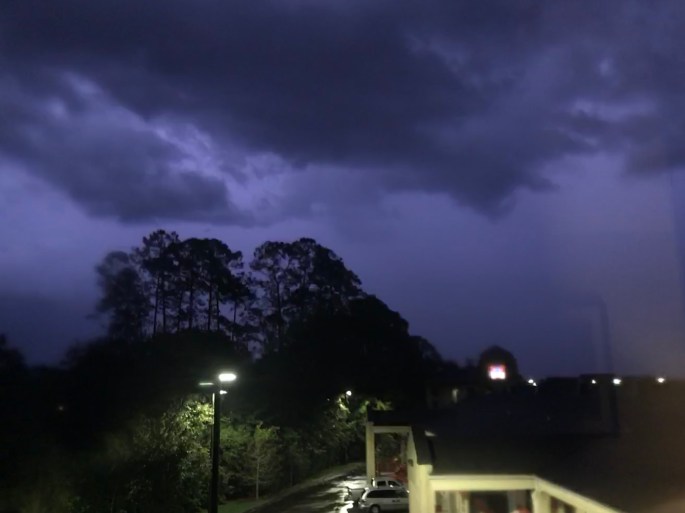
It’s wet outside. Rainy and dark. Thunder crashes shake the hotel that I’m staying in, and the lightning illuminates the cloudy night sky. Looking out the window on this third story hotel room, I see into the back parking lot and the hotel that is somehow either behind us or beside us. I’ve no idea which way these hotels are oriented in comparison to each other.

The parking lot is wet, and there are few cars down there. Street lamps are shining around the lot, wet metal on the cars reflecting up light.

A thunder-clap shakes the window I’m looking through, and I take a step back into the room. I decide to write a bit, before it gets time to go to work.

Stretching past resistance

I’m stretching out the muscles in my legs.

As I’m stretching them out, pushing forwards and backwards on my legs, alleviating the tension that builds up, I notice the resistance. Resistance that is met in a forward bend and backward bend. And just as the resistance becomes so terrible, so unbearable, the tension releases. I can feel the muscle actually give way – it sort of vibrates, and then it’s loose.

I think of it as a metaphor for all resistance we face. I don’t push the stretch to the point where the muscle will tear. That would do irreparable harm. But I’m finding the space just past comfortable, where I’m living in the state of discomfort, until the muscle finally gives. The resistance breaks.

You must lean into the points, as Pena Chödrön says. 

More on welfare

Here it is, Friday, and I’m finishing up a job. At least, finishing it for the week. After a contentious lunch, wherein the conversation at the table included someone saying that he wasn’t watching football anymore over the National Anthem debate (I’m keeping my mouth shut). He’s giving up drinking Pepsi, because they haven’t pulled sponsorship of the NFL (I’m keeping my mouth shut).

Now it’s the end of the day, I’ve got a date I’m excited to get to later that night, and it’s all going well. Then he brings up welfare, and people not wanting to work taking tax payer money (dammit, I am keeping my mouth shut!).  And finally, immigration.

“Don’t you think that we should keep the immigrants out?”

Well, shit. I’ve tried keeping my mouth shut, but now you’re asking me a direct question.

“No, actually. My grandparents were first generation Americans, and I think the backbone of the American system is immigration.”

“My ancestors were immigrants, too,” he says. “But I’m not talking about those.”

“Oh, you mean the Mexicans and the Muslims.”

This conversation goes on for a little while, back and forth, about whether welfare recipients are deserving, about legal vs. illegal immigration.

There is a cultural bias in this country, and it’s fragmenting how we view what’s happening around us, and around the world. This conversation was merely another example.


Night Terrors

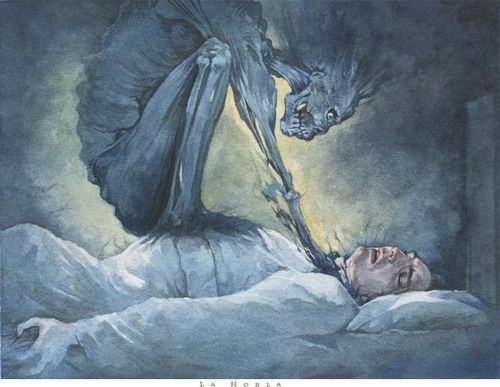
When I’m sleeping, I sometimes suffer from these twitches. I’ve been told that as I sleep I’ll give a full body convulsion. I’d chalked it up to night terrors, primarily because when I recall what I’ve been dreaming, it’s not usually the most pleasant.

Someone I was working a job with told me that before his anxiety attacks kicked in, he was having those twitching fits.

“Great”, I thought. More rough seas ahead. My parents already thought that I had gone through a nervous breakdown last year. I’m not entirely sure that I didn’t.

But I did some research on these twitches, and it turns out it’s much more common than I realized. They’re called hypnagogic (or hypnic) jerks, and also sleep starts, and perhaps up to 70% of people experience them.

It’s possible, then, that I just sleep poorly, and have numerous sleep starts throughout the night. Still, I’m more sure now that it’s not night terrors.

After…

I wrote this post several years ago, once again thinking of the tragic events of that time. Recalling it following last week’s tragedy, I thought I would post it again.


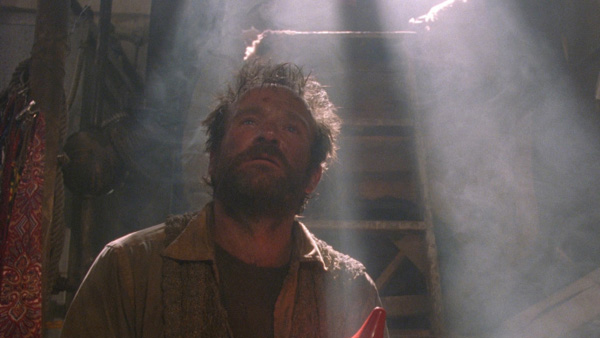
I was doing some cleaning last night, and I came across a memoriam for Robin Williams. Just over a month ago, Mr. Williams took his own life, and the subject of depression and mental illness took to the forefront of our collective conversations. How can we help? What can we do?

And what has been decided, I wonder?

The shootings in Ferguson and in other cities; schools where gunmen take others’ lives, or their own; domestic violence or sexual abuse; brutal murders in the Middle East – there is no shortage of tragedy that can keep our attention. But once our attention moves to the next “big thing”, what happens to those conversations?

Too often we sit idly by, talking about a tragic event until another occurs, and then we tune off. Sadly we are reminded because a similar event is coming, sooner rather than later. And when we stop talking about it, whose responsibility is it to keep the conversation alive?

I posit that it falls to the arts. It is the responsibility of artists, organizations and forms to provoke thought, and keep focus on events that the population as a whole might otherwise forget about. Sometimes that leads to protests. The NY Times article, “At Met’s Opening Night, Protesting a Production,” (9/22/14) illustrates how incendiary the arts can be. “Several hundred protesters gathered outside the Met before the performance of Mozart’s “Le Nozze di Figaro” for a noisy demonstration calling for the company to cancel its production of Johan Adams’s 1991 opera, “The Death of Klinghoffer,” which is to have its Met premiere next month.”

The titular Klinghoffer was a Jewish passenger aboard a cruise ship who was murdered by Palestinian hijackers. Considering the relationship between Israel and Palestine, it’s understandable that such a show could cause backlash. Former Gov. George E. Pataki called the production “the wrong show at the wrong time.”

Prior to the Met listing “The Death of Klinghoffer” in its season, how many Americans were familiar with the story? And if an opera, an art form which has been in declining attendance at least over the past few years, can spur conversations, isn’t that a good thing?

And there are many other cases. Thomas Cott curates a daily email, and today’s included the story of the Met, as well as other sensitive issues. (Read it here). When you’re dealing with hot-button issues, someone is going to protest. But if you let the controversies silence the arts, and the conversations themselves stop happening, eventually something tragic is going to happen again.

Vegas

It’s not funny. It’s not a political statement. It’s not a platform, and it’s not an issue of rights.

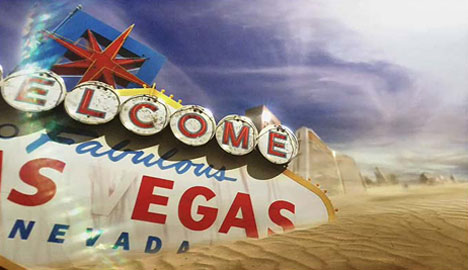
It’s 59 people dead. It’s 59 lives cut short because of one man with a gun. With a lot of guns.

There are so many words, in so many languages, yet nothing even begins to scratch the surface of what has happened. What these losses feel like, and what those families must be going through.

When will it finally be enough? When will the straw break the camel’s back, and finally something will be done?

I join a mourning nation once again for losses that could have been prevented.

Moving Forward

I burned a few bridges
As I walked these paths
Made forward the only
Way to go

Where I’ll end up
And who I’ll be
I guess that
God only knows

I’ve seen cities in Europe
And rode ships on the sea
Found love in the arms
Of another

I gave up on dreams
As new dreams took shape
And went off
To search for wonder

I went off to school
And I had me a time
I learned more than
I needed to know

There are joys and sorrows
In what we call life
And I savored
The highs and the lows

The journey’s begun
There’s no turning back
There are mistakes
I’d rather undo

Quite a few dreams
I wish I had held
A bit longer
Then I held onto

I’ve hiked through the mountains
Surfed in the oceans
Found myself while
Searching for more

And now what I see
Is only before me
As I step outside
My door

Tried to read in September

September 2017

Books Bought:

  • Object Lessons: The Paris Review presents ‘The Art of the Short Story’ – Picador (Misc. Authors)
  • 50 Great Short Stories – Bantam Classics (Misc. Authors)
  • Paperbacks from Hell: The Twisted History of ’70s and ’80s Horror Fiction – Grady Hendrix
  • How Proust Can Change Your Life – Alain de Botton
  • At the Existentialist Cafe: Freedom, Being, and Apricot Cocktails – Sarah Bakewell
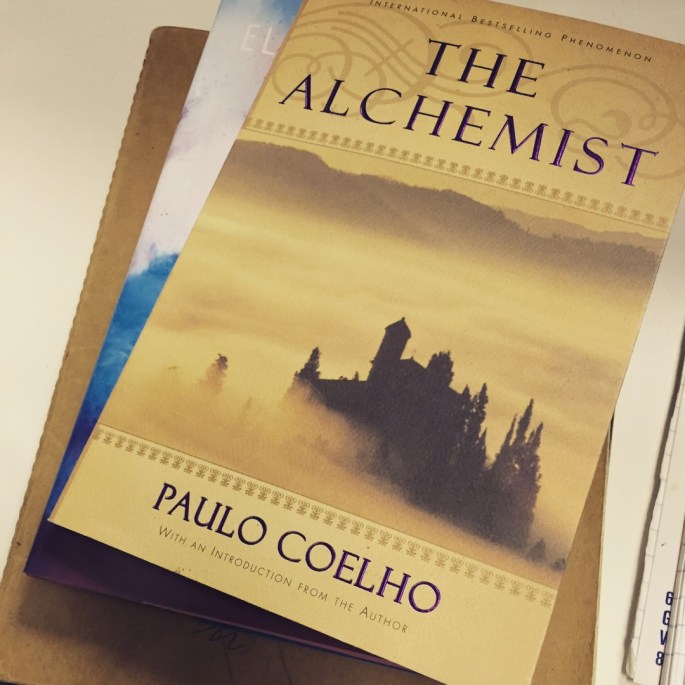
  • The Alchemist – Paulo Coelho
  • Black Wings of Cthulhu 2 – Titan Books (Misc. Authors)

Books Read:

  • Luke Skywalker Can’t Read: And Other Geeky Truths – Ryan Britt
  • Meddling Kids – Edgar Cantero
  • The Alchemist – Paolo Coehlo
  • Paperbacks from Hell: The Twisted History of ’70s and ’80s Horror Fiction – Grady Hendrix (unfinished)
  • We Gon’ Be Alright – (unfinished)
  • The Museum of Extraordinary Things – Alice Hoffman (unfinished)
  • It – Stephen King (unfinished)

Well, Hurricane Irma came and went. I’m still here, if just a bit soggy. The power was out for a few days, so with no power and no work, I sat down with Cantero’s Meddling Kids. I thoroughly enjoyed it, being a throwback to the Scooby-Doo era of my childhood, as well as dark mystery/fantasy with Cthulhu undertones. It’s getting even closer to Halloween, and I’m getting excited.

Cantero tackles issues unique from the animated source material, such as suicide, gender issues, LGBT relationships and mental disorders. He does so deftly and humorously, and thus it’s less likely to be seen as accurate representations of any of those things. But I finished it in just over twenty-four hours, sometimes by candle- or flashlight, and I was happy to be reading it.

It, on the other hand, I barely got into this month. I did see the film, which is a horse of a different color, and boy did I enjoy it. My date for the evening likewise enjoyed it, though she screamed at just about every scare, which made my viewing experience even more memorable, and somewhat interactive.

I recall being a young boy, and my sister was babysitting me. She had rented the original It adaptation, with Tim Curry, and while watching it, we got to the point when Stan had killed himself. Then the power went out in the house. I’m pretty sure that it was jarring enough for me to have a heart attack, even at twelve. The novel just didn’t get much time from me September, so I’ll try to rectify it this coming month.

I’ll be working in Georgia much of the month, so I’m hoping for ample time away from other responsibilities, with which I’ll devote to reading.

Another unfinished attempt, The Museum of Extraordinary Things by Alice Hoffman, was a book that I really tried to get into. I really, really did. The main characters were well-formed and the story was well woven, but it just left me in engaged. I gave it nearly half the book to determine that I was not going to maintain a relationship with these characters, so I sadly put it down. I may try again at some future time.

Unfinished number three – We Gon’ Be Alright. This short collection of essays on the race crisis in America made some strong points that resonated, but it echoes the climate of the Nation so vividly that it was difficult to digest. I intend to finish it this month.

And Paperbacks from Hell! What a lovely little collection from Grady Hendrix, one book showcasing dozens of horror novels from the 70s, 80s, and 90s. I’m only through the introduction, but even some of the displayed cover art has made me laugh and cringe.

With Paulo Coelho’s short novel, I reentered a world that I had become familiar with early last year. This was a book loaned to me as I struggled through spiritual and emotional turmoil that left me questioning many of my decisions in life. Very unlike the protagonist of the book, a shepherd named Santiago who was very content with life the way he was living it. Through his dreams he discovered a Personal Legend that then sent him across the desert to discover his treasure.

This gave me much to consider when I first read it, and I wanted to see if it held up now that I am ostensibly out of that dark night. And it does. The book is hopeful, and anyone feeling lost at any point in life could give it a read. It may or may not resonate, but it’s comforting to know that books can be both inspirational and accessible.

Something entirely different is the collection of essays: Luke Skywalker Can’t Read. I laughed, I had childhood beliefs called into question, and I learned a little bit more about nerd fandom than I had known that I needed. Britt is an author, film critic, and science-fi aficionado, and he took to task Star WarsBack to the Future, and various monster movies, among others.

I think my book purchases this month reflect my newfound interest in short form storytelling and essays. Botton, Hendrix, and the collected short stories are examples of short form, and I’ve been exploring them both as consumer and as writer.

The month didn’t provide me as much time as I would have liked to read. A theatrical production, a hurricane, and commuting to Georgia for work were all time-draining, and this coming month doesn’t look much clearer. But, I’ll certainly try.