Where our self-talk comes from

Every day, we make decisions, conversate, and have ideas bounce around our heads. How often do we consider the origins of what we think and feel?

And not the grand beginnings of thinking or anything. Just, from what part of our self do we make decisions.

Sometimes it’s easy to see – fear is a huge one. We almost always know when we’re making a choice based on our fears.

But other elements are harder to get a grip on. Is it charity, or a need for self-importance? Humility, or something disguising itself thus.

Knowing yourself is the goal, even if it isn’t always easy.

In praise of quiet

In today’s fast-paced world, where constant noise surrounds us, finding quiet moments has become increasingly rare.

We are bombarded with a never-ending stream of information, notifications, and distractions that can make it challenging to find peace and tranquility. However, amidst the chaos, it is important to recognize the profound impact embracing quiet time can have on our overall well-being and productivity.

Oh travel

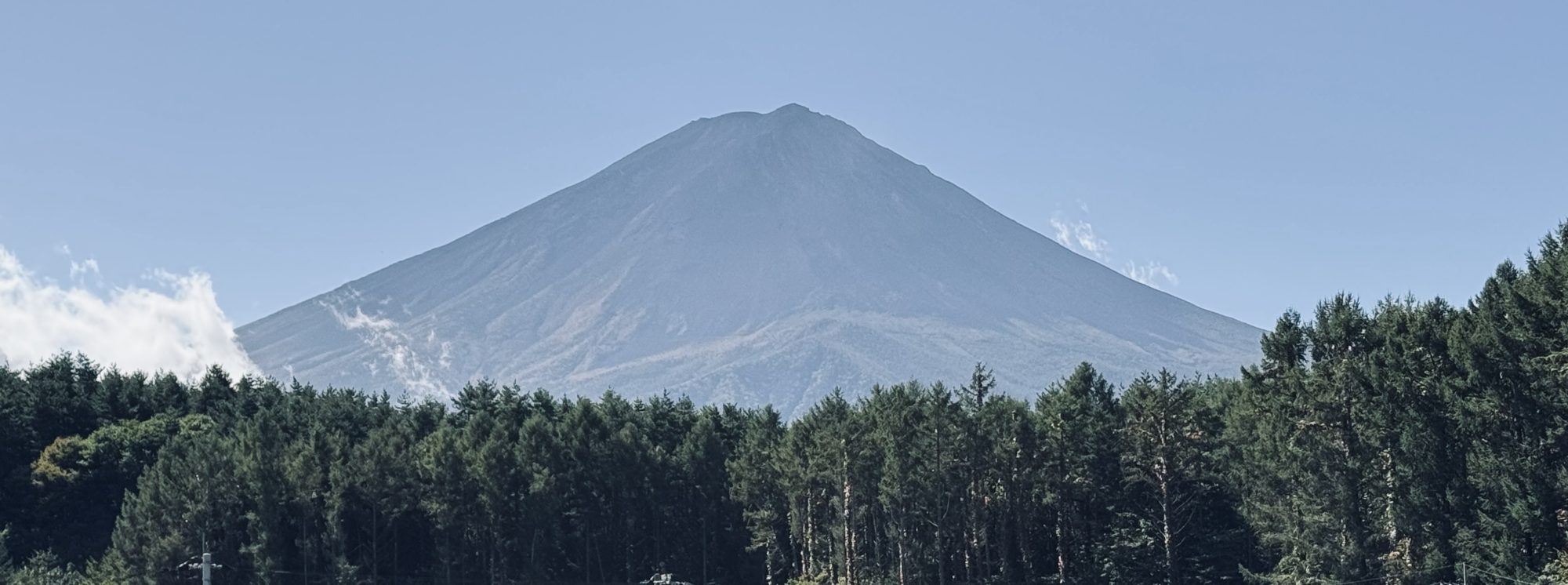
It occurs to me that travel is forefront of my mind because of my trip to Japan this week. I’ve wanted to visit since I was 15 or 16 years old, and it’s actually a little bothersome that it’s taken me this long. Still, I’ve no doubt that it will be well worth the wait.

Staring at the wall

Two hours. Right now my writing allocation is two hours a day. Honestly, a bit more, but it’s a dedicated two hours in the afternoon.

And I spend a lot of time staring at the wall in front of me or out the window beside me. Probably more than half the time allocated to writing is spent not writing. Not that I’m blocked. In fact, I can really knock out about a five to seven posts in that two hours – so I’m getting ahead of myself.

But I don’t do anything else with that time. It’s either writing or not writing. But it is not reading, or having the tv on in the background, or taking phone calls. It is two hours to write or think about writing.

And staring at the wall.

Barrier to entry

Barriers aren’t necessarily bad things. They can function as a failsafe or a precautionary measure. They can evaluate preparedness and similarities.

They can also be misused, preventing potential candidates from ever joining the ranks of whatever it is the barrier is managing the flow into.

Such barriers can be financial, physical, or even time. Learning to play an instrument has the following barriers: the cost or availability of the instrument; it’s maintenance; an instructor; and time to practice.

In that particular case, the barriers to entry aren’t difficult per se. They just require a level of commitment.

Consider Harvard, one of the premier Ivy League schools. Beyond the roughly $80,000 you’ll need per year – tuition, books, housing, and meals – you’d also want an SAT score of 1580 or higher, or a 35 on the ACT. Also recommended to carry nearly a 4.2 GPA.

Those happen to be high barriers to entry, though, not as high as some other situations. And again, with determination, and being mindful of how cold Cambridge gets in the winter, it’s possible to fulfill that dream – if that’s what you want.

These obstacles and challenges we face when trying to achieve something, or join a particular field, or pursue our goals – they can manifest in various forms. Sometimes it’s financial constraints or a lack of resources. Maybe there’s limited access to education or training. And even the familial and societal pressures we face.

It can be discouraging to individuals pursuing their goals and not finding the proper footing. Or even looking at the obstacles, sadly, many don’t even begin.

When you consider that everything, though, is a choice of some kind. A trade off. And every decision has some sort of cost attached, whether it be minute – a bit of time or exertion – or astronomical – quite literally, in the case of becoming an astronaut!

It’s all a matter of how you frame those choices.
Neverending learning

Continuously learning and expanding our horizons, we feed our minds with a rich tapestry of information.

Reading, classes, attending seminars, or exploring different disciplines. These expose us to new perspectives and concepts that can trigger moments of insight. The more we learn, the more raw materials we have to shape into innovative ideas.

Where it all comes from

Ideas are the lifeblood of innovation and creativity. They shape our world, drive progress, and spark new discoveries. But where do ideas come from?

Are they simply random occurrences or is there a method to their madness?

Emerging from our observations, experiences, problem-solving endeavors, collaborations, reflections, and our never-ending thirst for knowledge; ideas are not confined to any particular domain.

They transcend boundaries and can arise from the most unexpected places.

The world is wide

I feel there should be a program to take individuals and place them in a country different from their own. Not student exchange, though I think that’s hugely beneficial. And not for vacation or Instagramming or whatever. Something that embeds a person in a new culture. Exposes them to other experiences.

And there are great programs out there. Road scholar, The Peace Corps, and even cruise lines – though there is some debate working conditions on a cruise ship. But it doesn’t quite do the job, not when it comes to really understanding a place.

And it’s cost prohibitive to pay for travel for many, and time prohibitive – and potentially physically prohibitive – to go work for a company that includes travel. So We have a broad swath of the world missing out on new culture, new understanding.

No, I’ve no idea how it would work. But just because I don’t understand the mechanics of it yet doesn’t mean it wouldn’t have value.

As time ticks by

It’s a thing – we only have so much time on this Earth. Time is a precious resource that we all have in limited supply. It is essential that we use our time in a way that makes us feel fulfilled. It’s good to accomplish our goals, maintain a healthy work-life balance, and find joy. When faced with the end of those precious seconds, I believe we’d rather not regret anything.